In this episode, Joe interviews Jessica “Jaz” Cadoch: anthropologist, Co-Director of the Global Psychedelic Society, and Prop 122 steering committee member; and Sovereign Oshumare: Founder of XRYSALIS, an online community and retreat for queer, transgender, and intersex people of color, and Founder of Shelterwood Collective, a 900-acre eco-village and retreat center led by LGBTQ Black and Indigenous people.
Together, they are Co-Founders of ALKEMI, a consulting firm for psychedelic ethics and accountability, created due to the amount of businesses coming into this space who likely have very little understanding of the values that were established while they weren’t paying attention. They’re asking businesses questions many don’t consider: Is there a true need for them? Do they know their community and does the community want them there? Are their internal operations hierarchal or decentralized? Do employees feel heard and seen? And most importantly, have they taken any of the lessons from psychedelics and applied them towards the way they handle business and treat each other?
As Cadoch was a member of the steering committee for Colorado’s Natural Medicine Act (AKA Prop 122), she discusses what it was like from the inside: the problems (complaints about who was involved, if the voices from the community were a true representation, language in the bill); how the conflict showed how easily money and power could embody people; the problems with fighting over perfection while people are being sentenced to prison; and, where everyone is now: together in the aftermath, trying to figure out how to work together, unite missions, and build bridges between seemingly disparate parties.
They also discuss the problems with binary thinking, the concept of a business recalibrating its relationship to profit and ROI, what true access means, why it’s ok to go slow and not rush through the uncomfortable, and more.
Notable Quotes
“How are you really taking the lessons that the medicines are teaching us and applying them to the way you’re building your company? …Are you doing psychedelic business or are you doing business psychedelically?” -Jaz
“Each time that I’m broken, I’m rebuilt stronger. And that, to me, is such a journey. And committing to that journey is what I hope we as ALKEMI bestow upon people; giving them the endurance and stamina to be broken and be rebuilt, because we all need that. This system needs that. This world needs that. And we live in a system where we’re rewarded for not doing it.” -Sovereign
“At the end of the day, we are all we got. And the more we know who we are, the more we find alignment, the more we find each other, the more we mend our differences, the stronger we’ll be.” -Sovereign
“When we talk about access, it’s not only like financial access, but it’s also cultural access – to make it make sense for people who don’t speak this language, make it make sense for people who have survivor’s guilt from growing up in the hood in D.C., make it make sense for Hispanic rural communities, make it make sense for my Grandmother that needs a doctor in a white coat to tell her that this is safe. That’s what access means. It’s all of that.” -Jaz
In this episode of Psychedelics Weekly, the rest of the team is out or at Cannadelic, so a new voice steps up to the plate: Julian Bost, who works with the Vital team and handles the majority of our email, records his first podcast with Ph.D. candidate in Neuroscience, friend of the show, and speaker at Convergence: Manesh Girn.
You may remember the team covering some articles at the end of December and early January that were quite confusing and immediately met with a response of: “yea, we should have someone on to explain this to us.” This is that episode, with Manesh breaking down three very scientific articles into much simpler terms (at least we hope).
And a paper he co-wrote with Dr. Robin Carhart-Harris and many others, “Canalization and plasticity in psychopathology,” which aims to reframe neuroplasticity, disorders, and psychedelic interventions, and leads to a discussion on how adaptive thought patterns develop, the ability to relearn as “Temperature or Entropy Mediated Plasticity (TEMP),” Daniel Kahneman’s idea of fast and slow thinking, early trauma intervention, and the concept of viewing mental illness as a process rather than an identity.
As confusing (at least to the layperson) research seems to pop up daily, we may have Manesh on from time to time to help us understand some of these studies. How did he do? Did he clear up any of these articles for you? And should Julian be on the podcast more?
In this episode, David once again interviews a teacher and student from Vital, speaking with Grof-certified Holotropic Breathwork® practitioner, author, and developer of InnerEthics®: Kylea Taylor: M.S., LMFT; and therapist and Lead Consultant of psychological therapists at NEU: Shabina Hale.
This Vital Psychedelic Conversation is largely centered around ethics: how practitioners and facilitators define ethics; how InnerEthics® is involved; power dynamics; accountability; how the energy in a session is transferable and can bring up shadow elements for both parties; the need to be honest about one’s own scope of competence; the need for facilitators to have more experience both as a sitter and experiencer; and the very simple but most vital aspect of facilitation: considering how any decision made will affect the person on the psychedelic.
They also discuss having a code of ethics inspired by Indigenous culture and decades of underground use; how the psychedelic experience is affected by the ways it’s treated by its surrounding culture; how the practitioner becomes a protector; defining what is normal in a psychedelic experience (can you?); informed consent and the importance of explaining how roles will change throughout the process; and what the world would be like if everyone followed the same set of ethics.
Have you seen our commercial for Vital yet? We’re pretty thrilled with how it came out.
Notable Quotes
“We’re doing psychedelics in a different culture and a different community. I come from an Asian community that is often more tight knit and more tribal in its way of being, and mental health is seen differently within that community, care for elders is seen differently in that community. And so immediately, you’ve got these different rules and different structures that happen. And psychedelics obviously have come from some of those communities, but we don’t have the same communities anymore. We’re in the West. People will take them [and] they don’t go back to communities. They’re on their own. And that’s really isolating. …How do you keep people safe in some form of community when they go back into a society which is much more individualistic?” -Shabina
“I think it helps to just consider it all normal and not abnormal, because it’s only abnormal in the context of our society and our culture. What happened to Indigenous people in their psychedelic experiences was held; whatever it was was held by the culture, so it was not abnormal. It was normal in the extraordinary state of consciousness, and they assumed that it was healing and worked with it.” -Kylea
“You can see things that may not make sense on the outside, but to that person, on the inside, they really do make sense. And they make sense of it in a way that is far more profound than you could ever interpret or analyze or try and take apart.” -Shabina
“I think if people really find out what is theirs to do and do it, that is so satisfying that all these other things that cause problems for other people disappear.” -Kylea
In this episode, Joe interviews Portland, OR-based licensed marriage and family therapist, ketamine-assisted therapist at Rainfall Medicine, lead educator at InnerTrek, and speaker at our upcoming Convergence conference: Gina Gratza, MS, LMFT.
She talks about how she decided she wanted to become a therapist and when she knew psychedelics were the next step; meeting Rick Doblin at Burning Man; the efficacy of MDMA being used in conjunction with traditional therapy; how the self-compassion of MDMA gives her tremendous hope for its use in treating eating disorders; how non-ordinary states of consciousness teach us the wiseness (and uniqueness) of our inner healer; and her healthy concerns for how Oregon handles psilocybin legality: InnerTrek will be graduating some of the first licensed facilitators in Oregon and they should be certified by summer, but with OHA-approved service centers and manufacturers still up in the air, what happens next?
She and Joe also discuss how non-ordinary states of consciousness teach us the wiseness (and uniqueness) of our inner healers; the need for therapists to continuously do their own work; the idea of a psilocybin-licensed facility doubling as a music venue; David Nutt’s drug harm scale; Kylea Taylor; “The Trialogues”; archetypes of Burning Man; and how in psilocybin-assisted therapy, we can only do so much before the spirit of the mushroom ultimately takes over.
Notable Quotes
“There’s a strength in the empathic attunement that’s happening in the heart space that’s coming forward, so it’s not just talk therapy. There’s a connection happening. And we are creatures of love and belonging and connection, and when we feel that with another human being [and it’s] authentic – that is a very powerful force. We don’t have to compare it, but it’s just as powerful as medicine.”
“I hope to never be a master of any domain. I know that the juiciness of this life and this existence is continuing to stay open to learning and growing and evolving, and for me, that’s coming back to humility: I’ll never know everything, especially when it comes to the realm of altered states of consciousness. We’re trying to understand life in this state of consciousness, let alone bringing in altered states and the many different dimensions at which things can come through to you, and the uniqueness of everyone’s experience.”
“This is what we humans are able to do: Here are the measures, here are the ways in which we’re training. And then there’s the spirit of the mushroom. There’s what we are going to bring and then there is going to be what the mushroom brings: …the mycelium network, the earth, the nature; like a total other force that is beyond our ability to really know or read what will move through that.”
In this episode, David interviews two people from different sides of Vital: clinical psychologist, adjunct professor, Co-Founder of the Psychedelics R2R nonprofit, and Vital instructor, Dr. Dominique Morisano, CPsych (the teacher); and writer, psychedelic-assisted medicine facilitator, integration coach, and Women On Psychedelics Co-Founder, Jessika Lagarde (the student).
With the 2023-24 edition of Vital set to begin in April and applications closing at the end of March, we thought it would be interesting to relaunch Vital Psychedelic Conversations, but with the spin of speaking to both instructors and students to hear their different perspectives on retreats, facilitation, psychedelic education, the quickly advancing psychedelic space, and of course, Vital itself.
Morisano and Lagarde mostly discuss experience: how it’s gained, how it changes perspectives and methodologies, how one decides they’ve experienced enough to be able to know the terrain enough to help others, the importance of knowing when a patient needs a facilitator/therapist who has had the same life experience, and knowing when one’s own skills and limitations means a patient would be better off seeing someone else. And they discuss safety, the importance of being trauma-informed (and what does that mean, really?), and the puzzling cases when facilitators haven’t had their own psychedelic experience but feel the need to use psychedelics to help others.
And of course, they talk about Vital: the joy in joining together in community with people they’ve only known virtually; how interesting these retreats are compared to others due to the level of the participants’ experience; how partnering up and taking turns as the sitter and experiencer shows how little of a difference there is between student and teacher; and how many people have reported the most impactful part of the retreats was not their own experience, but being there for someone else.
Notable Quotes
“Do you know the terrain? Let’s say you’ve taken ketamine once, and you’re doing six sessions of ketamine with a client. Do you really know what they’re going to be experiencing, and can you have had the full range of experience? …How do we define this? I can tell you: You have a hundred psychedelic experiences; most likely you’re going to have a different experience each time, and a different connection to inner/outer terrain or different realms or different ways of thinking and being. So when is enough enough? When did you learn your lesson? When did you gain the experience necessary to navigate someone [else’s experience]?” -Dominique “You learn a lot about yourself as well, I find at the end of a day. Every journey is also a journey for the facilitator, and we are constantly mirrors to each other, so it’s very interesting work to do in that sense as well, because your own inner work is continuously being done.” -Jessika “It’s never the same. Two sessions are never the same, and even how you show up on that day for that session, or set and setting; all of that influences [the experience], so we have to constantly be placing ourselves between being a student [and being] a teacher sometimes, but never put ourselves in the spot that we think, ‘Okay, now I know everything. Yeah, I’m done.’” -Jessika
“How do you develop wisdom? The way to develop wisdom is through experience, and often, pain.” -Dominique
In this episode, David interviews Raad Seraj: host of Minority Trip Report, a podcast for underrepresented views in psychedelics and mental health, and founder of Mission Club, an education and investment platform.
Seraj tells his story of growing up in Bangladesh and Saudi Arabia and eventually finding himself in Canada, and how the discomfort and rage he felt as a result of class and xenophobia affected him. He talks about the idea behind his podcast, Minority Trip Report, and how, while they need to be heard, underrepresented and BIPOC voices aren’t a monolith. And he talks about the incestuous and gatekeeping nature of venture capital and the complications of actually turning investments into lasting business. With Mission club (which is partnering with Microdose), he aims to create opportunities for people who don’t have a ton of money to invest in early stage companies in this space, to help the dreamers who don’t necessarily fit the bill for traditional VC.
And he discusses much more: David Chalmers’ theory of “The Extended Mind”; the problems with having one idea of mental health and summarizing complicated minds into little boxes; how we are made up of different selves and how psychedelics can help us to acknowledge and integrate our minority selves; the differences between anger and rage and how 5-MeO-DMT helped him shed his rage; how we can use technology, culture, and capital together to amplify what exists and build what doesn’t; the three places that have transformed him the most; and initiating a bus-wide Cyndi Lauper sing-along while on tour with Finger Eleven as a host for Much Music.
Notable Quotes
“If you talk about mental health and healing: all healing is the reintegration of the narrative landscape – the autobiographical story. But the problem is; when you only have one type of story, one type of autobiographical narrative that gets to be heard, that gets to be embedded, that gets to be shared, that gets to go viral; and from that, you build courses and infrastructure and definitions of what mental health is and then you sort of impose it on the rest of the world – that is a problem because mental health is ultimately about being a human being, and we are multipolar beings and we are forced to be summarized in very small ways, whether by society or by systems.”
“You have a part that is elevated above the body and the mind and the consciousness, and seeing and observing yourself and your truest nature and your truest needs and wants and desires and so on, and I think with people who are on the margins (again, whether you’re Jewish, whether you’re bisexual, whether you’re a person of color, whether you’re an immigrant, or whatever), the parts that you suppress the most all of a sudden find light. They can be seen; that’s where the light gets in. And then that temporary visibility of all of a sudden seeing that part of you without judgment, and being almost agnostic to those parts, is powerful.”
“I recognized very early on [that] there was class. Race came after. Race is a 400-year-old concept. Class is a permanent part of any human society, but class is so much more insidious. We don’t talk about it.”
“At the surface of everything, whether it’s culture, politics, music, tech: it’s all bullshit. There’s a thin sheen of garbage. You have to dig a little deeper to find the true stuff.”
In this week’s episode, Joe is joined by Kyle, calling in from The Atman Retreat in Jamaica, where he’s running the fourth of five retreats offered through our Vital program.
They first discuss some news: Oregon Senator Elizabeth Steiner introducing a bill (SB-303) to essentially override many of the recommendations of the Oregon Health Authority, especially around client data – which would be provided to government agencies instead of staying private (which the people voted for); a reparations proposal in San Francisco recognizing the harms of the drug war; GOP lawmakers in Missouri and New Hampshire proposing bills for psilocybin therapy and psychedelics legalization (respectively); and Canada’s Apex Labs being granted approval for a take-home psilocybin microdosing trial.
Then, Kyle gives us an update on his very busy last few months, running Vital retreats: breathwork in Costa Rica, breathwork and cannabis in Colorado, and psilocybin in Amsterdam and Jamaica. He talks about the retreats themselves, the five components of breathwork, the idea of safety and “brave spaces,” the power of community and being witnessed, the concept of focusing on technique over the substance, what students have been saying, and finally: how the five elements relate to Vital, psychedelic therapy, seasons, and the process of growth. Reminder that applications for Vital’s 2023 edition (beginning in April) close at the end of February (update: we’ve extended the date to March 26), so if you’re curious, head to the site to learn more or attend an upcoming Q+A here!
Insurance for the nascent psychedelics industry is a four-letter word. And where available, while business insurance is often purchased as part of licensing obligations, is it often treated as an oversight and later forgotten.
This webinar shares insider tips and tricks for making insurance a profit center. We will discuss the current state of the market for insuring psychedelic businesses, including types of insurance policies, “red flag” policy terms, best practices for applications, and more.
After protecting insurance companies from up to billion-dollar liabilities in her early career, Jodi Green now helps forward-thinking organizations mitigate risks, with a focus on startups and companies operating in highly-regulated industries, such as cannabis and psychedelics. Jodi is licensed to practice law in California and Illinois and assists clients with a wide range of legal needs, including corporate governance; complex contracts; regulatory compliance; and insurance coverage and risk management. She also provides fractional general counsel and risk management services to growth-stage entities.
In this episode, Kyle interviews researcher, speaker, writer, competitive freediver, and one of the world’s leading experts on 5-MeO-DMT: Dr. Malin Vedøy Uthaug.
As a society, we mostly live in our minds, emotionally constipated while surprisingly disconnected from our bodies, with basic human needs that are all too often not met. Uthaug and Kyle talk about what manifests when those needs aren’t fulfilled, the strength of one’s inner mind state to change perspective, and how powerful true catharsis and embracing grief can be. And they talk about somatics: why we don’t focus on the body more, and how we could embody experiences with non-ordinary states of consciousness to better connect to our inner world.
She discusses the impact (or non-impact) of following a strict dieta before a big experience; preparing for an experience with physical exercise (even right before the ceremony); freediving; the challenge of therapists/facilitators sitting with someone through strong catharsis; the popcorn theory; the guilt people feel from experiencing love and bliss; and the paralysis-by-analysis problem of not making the connection between insight and action.
Notable Quotes
“What I’ve seen throughout all these years working in the field is that there is at least very commonly this notion that the psychedelic is going to heal them; they don’t have to do any other work – just popping that tab of psilocybin or smoking that pipe of 5-MeO is going to result in change. And that expectation is a bit dangerous, I think. They might not get the help that they are seeking because they’re placing that help externally to them. …Healing is actually hard work. It’s not something that happens overnight. It’s the tiny little steps of change accumulated that creates a bigger change. It’s changing your tiny, tiny habits until it changes your life.” “You can realize a bunch of things, but if you’re not doing anything, nothing is actually going to change. It might feel like it changes because you have felt it in your brain or you’ve seen it or have this insight, but that needs to be translated actively into your life.” “I think putting the body back into the equation is the way forward, however that might look.”
For this week’s episode, we had plans for a guest to join Joe to talk about some legal battles, but as seems to be the norm this time of year, sickness postponed that conversation to a future date. With David taking some much-deserved time off and Kyle in Jamaica on a Vital retreat, this Psychedelics Weekly is a rarity: just Joe, monologuing the news.
It’s probably best to just listen and head to the links to follow along, but some highlights this week are: Prince Harry coming out of the psychedelic closet; Virginia lawmakers proposing the legalization of psilocybin; psychedelics legislation already in plans for nearly a dozen states in 2023; NBC news recognizing the need psychedelic therapists, facilitators, and education; the WHO aiming to rename 5-MeO-DMT to Mebufotenin; and Roland Griffiths creating The Roland R. Griffiths, Ph.D. Professorship Fund to ensure his work continues to be recognized after he passes.
He also talks about Convergence, and you should know that prices increase on January 16, so don’t wait any longer! Check back next week for more news and, *fingers-crossed* a co-host – hopefully Kyle calling in to tell us all about the retreat!
In this episode, Joe interviews Dr. Andrew R. Gallimore: computational neurobiologist, chemical pharmacologist, researcher, and writer of Alien Information Theory: Psychedelic Drug Technologies and the Cosmic Game.
Gallimore feels that DMT is the most efficient and effective reality switching molecule we’ve seen, and that there is no other psychedelic experience that is so in your face: If we really could communicate with entities not of our known universe (who may have created our universe), how can so many dismiss that as a hallucination? Why would we not want to pursue something so mind-bending and revolutionary? His hope for his newest book, Reality Switch Technologies: Psychedelics as Tools for the Discovery and Exploration of New Worlds, is that it will be the quintessential guide for how psychedelics work in the brain from all levels of organization, what happens when you perturb the brain, and the future: how we might be able to fine-tune our brains to access different realities at will.
He discusses the element of design used in his books; why understanding something as complex as DMT is a multidisciplinary practice; the genius of Terence McKenna; what Alien Information Theory was about; his work with Rick Strassman in researching intravenous infusion DMT pumps to keep someone in the DMT verse; Conway’s Game of Life and the unpredictable levels of complexity that can arise from simple rules; lucid dreaming; John Mack, alien abductees, and trusting a patient’s experiences as real; psilocybin yeast; and much more.
This one will definitely make you think!
Notable Quotes
“It’s always felt a little bit sci-fi in a way, in that you’re planning basically a program of inter-dimensional citizenship. It feels like that. I mean, Terence McKenna used to [say] ‘galactic citizenship,’ and it’s almost like we’ve leapfrogged over galactic citizenship and we’re now going straight to inter-dimensional, trans-dimensional citizenship (whatever you want to call it) where we’re interfacing and communicating with an intelligence not of this universe. I mean, that’s a wild idea. And we have the technology now. To me, this infusion technology; this is the way to do it.”
“We’re just at the beginning now. You take virtual reality technology and the way that that is progressing, then you add artificial intelligence into the mix, and then you add pharmacology and neuropharmacology, chemical pharmacology and other neural manipulation systems, and you begin to realize that our brain is this tool – this world-building machine that we can learn to tune to access other worlds.”
“There’s also deja vu of course, the sense of having been there before – this very profound, deep sense of deja vu; not like we’ve all had, that occasionally you get that sense of deja vu that something has happened before. This is like, ‘I really, really have been here before. This is the most bizarre place I couldn’t possibly have imagined or conceived of; an impossible place of impossible geometry, and yet at the same time, it seems bizarrely familiar. ‘Why? Why would some place that should be the most unfamiliar place possible– There isn’t a more unfamiliar realm that you could imagine than the DMT world, and yet people think, ‘Oh my God, I’ve come home.’ And the entities, the elves will sing and cheer and bells will ring and lights will flash and [they’ll] say, ‘He has returned! The one has returned home! Welcome back! We’re so pleased to see you!’ This great uproar, this great celebration as you burst into this space. Why would that happen?”
In this week’s episode, Joe and David meet up to talk about Vital, Convergence, and the latest news:
-Tryp Therapeutics and Mass General signing a letter of intent for a Phase 2 clinical trial investigating the effects of psilocybin-assisted psychotherapy for the treatment of Irritable Bowel Syndrome – interesting because it further highlights the likely effect of psychedelics on the brain-gut connection and that psychotherapy is involved;
-New York lawmakers pre-filing a bill to legalize DMT, ibogaine, mescaline, psilocybin and psilocyn (and remove them from the state’s banned substances list) for 2023;
-New York’s first cannabis dispensary finally opening on December 29;
-British Columbia responding to their opioid crisis (the latest data reports 14k deaths since 2016) by beginning a Portugal-like decriminalization model, allowing people 18 years and older to carry a combined 2.5 grams of drugs (heroin, fentanyl, cocaine, methamphetamine and even MDMA);
and finally, an interesting but confusing (maybe a follow-up is necessary) article showing that what we’re learning about ketamine could lead towards a better understanding of psychosis and schizophrenia.
In this episode, Kyle interviews C.J. Spotswood, PMHNP-BC: author and board-certified psychiatric-mental health nurse practitioner currently enrolled in CIIS’ Psychedelic-Assisted Therapies and Research certificate program.
He talks about his introduction to psychedelics and his first patient immediately asking him about microdosing; why he changed his mind on microdosing and why he wrote his book; microdosing studies he’s most excited about; the terms: treatment-resistant depression, risk reduction, and flight nurses; Irving Kirsch’s work uncovering the bad science of research studies; the need for physicians to know enough about psychedelics to be able to meet their patients where they are; the importance of group work; and how, while they’re already so well-versed in caring for patients, using nurses to their full licensure could be the answer to the quickly growing psychedelics and scalability problem.
Notable Quotes
“When you look at the early research into the 50s in the 60s; they were doing microdosing research, they just didn’t have a title for it. They thought they were using placebo levels but they were actually looking for threshold levels; things like that. Really, it was what by today’s standards [would be an] amount that we would consider as a microdose.”
“I don’t like the term [treatment-resistant depression] when we use that because if you’re using [it] when you’re looking at the standard medications like SSRIs [or] SNRIs, they’re basically all the same. …So when you say that someone’s ‘treatment-resistant’ for three medications, four medications that are all basically working the same pathways and in the same amount; is that truly treatment-resistant, or are we just trying the same thing with just different medications, whereas doing microdosing is a different pathway [and] is a different approach?”
“My first patient I ever saw as a new clinician, like, literally my first patient: I come in and I’m starting to talk to them for the first interview and I got to the point and I’m asking them: ‘Where are we going, what do you need?’ and they said to me, ‘Do you know anything about microdosing?’ …I said to them, I go, ‘Yeah, I know a little bit.’ …So I asked her what she knew, and she knew quite a bit. And she goes, ‘What do you know?’ and I kind of just said to her: ‘I don’t really know how to put this, [but I] wrote a book on it and it’s going to be coming out next year.’ …It reinforced my feeling [that] I’m doing the right thing: this career suicide I’ve thought of, going into working with psychedelics and being open and talking about it, hearing my first patients talking about it – it’s got to be serendipity.”
In this week’s episode, Joe and Kyle are together again before Kyle sets off for a 2-month road trip centered around Vital retreats, where we hope he’ll be able to report in from live while in Jamaica.
In this episode, David interviews published researcher, social entrepreneur, and internationally recognized Indigenous rights activist: Sutton King, MPH.
In New York City alone, 180,000 people identify as Indigenous, Native American, or Alaskan Native, and this community is facing a disproportionate prevalence of mental health disparities, poverty, suicide, and PTSD due to intergenerational trauma from attempted genocide, forced relocation, and the erasure of culture and identity via boarding schools. Her purpose has become to bring light to what Indigenous people are facing due to being forced to live under a reductionist, individualistic Western approach that is in direct opposition to their worldview.
She talks about growing up being instilled with the importance of ancestry and tradition; why she moved to New York; how psychedelics helped her move through the trauma she felt in herself and saw so commonly in her family tree; and capitalism: how we need to move away from our private ownership, profit-maximalist, extractive model into a steward mentality inspired by the Indigenous voices and principles that have been silenced for so long.
And she lays out all that she’s doing to push these goals forward and help these communities: her work with the Urban Indigenous Collective, Shock Talk, the Indigenous Medicine Conservation Fund, Journey Colab and their reciprocity trust, and even her time last year at the World Economic Forum in Davos. We’re thrilled that she’ll be speaking at our conference, Convergence, this March 30 – April 2.
Notable Quotes
“One of the principles that I always was taught is that Indigenous peoples were always taught to be humble and not to be proud and not to be loud. But I have always felt like that was a way to keep us stagnant, to keep us complacent. So I would say I’m definitely a disruptor of this generation.”
“We are dealing with a burden of poverty, we’re dealing with so much chronic morbidity and mortality, as well and our chronic health. There is a number of different issues that we’re facing as Indigenous peoples. However, I’d also like to highlight how resilient we are as well. To be able to survive genocide, forced relocation, boarding school, and the poor socioeconomic status that many of us face [and] our families face, but continue to be a voice for our communities; continue to be on the front lines, advocating for missing and murdered, advocating for the protection of our land and demanding land back – I see a resurgence.”
“When you look at that skyline of that concrete jungle in New York City, I love to remind folks that it was the Mohawk ironworkers who risked their lives on that skyline, to be able to create the world we see around us. The paths that we walk today [and] the rivers that flow have always been used by the Indigenous peoples who came before us.”
“When we think about the economy and this market, it’s not capital that creates economic growth; it’s people. And it’s not this reductionist, individualistic behavior that’s centered at the core of economic good; it’s reciprocity, and being able to make sure that we have a market and an economy that’s inclusive; that’s bringing in all voices, that’s also considering all voices, all of the different parts of the ecosystem – not to silo people, but to bring everyone together, I think, will be the opportunity of a lifetime to really be able to really enact change.”
In this week’s episode, Kyle is back on the podcast, joining Joe to discuss three recent articles; two of which pose a lot of questions.
They first look at Colorado’s Proposition 122, which, now that it has passed, enters into the long and arduous process of being figured out – all while existing in the complicated paradigm of state vs. federal legality. One of the biggest concerns revolves around data collection and privacy: Is the collected data truly anonymous? Since psychedelics will still be federally illegal, how can we trust that the DEA isn’t going to abuse their power?
Next, they discuss Attorney General Merrick Garland making moves to end the sentencing disparity between offenses involving powder cocaine and crack cocaine: while essentially the same substance, being caught with 28 grams of crack cocaine currently carries the same sentencing as having 500 grams of powder!
And lastly, they touch on a very interesting article from Lucid News about the value of psychedelic therapy, which gives some staggering data points showing why the black market will always exist: MDMA-assisted therapy sessions likely costing $11,500 (with the MDMA itself costing between $480 and $9,600), Esketamine treatments costing as much as $32,400 a year, and more – all with results that don’t seem to be as long-lasting as many believed they would be. This one deserves more analysis, but Joe and Kyle had limited time for recording this week, so stay tuned for more. For now, enjoy this episode, and Happy Holidays from the Psychedelics Today team!
As the psychedelic movement expands, with surmounting research serving to change the tide of public opinion, more people are seeking out psychedelics as modalities for healing and self-exploration. Whether in the context of psychedelic-assisted therapy, plant medicine ceremonies, or recreational use, the modern Western psychedelic discourse has long been interwoven with the concept of “set and setting.”
But in contemporary psychedelic culture, the term is no longer sufficient as a harm reduction mantra. How can it be updated to better serve today’s journeyers?
A Brief History of Set and Setting
“Set and setting” refer to many factors which extend beyond the psychoactive effects of a given substance, playing a vital role in shaping psychedelic experiences. Typically, “set” refers to the mindset of a psychedelic explorer and “setting” refers to the context in which a substance is taken.
However, there has been little development of which variables fall under the umbrella of set and setting since its conception in the 1960s. There are significant factors that shape a psychedelic experience – both acutely and in the long term – which aren’t fully captured by set and setting alone.
The concept of set and setting has become something of a harm reduction mantra interwoven with the emergent field of psychedelic-assisted therapy and psychedelic research at large, used to describe the ways in which factors that extend beyond the substance itself can impact and shape its effects. Accordingly, it’s been an impactful linguistic tool that therapists, researchers and explorers have looked to for guidance on curating a container for an experience with medicine.
“Set” commonly refers to an individual’s mindset, including both immediate and long-range states of mind. A person’s immediate set is related to their state of mind before a psychedelic session, including everything from intentions, fears, hopes, and expectations about the session. However, their long-range set might include enduring personality traits, personal history and formative life experiences, social identities, and mental health history.
“Setting” commonly refers to the container of the experience, which includes the physical and social environment within which a substance is ingested, factoring into account when and where it will take place. Thus, setting may include aspects such as music, whether it takes place outdoors or indoors, the decor/props in the session room, as well as the relationships between others present.
The concept of set and setting does not exist independently of culture, with the sociocultural context of set including, but not limited to, race, economic status, strength of relationships with others, and the individual’s access to and relationship with nature.
Timothy Leary, 1960s counterculture icon and ex-Harvard lecturer in clinical psychology, is generally given credit for popularizing the concept of set and setting through his emphasis on the importance of both in shaping psychedelic experiences.
In the cult classic, The Psychedelic Experience, Leary together with his colleagues Ralph Metzner and Richard Alpert reflected, “Of course, the drug dose does not produce the transcendent experience. It merely acts as a chemical key – it opens the mind, frees the nervous system of its ordinary patterns and structures. The nature of the experience depends almost entirely on set and setting.”
To a large extent, the notion of set and setting within Western culture has been shaped and inspired by the ways in which Indigenous cultures around the world ingest psychoactive plant medicines in contexts bound by ritual, ceremonial objects, music, relationship with the land, and cosmological interpretive frameworks.
Compared with Indigenous cultures, Western culture has a bias against the use of psychoactive substances, and despite evidence that the peoples of Europe once used psychoactive plants ritualistically, such traditions have been long forgotten. Cultural frameworks determine the lens through which psychedelic experience is interpreted, and the lack of a cultural context, beyond that of prohibition, within which to make sense of psychedelics in the global North has produced a need for the ongoing formulation of set and setting.
More recently, Ido Hartogsohn, assistant professor at the program for Science, Technology & Society at Bar-llan University, has been conducting research on set and setting, exploring the ways in which psychedelic experiences are shaped by society and culture. In 2017, Hartogsohn published a paper outlining the history of set and setting, pointing out that although the term is often credited to Leary, its roots extend further back.
He explains how members of the Club des Hashischins, translated as “Club of the Hashish Eaters,” a Parisian group dedicated to exploring psychoactive-induced experiences in the 1840s, gave emphasis to what he calls factors beyond the substance itself. When Timothy Leary began his research with psilocybin in 1960, he exchanged letters with English author Aldous Huxley, who shared an excerpt written by one of the club’s members, Théophile Gautier, in which Gautier explores the necessity of preparation and going into a hashish experience with a “tranquil frame of mind and body.”
In addition, Hartogsohn suggests that having a better understanding of set and setting could serve as a form of harm reduction as well as benefit enhancement, highlighting that “the discourse on set and setting had remained largely underdeveloped over the years.”
An Expanded Vision: Set, Setting, and Support
Considering the growing mainstream emergence of psychedelics, set and setting alone is no longer sufficient as a harm reduction mantra, nor is it sufficient as a guidepost for the benefit maximization of psychedelic therapy and research. We argue that as a matter of public health, this mantra must evolve into “set, setting and support.”
No doubt that the proliferation of positive results from clinical studies being conducted on psychedelics, alongside countless mainstream articles detailing their healing benefits with promising headlines like “The Psychedelic Revolution Is Coming. Psychiatry May Never Be the Same,” are driving increasing numbers of people experimenting with psychedelic substances.
Despite the undeniable healing benefits of psychedelics, media discourse around them is sometimes dressed in sensationalist language, serving to construct psychedelics as miracle cures for all mental health problems. This premise is misleading and does not highlight the innumerable challenges that present themselves around the psychedelic experience.
One evident challenge that may emerge, is that of the psychedelic experience itself. Even when set and setting are controlled, there is no guarantee that challenging content and situations will not present themselves.
“Sometimes active journeyers can find themselves in unsound decision-making states. Having the support of a peer, trip sitter, or facilitator, during an experience can help the explorer navigate their inner state and make adjustments to the setting for maximum comfort and safety,” says Hanifa Nayo Washington, co-founder and Chief of Strategy at Fireside Project, a psychedelic peer support line that provides free, live phone support to individuals actively tripping or looking to process past experiences.
As psychedelic researcher and transpersonal psychologist Stanislav Grof says, psychedelics can be “non-specific amplifiers of mental or psychic processes.” That is, they have the ability to amplify content which is latent in the psyche, bringing up thoughts, emotions, and sense impressions that we were previously unconscious of.
Another challenge that may emerge after the experience relates to the fact that healing is often a messy, non-linear process in which things sometimes get worse before they get better. Anecdotally, there appears a common point of contention around individuals’ expectations going into an experience versus the actual outcome. No doubt, having forms of support already integrated into the process can make such moments of difficulty easier.
This self-guided class investigates the history, science, and best practices for safe and effective microdosing; hosted by Adam Bramlage, founder of Flow State Micro, Dr. James Fadiman, the “father of modern microdosing,” and a dozen expert guest faculty. Enroll today!
Beyond this, the aftermath of a psychedelic experience can also be destabilizing, as the non-ordinary states of consciousness they elicit serve to catapult us beyond the bounds of our everyday perceptions. In part, it is this very disruption in our normative flow of consciousness that enables psychedelics to be so healing, however, it can also be a simultaneously scary process as we find the foundations of our worldviews and belief systems turned on their heads.
“Psychedelic experiences can invite tremendous dysregulation in the body, mind, and spirit system,” Washington says. “Enlisting post-journey support in the immediate days, weeks, and months that follow a psychedelic experience can significantly ease the process of self-regulating to a ‘new normal’.”
What Can You Do To Seek Support?
Seeking avenues of support is a way to enhance psychedelic preparation, journeys, and integration, with support taking many different forms. One type of support, which may seem more self-evident, is that of socially-based, community support at the interpersonal level.
Despite the fact that psychedelics can elicit feelings of connection and oneness, some who use psychedelics may find themselves feeling alienated and misunderstood. For years, prohibitionist, zero-tolerance policies served to demonize psychedelic substances and those who used them, resulting in a lingering stigma and sense of shame associated with their use. This is especially true for individuals from communities of color who have long faced the impact of the discriminatory enforcement of drug laws, with the war on drugs producing profoundly unequal outcomes across racial groups.
Additionally, spiritual and mystical-type experiences have long been ridiculed and pathologized in Western culture, as they often include elements that are not culturally accepted as objectively real, sometimes resulting in those who have profound transpersonal experiences being dismissed or labeled as “crazy.”
Following a deep spiritual or transpersonal experience in which an individual disconnects from their ego, once they begin folding back into themselves there are layers of their identity or their lives that they may leave behind. This letting go of behaviors and parts of the psyche that are no longer of service can be conceived of as a type of “psychedelic shedding.” Omar Thomas, Founder of Jamaica’s Diaspora Psychedelic Society, CEO of Jamaican Organics and Psychedelics Today Advisory Board member, first formulated the notion of “shedding” in the context of psychedelic integration.
This might relate to one’s job, relationship, identification with a certain religion, sexual identity, or even their gender. When one goes through this shedding process without adequate support, there’s the risk that rather than finding relief from their mental and psychospiritual afflictions, they deepen, due to the many associated implications and consequences of the shedding process.
For example, what happens when someone realizes that the reason for their stress is rooted in their work, but they can’t quit because they won’t be able to support their family otherwise? Or what happens when someone sheds a cis-gendered identity but they’re in a marriage that would fall apart, opening a flurry of difficult, albeit potentially necessary effects?
This shedding process isn’t necessarily a bad one, but it certainly can be without having adequate support present to facilitate and ease the process. Like a butterfly going through its metamorphosis, it needs to be held in a safe container while fragile to emerge on the other side as its fullest and most beautiful expression.
Even today, as psychedelics become increasingly accepted in the mainstream, there is still a residue of stigma that remains. Thus, it is important, when looking for someone to support your journey, to find a non-judgemental, trustworthy person to share the experiences with. For some, this person may materialize in the form of a therapist, counselor, coach, or shamanic guide, while for others it may be a trusted friend or family member.
If support in an individual’s immediate circle is scarce, finding community support could come from connection online or in person with a psychedelic community, many of which offer courses and integration circles. One benefit of finding community online is around connecting with people from a particular social identity group that may not be accessible otherwise. For example, there are now integration circles that cater to individuals who identify as BIPOC, neurodivergent, or queer.
“In preparation for a psychedelic journey, support can look like gathering with a trusted friend, psychedelic facilitator, or support circle, to explore intentions, apprehensions, impressions, and beyond,” Washington says. “This support can increase awareness of one’s inner weather or set. With greater awareness comes the possibility for increased understanding of one’s own needs and knowing.”
Other forms of support include tools and techniques that a psychedelic voyager can draw upon as resources for grounding before, during, and after psychedelic experiences.
No matter the quality of the experience, beyond an intention to reduce the risk of harm, certain practices can be adopted as a way of supporting oneself through moments of discomfort or difficulty, to add a deepened sense of meaning and lasting benefit to the experience. For example, a 2019 study that observed the effects of psychedelics on long-term meditators suggested that the effects of a mindfulness practice may help patients sustain treatment outcomes in the long-term.
One might consider adopting a type of embodiment practice, engaging different aspects of the body in creating deeper self-awareness, balance, and connection. Whether it be a practice rooted somatics or mindfulness, or a more dynamic movement-based practice like yoga or dance, finding ways to become embodied helps to cultivate a deeper relationship with oneself and inner support to fortify your whole being.
Exploring the value of somatic practice, Lauren Taus, therapist practicing Ketamine-assisted Psychotherapy and Founder of Inbodied Psychedelic-Assisted Therapy and Integration Training shares, “Every emotion has a somatic counterpart, a felt sense in the body, which means that developing a daily practice of being in your body and listening to somatic wisdom is essential for healing.”
Support can also manifest by tending to your connection with nature. It can be easy to feel isolated after the depth and intensity of a psychedelic experience, however, the earth and the manifold beings that permeate it can serve as a source of community, providing consistent support through the embodied, knowing you were never alone to begin with.
In our vernacular, we tend to say that we are using psychedelics, but it’s certainly possible that psychedelics are actually using us. When one considers the predictable shift in values developed out of their use, expanding them to the global scale, we can see that not only are psychedelics healing us at the individual level, but are collectively helping to change the course of humanity’s place on earth by allowing us to care more about ourselves, one another, and the earth itself.
As this continues, there will be a never-ending need to increase layers of support for the broader community. Where might you be able to add that missing piece in your community, in your work, or in your personal life? What does it mean for you to evolve beyond set and setting?
In this episode, Joe interviews Zach Leary: host of the MAPS podcast, facilitator at Evo Retreats, author, and of course, son of psychedelic legend, Timothy Leary.
Leary was last on the podcast four years ago, so this episode serves as a bit of a check-in and reconnection, and truly goes all over the map. He discusses his relationship with Ram Dass and reconnecting to psychedelics (and himself) after a 13-year spiritually-bankrupt career and not quite understanding his identity outside of his father’s shadow; why the psychedelic facilitation role shouldn’t be standardized; Dave Hodge, Kilindi Iyi, and super high-dose experiences; ancestor work; solo ski trips compared to the Vipassana experience; the ease with which people play Monday Morning Quarterback with the story of his father; floatation tanks and the birth of ketamine; why Ram Dass held a grudge against Dr. Andrew Weil; and critiques of Michael Pollan – how much How to Change Your Mindskipped, how little experience Pollan had before essentially jumpstarting a revolution, and how many people now think they’re ready for a psychedelic experience when they’re likely not.
Leary just recorded with Rick Doblin for the MAPS podcast, he’s finalizing his first book (tentatively titled And Now the Work Begins – Psychedelics in the 21st Century and How to Use Them), and launching an online 8-week course called “Psychedelic Studies Intensive,” which begins February 8. He will also be a guest at our first conference, Convergence (March 30 – April 2).
Notable Quotes
“I don’t believe that the psychedelic facilitation role or experience should be standardized. There are just so many ways to do it. There’s no one way to do it. Sure, there are some wrong ways to do it, there’s no doubt about that. But it shouldn’t be standardized. It shouldn’t be generic. It shouldn’t be one-size-fits-all. It really doesn’t matter to me if somebody has gone through the MAPS training program or CIIS; that doesn’t make them any more qualified than some of the amazing underground visionaries who are doing healing work as well. …No one psychedelic experience is the same. Why should the facilitation experience be the same?”
“It sort of becomes like a catch 22: If you have to ask if you’re ready for psychedelics… I don’t know, maybe you’re not.”
“If you look at every iteration on the war on drugs; every single one, going back to the late nineteenth century criminalization of opium against Chinese immigrants in the bay area, to African Americans [and] cocaine, to [the] Hispanic population and ‘Reefer Madness’ to white, long-haired, anti-authoritarian hippies dropping LSD, African Americans [and] the crack epidemic – every single time (I mean, this list is endless), it always goes back to a war against people [they] don’t like. And once you do that, you create an inherent system of corruption to fuel that, because it’s a civil war. It’s not a war against the drug. It’s a civil war against behavior [and] against consciousness.”
“This isn’t a political issue. It’s a human rights issue. Like it or not, every single society on the face of the Earth since recorded history has used mind and mood-altering chemicals. And that is never going to change, ever.”
In this week’s episode, Joe and David team up again to discuss what news interested them the most this week: the DA dropping a felony drug charge against a mushroom rabbi in Denver due to the passing of Proposition 122; Numinus Submitting a Clinical Trial Application to Health Canada that would give in-training practitioners the ability to experience psychedelics with their psilocybe-containing EnfiniTea; and a University of Exeter-led trial moving forward with the next step in a study using ketamine for alcohol use disorder (with 2/3 of the money coming from the National Institute for Health and Care Research).
They also review a paper that analyzed the economics of psychedelic-assisted therapies and how insurers come into play; as well as The Journal of the American Medical Association stating that, based on current trajectories compared to cannabis legalization, they believe the majority of states will legalize psychedelics by 2037. So nice to see these continued steps in the right direction!
And if you missed it, we just announced that applications are open for the next edition of Vital. There are incentives to paying in-full by certain dates, so if you missed out on last year’s edition or have been curious, attend one of our upcoming Q+As!
With the industry fast developing, trained professionals are vital for the delivery of psychedelic healthcare. To bridge the education gap in the field, Psychedelics Today has launched its new training programme.
The Vital 12-month, immersive, inclusive and personal psychedelic certificate training will focus on psychedelic therapy and integration for professionals.
There’s no scientific definition of microdosing, but generally, it means taking 1/20th to 1/10th the usual dose of a drug. LSD and mushrooms are probably the most common choices, but the world of microdosing is a lot bigger (and wilder, and more colorful) than that. Drugs that might seem more intimidating, like DMT or mescaline, can be microdosed, too, if someone knows what they’re doing.
Read more on microdosing LSD from Psychedelics Today CEO and Co-Founder Joe Moore in this Vice article.
Catch Psychedelics Today in this Top 5 roundup by Psychedelic Spotlight. From the article:
New psychedelic podcasts are popping up every week, but which ones are worth listening to? Here’s a few of our favorites.
As psychedelics re-enter the mainstream, people from around the world are hungry to learn more about the mind altering substances. And while, of course, a great way to do this is by reading publications such as Psychedelic Spotlight, some enjoy the medium of podcasts over reading.
The only problem? In an age of infinite podcasts, finding a good one can be tricky.
It’s with that in mind that I decided to compile a list of the Top 5 Psychedelic Podcasts, presented in no particular order.
As states such as Oregon and Colorado pass measures to decriminalize psychedelic therapies and more than fifty publicly traded companies develop these treatments, the demand for therapists trained to work with psychedelics continues to grow.
Read more about training offerings, including Vital by Psychedelics Today.
In this episode, Joe interviews New York Times best-selling author, pioneer in the field of integrative medicine, and overall legend in the health and wellness space: Andrew Weil, M.D.
As the author of 15 books on health and wellbeing and a regular in the media, you’re probably familiar with Weil and some of his work, but you may not know of his more psychedelic connections: a long history of experimentation, leading Paul Stamets in the direction of functional mushrooms, co-writing one of the first papers about the Sonoran Desert toad and 5-MeO-DMT with Wade Davis, and being a strong advocate for psychedelics being the spark that could spur a global change in consciousness.
He talks about the connection between true osteopathy and integrative medicine; why the traditional Chinese medicine approach to mushrooms made so much sense to him; academia’s lost interest in pharmacognosy; how psychedelics may help people with autoimmune diseases; turmeric (he largely popularized it as an anti-inflammatory supplement); matcha; why we should be studying the placebo effect much more than we are; humanity’s innate drive to experience altered states of consciousness; and why a big part of the psychedelic revolution is so many people starting to believe in panpsychism.
We’re pumped to finally have him on the podcast, and we’re even more excited that he’s spreading the gospel of psychedelics to a health and wellness crowd who may still be a bit apprehensive about something they were taught to fear.
Notable Quotes
“I’m tremendously interested in [psychedelics’] potential at the moment for therapeutic use and ceremonial use, and actually, if I think about it, I would say I’m really interested in the possibility that they can save the world. I don’t see many other things out there that can do that.”
“I don’t know anything else that is so readily available and that, with at least some attention to how you do them, has such a potential to change how people interpret their perceptions and interpret their experience of the world around them. I’ve seen just such dramatic changes in people and in myself as a result of psychedelic experience. …My first book, The Natural Mind, that was published in 1972, said that only a global change in consciousness could really transform our world, and I think that the psychedelic revolution has the potential to do that.”
“I think the placebo response is the meat of medicine. That’s what you want to try to make happen. It’s pure healing response from within, mediated by the mind and unmixed up with the direct effects of treatment. …The commonest way I hear that word used is things like, ‘How do you know that’s not just the placebo response?’ or ‘We have to rule out the placebo response.’ I mean, we should be ruling it in. You want to make it happen more of the time.”
“Human beings have an innate drive to experience altered states of consciousness, not necessarily through the use of drugs (although drugs are a very convenient way to do it). One of the examples I gave was of kids learning to spin until they get dizzy and fall over and the world changed, and that’s universal as far as I can tell, in all cultures. So I got a lot of crap from people for saying that there was an innate drive toward altered states of consciousness, but I absolutely believe that, and I think that a part of the drug problem in our culture has been our failure to acknowledge that and teach people safe and better ways of satisfying it.”
In discussing these articles, much is covered: methylation and genetic memory; addiction; gut biome; cesarian births; how much inequality is built into the “psychedelic renaissance” due to it primarily evolving out of inherently unequal Western societal paradigms; permaculture; new ways to be together; Burning Man; the concept of the nuclear family; the power in working with your hands; creativity; harm reduction and the lack of readily available drug testing kits; and more.
Integration as a word is being applied to a wide range of practices and means different things in different settings. How can we understand the process of integration from a Depth Relational Process perspective which highlights depth perspectives – like the Jungian or attachment lens -, relational unfolding and depth of processing? And how can we match integration set with integration setting from a theoretically pluralistic perspective to meet the needs of people post experience at an appropriate and adequate level?
Depth Relational Process is a model we have co-developed with Dr. Tim Read in support of working with the deep psyche as well as expanded states. In this talk we will consider the main elements of working in this way alongside some clinical material to bring some of these ideas into the realm of practice.
Maria Papaspyrou is a senior accredited psychotherapist, working in private practice in Brighton, UK. Her core trainings have been in integrative relational psychotherapy, systemic family constellations and supervision. She has had a long-term interest in the healing potential of expanded states and her clinical practice focuses on psychedelic integration and working as a supervisor for individuals and organisations in this field.
She has co-edited “Psychedelic Mysteries of the Feminine” with Chiara Baldini and David Luke and “Psychedelics & Psychotherapy: The Healing Potential of Expanded States” with Dr Tim Read. With Tim they have co-founded and co-direct the Institute of Psychedelic Therapy (IPT) where they have co- developed and teach a 2-year professional training on Psychedelic Assisted Therapy through their model, Depth Relational Process.
You can find out more about her work at towardswholeness.co.uk.
In this episode, David interviews Sherry Rais: Executive Director of the Boston Psychedelic Research Group, Grants Manager for CIIS, and CEO/Co-Founder of Enthea.
Enthea is a benefit plan administrator that provides health plan benefit riders and single case agreement services for psychedelic healthcare with a provider network including certified and credentialed Ketamine-Assisted Therapy (KAT) and Psychedelic-Assisted Therapy (PAT) practitioners. In other words, if a company wants to offer psychedelic-assisted therapy as a benefit for their employees, Enthea makes this possible (and affordable). Their first client was the very psychedelically-minded Dr. Bronner’s Magic Soaps, and they’ve just announced the signings of three new clients that you may not expect to provide KAP to their employees: Daybreaker, Tushy, and Guinn Partners. Their goal is to have 100,000 covered lives in 40 cities by the end of 2023, and, alongside the guidance of MAPS, hopefully roll out MDMA-assisted therapy in Q2 of 2024.
Rais talks about Enthea’s process, costs, and goals; her Ismaili religion; her nomadic, marathon-running life; her experience sleeping on the streets of Toronto at 16 and her need to help the less-fortunate; how her most powerful psychedelic experience was watching someone else transform; and why companies are suddenly interested in these emerging therapies.
Notable Quotes
“For me, the most powerful psychedelic experience I had was actually in a situation where I was sitting with someone else and saw this person transform in front of me. That was two years ago and that person; I still see the effects of that experience on that person’s life and how much he’s changed from this one experience, and I’ve never seen anything like it. It was the most beautiful thing I’ve ever witnessed.”
“I think you and I know that these medicines work, and we also know that they cost way more than $500, and immediately, that tells me there’s an equity crisis in the ecosystem; that we’ve finally found medicines that may be able to help millions of people that are suffering from a variety of issues, and there’s this huge barrier and its cost. So the goal of Enthea is to solve that problem by making these medicines affordable.”
“The fact that you have a plan that doesn’t cover mental health is very telling of the landscape and the culture in America today and why you’ve made the case for me on why Enthea is needed. Because if this doesn’t happen, when will people get access? They’ll continue waiting and waiting and waiting that their primary insurance provider covers this.”
In this week’s episode, Joe and Alexa talk about the excitement brewing around our first conference-meets-festival, Convergence (March 30 – April 2 at the Wisdome in LA), and some of the sponsorships starting to come in (interested? email Alexa@psychedelicstoday.com).
Then, they dive into what intrigued them the most this week: a study looking into potentiality and possible causes of 5-MeO-DMT reactivation (and what reactivation actually is); New York cannabis farms sitting on $750 million worth of cannabis as the government drags its feet on licenses; and the story of a woman who used cannabis and psilocybin as an adjunct to standard therapy in the treatment of advanced metastatic breast cancer.
In this episode, Victoria hosts a bit of a microdosing roundtable, speaking with three champions of microdosing: “The Father of modern microdosing,” James Fadiman, Ph.D.; Adam Bramlage, Founder/CEO of Flow State Micro (a functional mushroom company and microdosing educational platform); and Conor Murray, Ph.D., a neuroscientist at UCLA who conducted the world’s first EEG microdosing study.
Fadiman and Bramlage recently launched a very popular course through our Psychedelic Education Center: “Microdosing Masterclass,” which covers the history and science of microdosing, as well as best practices for microdosing safely and effectively. They discuss the roots of microdosing, decriminalization and concerns over the corporatization of psychedelics, what we’ve seen so far in research, and how we’re finding ourselves in an era where people are going to be allowed to actually help themselves.
Murray is hoping to make big waves in the promotion of microdosing with the world’s first take-home EEG microdosing study: participants will be mailed a wireless headband that will be able to track brain activity in real world scenarios – the citizen science we’ve so desperately needed in comparison to lab studies that couldn’t be more different from how people actually live day-to-day. There is no criteria to participate, and, in contrast to lab studies, they want all data possible: people who are in therapy or not, people following different microdosing protocols, people microdosing for different reasons, etc. Will microdosing improve brain scores on cognition and emotion? Will participants see measurable improvements? And how will these numbers look when comparing scores months after initial peak neurological windows?
If you’d like to participate, head to psynautics.com and sign up. The first 50 people to do so will receive the wireless EEG to track their brain for one month for only $40.
Notable Quotes
“Because it’s inherently interesting for people to find that their consciousness can be improved (not necessarily changed) and that their whole physical system can also be improved, microdosing has found a natural niche which is: it might be good for you, and as far as we can tell, it’s very, very, very, very, very rarely bad for you. And that’s a nice risk/reward ratio.” -James
“It’s hard to fool the brain. You can maybe have a good placebo effect if you’re trying to ask someone: how much do you think your cognition’s improving today or emotion’s improving today? But it’s harder to fool the brain into having a different answer.” -Conor
“There’s so many people who will not buy into this until it’s proven by modern science, and that’s why Conor and his work is so important, and this new study with the wireless headbands and the idea that every citizen scientist on the planet can write Conor at Conor@psynautics.com and be a part of this study and get a wireless headband – I mean, that is fascinating. That is taking microdosing out of a sterile lab and putting it into the natural environment where it came from, as hunter-gatherers, for hundreds of thousands of years.” -Adam
“That’s really the metaphor, which is: the more windows, the more you see different views, and there’s nothing good or bad about any particular window except how clean it is. …We’re opening up bigger windows in more directions than has been the case in the past.” -James
This week features David Drapkin, Joe Moore (for the first part), and introduces Alexa Jesse, who you’ve probably heard in ads, but who makes her first appearance on the podcast.
They discuss two big political moves in the advancement of psychedelics: the creation of the Congressional Psychedelics Advancing Clinical Treatments (PACT) Caucus (led by Representatives Lou Correa (D-CA) and Jack Bergman (R-MI)), and the filing of the Breakthrough Therapies Act by Senators Cory Booker (D-NJ) and Rand Paul (R-KY).
And they talk about the story of Jim Harris overcoming paralyzation through psilocybin; NICE (National Institute for Health and Care Excellence) determining that Esketamine is not cost-effective; new progress in Germany and Finland; MDMA-assisted therapy (and other psychedelics) showing alleviation of chronic pain; a ramp up in LSD research for Alzheimer’s studies; and more.
Plus, we hear a bit of Alexa’s story, wish Joe and Johanna happy birthdays, and talk about what’s most immediate in the PT world: Early Bird pricing ending today for our first conference, Convergence (use code PTINSIDER10 for a 10% discount!), and the next round of Navigating Psychedelics launching next week.
In this episode, Kyle interviews psychologist, psychotherapist, author, and certified Holotropic Breathwork® facilitator: Marc Aixalà.
Aixalà is part of the International Center for Ethnobotanical Education, Research and Service (ICEERS), offering integration psychotherapy sessions, developing theoretical models of intervention, and training and supervising therapists. He is also the writer of the recently released, Psychedelic Integration: Psychotherapy for Non-Ordinary States of Consciousness, of which you can win a copy by entering our giveaway here!
Aixalà wrote the book after receiving more and more emails from people asking for guidance on how they were supposed to process a recent experience, and he realized that so much was unknown around the concept of integration: What exactly does it entail? Has the psychedelic space created a narrative that you need integration when maybe you don’t? When is the work considered integration and when is it psychotherapy?
He talks about some of the metaphors he uses to explain integration; the seven scenarios he typically sees in people seeking integration (and how to respond to each); philosophical constructivism and the importance of working with someone within their preferred cosmology; how the psychedelic hype has created a marketplace full of competition (and why that could be bad); and why he thinks being trained in Holotropic Breathwork is perhaps more important than being trained in facilitating a psychedelic experience.
Notable Quotes
“One of the things that psychedelics show us (or for me, the main thing) is that somehow, healing is inside of us and growth is inside of us, and they teach us accountability, they teach responsibility, and they teach us that we are the expert of ourselves – that our journey does not depend on an external person. So in my way of practicing integration, I also want to honor that, and do integration when it’s needed, but not create an additional need for people that don’t have it.”
“I think that that’s the richness and the beauty of psychedelics and the psychedelic experience, is that it cannot be understood from just one prism. No, it’s a trans-disciplinary approach that will give us a more subtle understanding of different dimensions included. I don’t think that there’s one way that is better than the other of using psychedelics, [just] as I don’t think that there’s one Shamanic tradition that is better than another Shamanic tradition. Things are there for a reason and we find what resonates more with us.”
“I believe that breathwork can be more effective than psychedelics to deal with certain emotions; things like anger, rage. The body and the somatic part of a traumatic event; that has worked very well with breathwork in my opinion – better than with other substances because it provides some sort of mental clarity that is not distorted by the archetypal aspects of psychedelics.”
I had years of experience in cold water training from my Aikido career, but as my depression had increasingly grown worse, I developed a severe cold intolerance. It had become painful to stand under the shower, with my scalp almost spasming in contraction, when I used to be able to stand in late winter melt-water waterfalls and rivers with ease. But post-dosing, my cold tolerance came roaring back; allowing me to stand under a cold shower for minutes at a time with no numbness and no pain – it was almost like it was happening to someone else or there was a micro-force field on the surface of my skin. I found myself having to leave the shower because I just had other things to do. Cold water tolerance is a gold-standard for measuring pain response in clinical trials, and in fact, later that year, the Department of Psychopharmacology at Maastricht University, sponsored by the Beckley Foundation, conducted the first LSD and pain study in nearly 50 years, showing that low-dose LSD significantly increased cold water tolerance without interfering with day-to-day activities.
I had been known for my mobility and flexibility throughout my career and my ability to train others to achieve the same results, but mine had been compromised for a good while at this point. But the day after my session, I was able to resume positions that I hadn’t been able to comfortably acquire in months, if not years. Movement now felt smooth and effortless once again, and I swear there was even improvement in the tissue quality in areas that had become “crunchy.”
There was also a significant change in my inflammatory baseline. Depression is seen as a disorder that also includes fairly significant neurological inflammation and is often bi-directional with chronic pain, but many of the same receptors that psilocybin operates on are also contained within the gastrointestinal tract, and mine had altered sensation for a month afterward. I believe my systemic inflammation significantly improved during that period because within three months of my dosing, I reacquired personal training records that had become elusive, and by summer, I passed those PRs and set new ones. I also felt incredibly less “puffy.” Accidentally banging into something didn’t hurt anymore and persistent joint aches and lack of motor activation disappeared. There were additional improvements in neurological issues that will be described in a future case study, but that was just as immediate and impactful.
Lockdown Leads to the Lowdown on the First Psychedelic Pain Studies
Within the training and recovery world, patients and trainees can loosely be categorized as super, normal, non, and negative responders. I had stopped being responsive to both training and rehabilitation efforts at the peak of my depression, and was entering negative-responder territory, which was severely distressing. Fascinatingly, I now seem to be trending somewhere between a normal and high responder. I began proclaiming to the researchers at NYU that psychedelics were going to completely change chronic pain treatment within five years. And I also had a secret; the day after my dosing session, I had what’s referred to as a huge download: I realized that if you could consider things like depression, PTSD, and severe anxiety to be nociplastic outputs of the Central Nervous System (CNS) that causes iterative rumination (a.k.a. looping maladaptive outputs), that was no different from the looping maladaptive outputs that characterize chronic pain – the neurology of which I had been studying for years at that point. Due to the extreme visual qualities of the psychedelic experience and the rapidity of my own remission, I saw, in a flash, that since psilocybin was an impact booster for neuroplasticity, it would enhance the impact of mirror box therapy for phantom limb pain or likely any other neuromodulation.
“Remapping” is the term describing the tactic of using visual or other sensory receptor inputs to modify and change nociplastic or noxious/painful outputs of the brain. As this is part of the Z-Health process, I had been introduced to the concept of mirror box therapy years earlier as part of my certifications, but I thought I had come up with a whole new approach and kept it to myself, barely hinting at what I believed I had uncovered. But, since NYC was locked down and I was unable to work, I had nothing to do but go online and research what had happened to me.
Within two weeks or so, I found an old photocopied English abstract from a 1962 study in Japan, by Kuromaru, et al., using low-dose LSD to treat phantom-limb pain with 50% of its participants going into instant remission by the end of their session, and the authors pointedly declaring that stacking the LSD with movement had a far stronger impact on resolving both phantom limb pain and phantom limb syndrome. Stacking inputs is a common practice within the neuromodulation world for pain treatment, often coupling a weaker input with a stronger one, and I realized that this was what had clearly happened to me while I was in my post-dosing neuroplastic window. It finally felt like I was getting traction again; that drills and exercises were once again effective, and crucially, maintaining their own momentum. I didn’t have to be hypervigilant anymore in my daily routine for these drills to become “sticky.” I also realized that the Kuromaru study had, in fact, been released earlier than the Kast study from 1964 investigating the analgesic properties of LSD for terminal cancer and other painful conditions, which is frequently and incorrectly cited as the first psychedelic pain study. I became aware of other previous psychedelic pain studies, as well as recent ones like Dr. Charles Nichols’ work on the anti-inflammatory properties of psychedelics, and studies involving Dr. Robin Carhart-Harris’ REBUS model and cortical reorganization, which is what happens when a stimulus results in the creation of a new cortical map (essentially a vertical column in the brain cortex consisting of neurons performing specific processes).
Both of these discoveries are crucial because cortical reorganization (or remapping) and inflammation are key drivers of chronic pain. Conditions like depression and anxiety are characterized by rigid, fixed beliefs or frameworks where the same negative thought loop keeps reoccurring repeatedly, with no amount of incoming contrary information able to alter that belief. It becomes what’s known as a “strong prior” in neurology, becoming a top-down driven process in the CNS, actively suppressing any bottom-up sensory input error correction. The same mechanisms of action occur with chronic pain, where, despite the healing or resolution of an injury; a rigid, fixed pain signal is continually being sent out by the brain as a maladaptive response of the CNS’ protective suite. These are referred to as nociplastic or noxious neurological conditions. The same is true for multiple chronic pain conditions where inflammation causes maladaptive signaling and perceptions, leading to negative structural or nociplastic changes in the peripheral and central nervous system. In psychedelic-assisted psychotherapy, a non-rigid, chaotic state is induced, which allows the cortical landscape to reorganize into a more efficient and positive state.
Landmark Study in Pain and Psychedelics Confirms Insights
I sat speechless for at least five minutes, shaking my head in a feeling of wonder and disbelief, as if the universe itself had just delivered this paper to me. Other than my remission and the pandemic, I had thought of nothing else but the application of how these two approaches could be combined. Of course someone else had invented it well before me; of course they had. I knew that resourceful, capable people had been working on this for a while, and chronic pain is a singular motivator, but it was still astonishing to see my vision so vividly applied and executed.
Check out this podcast with Court and Joe interviewing Dr. Castellanos and Dr. Timothy Furnish of PHRI!
I had learned in 2015 that cluster headaches had been effectively treated with psilocybin for 25 years, and of mirror box therapy a few years before that. I had even blogged about it because people in the rehab and training communities thought that my using visual inputs to treat pain was so weird they called it “voodoo.” But there is a neural hierarchy, and many pain and performance conditions in the body actually have higher-order components within the visual and vestibular systems. That’s often why, no matter how much manual/physio therapy one does, it is often a downstream compensation within the body in order to reconcile perceptual discrepancies between the visual and vestibular system. The visual system lets you assess the surrounding environment and predict any threats that exist within it, and the vestibular system helps you orient within that space, keeping your body in balance so that you might be able to execute any motor actions in response to any perceived threats. If your eyes are telling you the horizon is 5° tilted to the left, but your vestibular system, a.k.a. your inner ear, is telling you that it’s 5° to the right, your body will compensate so that those discrepancies are reconciled and you maintain a stable, level “sight picture” – your viewscreen of the world. Having an unstable sight picture makes for poor predictions; in other words, in an evolutionary survival context, having a “shaky cam” is not so great for avoiding saber-tooth tigers.
So, those downstream bodily compensations that keep your viewscreen steady are creating distortions and possible maladaptations in the structure of your body, and are now being cemented due to repeated compensatory use. The nervous system will protectively reduce motor output and increase pain perception as a response, to slow you down in order to avoid potential injury and survive another day. Ultimately, the body has evolved towards survival, not performance. And pain is an alarm/action signal designed to keep you alive.
This self-guided class investigates the history, science, and best practices for safe and effective microdosing; hosted by Adam Bramlage, founder of Flow State Micro, Dr. James Fadiman, the “father of modern microdosing,” and a dozen expert guest faculty. Enroll today!
Mirror Box Therapy and Pain as An Output of Perception From the Brain
When we look at phantom limb pain, what we’re seeing is the phenomenon known as deafferentation: the loss of afferent or ascending inputs from the peripheral nervous system up to the brain. No limb equals no signal, and the loss of signal is very dangerous within an evolutionary context because limb loss due to injury or infection will mean, at the least, loss of sensation and loss of coordination for motor outputs/muscle contraction/movement, meaning a lost ability to gather food or to avoid threats. Or worse, it could mean signaling that you’re going to bleed to death in a matter of minutes.
Multiple pain conditions could be considered sub-clinical deafferentation: peripheral neuropathy from conditions like diabetes or shingles, or different types of phantom limb pain where the limb is still present but the nerves are so injured that they no longer transmit afferent signals – such as we see in cancer, stroke, or crush injuries. That loss of signal gets hardwired into the cortical representations of that limb, and never gets a counterbalancing signal, so the CNS registers it as an ongoing sense of threat. That creates a huge alarm signal in the form of pain perception.
What mirror box therapy does is replace that loss of signal with the image of an intact limb, generating input that dampens down that pain signal. And when you touch the remaining limb (which is generating normal signals) while seeing it reflected in the mirror in place of the missing or injured limb, it can immediately cause the pain signals to cease; so powerful are visual representations within the somatosensory cortex of the brain. Essentially, through seeing a limb appear where it wasn’t before, one tricks their own brain into thinking it’s still there, and the pain signals from the CNS for that lost limb stop being sent.
Mirror box therapy is often not enduring though; only being effective for as long as you do it, and that was the case with Albert Lin. It often takes a lot of repetition for it to become “sticky.” Neuroplasticity requires novelty and intensity, usually in the volume of work. But that can be hard to achieve, thus the issue in pain treatment that I had experienced directly as a practitioner and as a patient; everything works, nothing lasts. When it was suggested to Lin that psilocybin had strong neuroplastic properties that could impact cortical reorganization for chronic pain, he tried it a few times, taking a high dose of psilocybin mushrooms, which gave him approximately 3-12 pain-free hours, depending on the dose. But then the pain came back with a vengeance. Within the cluster headache communities, this is known as a “slapback effect” and can actually be a sign that the nervous system is adjusting and more permanent relief could be imminent.
Then, Lin’s wife suggested combining (stacking) mirror box therapy with psilocybin. He went out to the desert with a closet door mirror, and while under high-dose psilocybin, he would stare at the reflected image of his remaining leg and then at the space where his amputated limb had been, while repeating the phrase “You are safe. You are totally safe,” for approximately 45 minutes. This met all the conditions for driving neuroplasticity: novelty, intensity, and volume of work with deep assurance of emotional and physical security. Amazingly, it worked, immediately putting him into remission for the next 20+ hours, with 50% reduced pain for nearly two weeks. He shared his success with the lab, and experiments with different types of visual neuromodulation while under high-dose psilocybin quickly began.
Lin was dealing with a persistent pain in his phantom foot that felt as if a railroad spike was being driven through, suspected to be a sensory remnant from when the bones in his foot were surgically pinned together as they attempted to save it before ultimately deciding to amputate. An artificial foot and a pen with a telescoping pointer was introduced, and they covered the space between his stump and the plastic foot with a blanket, then “pulled” the telescoping pen out of his foot at the site of pain, mimicking the action of removing pins (or really, removing the pain). He felt instant relief.
Another experiment involved a novelty Halloween-store “flame” (bright light with orange and yellow fabric and a fan underneath that makes it flutter). Lin chuckled when he saw it, but when they brought it near his representational foot, he actually felt heat from the “flame,” which was intensely relieving.
Through these experiments and continued work, Lin went into full remission after five weeks, and has been free of chronic pain ever since. It’s worth noting that he had a top research team working with him that was extremely creative in creating novel inputs, and he is known for being an almost Michelangelo-type character, with a high degree of inventiveness and novelty-seeking, allowing him to discover unique, lateral approaches to solve problems. And, it bears repeating: chronic pain is a singular motivational force.
Additionally, post-dosing, cortical reorganization was happening during a psychedelically-induced “critical period reopening”; when the brain has a metaplastic quality that allows it to reset to an almost-new condition. As described in the work by Dr. Gül Dölen, critical period reopening happens during crucial phases of nervous system development in childhood, such as when toddlers can learn multiple languages without an accent or when adolescents are uniquely sensitive to social cues from peer pressure (and/or support), allowing them to quickly adopt different social customs and frameworks. This reopening is also seen post-stroke, when there is a limited window for rehabilitating from brain injury, so this likely applies very well here with chronic pain. We know that veteran groups like the Heroic Hearts Project, VETS (Veterans Exploring Treatment Solutions), and The Mission Within, who are employing psychedelics for treatment, are having striking results both in recovery from combat-induced PTSD as well as traumatic brain injury – typically seen as treatment-resistant conditions.
If there’s anything I would like you to understand after reading this article, it’s that:
We don’t have to prove that psychedelics are effective for treating chronic pain; we have to establish that this has already been proven.
Psychedelics are not an instant cure for chronic pain, but they are strong impact boosters for neuroplasticity and can make physiotherapy/neuromodulation become “sticky,” creating enduring relief.
We know that many mechanisms that create psychiatric conditions that are responsive to psychedelic-assisted psychotherapy are extremely similar in nature to the same mechanisms that generate chronic pain; it’s just that psychiatric conditions have gotten far more focus in psychedelics, perhaps because the non-ordinary states of consciousness they are known for producing seem more applicable to conditions more traditionally thought to be related to the mind.
But both arise out of the central nervous system and are rigid, fixed states of cognition and perception. With depression, you have negative outlooks and self-perceptions: “Nothing I do makes a difference,” “People are just saying that to make me feel better,” etc. At one point, these thoughts may have helped you to cope with a traumatic incident, environment, or upbringing, but now they’re maladaptive, weigh you down, are out of step with reality, and have actually caused (or are the result of) structural deficits in the neurology of your brain. It’s the same with chronic pain: when there is an acute injury or even the possibility of one, pain is part of the protective suite of responses from our nervous systems to prevent further injury and allow healing to occur – an alarm bell/action signal to change a behavior. But it can be so overprotective that it gets embedded and cemented with movement, emotions, and surrounding environments long after all tissue healing is done – getting triggered by seemingly innocuous events, maladaptively hardwired into your neurology in a negative loop of conditioned responses.
This is exactly what happened to me when I went through NYU’s psilocybin trial; an adverse financial and work environment, repeated (and under-recovered) musculoskeletal stress/injuries, and (likely) sub-clinical post-concussion syndrome and PTSD, all topped off by the sudden death of a close friend releasing long-suppressed grief and leading to a significant nociplastic output in the form of increasingly treatment-resistant depression and moderate chronic pain. Many recovery efforts were attempted using every modality I knew, but there was too much of a deficit to overcome – until psilocybin was introduced to the mix. That life-changing experience allowed for metaplasticity, cortical reorganization, descending inhibition, and anti-inflammatory properties to take root, giving all post-dosing interventions the opportunity to gain traction and for me to flourish once again.
Future articles in this “Pain and Psychedelics” series will focus on old assumptions vs. new science, additional case studies, the suspected mechanisms of action behind the interaction between psychedelics and pain, and best practices and safety concerns for working with psychedelics to alleviate chronic pain.
This week’s episode features David Drapkin and Jon Dennis, who you know from Eyes on Oregon and all of the work he’s done in an effort to protect religious freedom under Oregon’s Measure 109.
They discuss opposition and concerns around Colorado Proposition 122 (which officially passed last week with 53% of the vote!) and recent cannabis legalization in three states, then move on to Oregon: what it’s been like being so involved in Measure 109’s rulemaking progress, what people were saying during this week’s final public comment period, whether María Sabina would be able to work under the proposed guidelines, and even the idea of microdosing under this new framework.
An NYU psilocybin depression study participant discovers an unforeseen application for psychedelics: the treatment of chronic pain. Part 1 of the series: Psychedelics and Chronic Pain.
Everything Worked, but Nothing Lasted
In the fall of 2020, I was living a pretty successful and happy life – on paper. I had co-founded a very popular, leading-edge CrossFit gym in NYC; one of the first in the world. I held multiple advanced certifications in applied neurophysiology through Z-Health, helping clients with challenging pain and performance issues. As an early adopter of kettlebell training, I became a nationally top-reviewed instructor and trained Team 6 Navy SEALs, astronauts, pro athletes, wounded veterans, and members of the FBI, NYPD, NYFD, and ROTC. I was featured in Men’s Fitness, the NY Times Sunday Routine, and USA Today. I had 30 years in the pain & performance field, training and teaching at a high level, and was becoming widely known for helping people with difficult mobility problems or chronic pain, using unique methods from the leading edge of neurological rehabilitation. On top of all of that, I was 17 years sober.
However, not all that glitters is gold. A now ex-business partner was committing a Ponzi scheme to the tune of millions, and his case followed him like a shadow, turning my life’s passion into an emotionally and financially toxic nightmare that economically devastated my family. My best friend, Kirk MacLeod, who I had completely rehabbed from chemo & cancer surgery, died six months after being declared in remission. My first son had developed undiagnosed GERD and couldn’t sleep more than an hour and half at a time, which meant my wife and I slept even less.
Unsurprisingly, my episodic depression returned after more than a decade and a half, and I was now increasingly treatment-resistant; unresponsive to psychiatric drugs that had previously worked. All my pain neuromodulation interventions that worked on my clients no longer worked for me, and I had developed chronic pain myself.
I share all my background here to demonstrate that I was not under-resourced in either knowledge, networks, or diversity of approaches, practice, or experiences. I poured over all my certification materials looking for anything I had missed, but had fallen into an increasingly deeper recovery hole; everything worked, but nothing lasted. I was hitting a new bottom in my life, deeply sinking into the midst of an increasingly treatment-resistant depression episode that had likely been ongoing for five years.
But then I became aware of ongoing studies on psilocybin for depression happening locally in NYC. I had experienced a few high-dose psychedelic sessions nearly a quarter century ago and had been an avid Terence McKenna fan (even speaking with him directly after a lecture in Seattle), but I had never taken psychedelics therapeutically, and my recreational interest had effectively vanished once I became sober from alcohol. Intrigued, I connected with the local clinical research coordinator, Leila Ghazhal, at the NYU for the clinical trial of Psilocybin for Major Depressive Disorder study (sponsored by the Usona Institute), and took all the online and over-the-phone assessments, passing them easily. The primary investigator (PI) on my study was Dr. Stephen Ross, who had been leading psychedelic research at NYU for more than a decade. Amazingly, I made it into the trial within a month and a half, learning that I’d actually beat out 8500 other applicants for just 100 spots nationwide.
Trying Not to Hope
When I first entered the trial, I was in a state of denial about how severe my depression was, but once I took the MADRS assessment, there was no avoiding that I had moderate to severe depression with suicidal ideation.
I remember a specific moment very well during this process, when I was finally cleared to enter the study and the study coordinator was speaking with me about the results of my assessment and my upcoming participation. I asked what would happen if I didn’t receive psilocybin during my session, and he reassured me that they would not just drop me off in the middle of the ocean to dog paddle – that there were other interventions and studies available and they would be sure to find me something, but there was a good chance I would receive psilocybin and hopefully get some good results. At this point, my mask cracked a little bit and some protective cynicism came out, and I quipped with a bit of a shrug: “Well, we’ll see.” I hadn’t meant it to be dismissive or sarcastic but it came out that way, and the conversational atmosphere rapidly shifted. He looked right at me and suddenly he wasn’t the primary investigator anymore, lost in the myriad details and logistics of a very involved study. Now he was the deeply experienced clinician and therapist, and, having heard something within the tone of my voice, dropped all the way in and asked softly: “What’s going on behind that, Court?” Suddenly, all the masking dropped and there was no more place to hide because I was so, so tired at this point, and had been waiting for this moment. In and out of therapy for years, dozens if not 100 self-help books, so many modalities, so many somatic systems, and here I was with a chance for something new to help me. When I realized why there was cynicism behind my statement, my voice cracked, I started crying, and I answered him: “Trying not to hope.”
The one glimmer of hope I did have was reading a 2018 paper by lead author Calvin Ly describing psychedelics’ neuroplastic activity in the prefrontal cortex. As someone who had studied the neurology of pain for years, this was revelatory. Many pain conditions are, in fact, nociplastic or noxious conditions arising out of the central nervous system (CNS); there’s no more injury or damage if there ever was, but your CNS is still continuing to put out a maladaptive alarm signal that is perceived as pain. So learning that psilocybin was creating actual structural change within my cortex – not “just” psychological change – was completely astonishing.
Applications close on March 26 for this year’s edition of Vital.
My dosing date was on March 5, 2020, and I remember looking down at the capsule sitting in the cup, saying to it: “I really hope that’s you.” I was terrified inwardly that I would receive the placebo, that I wouldn’t respond to the psilocybin, or that it would only work just a little bit, only for its effects to slowly fade. But within half an hour, there was no denying that I had received psilocybin, and I earnestly pursued all the procedures everyone on my care team at NYU had worked with me on for weeks in preparation for this day.
I was genuinely shocked at the sheer volume of psychological material from my childhood and early adulthood that came up. I had profound transpersonal experiences and healing, revisiting instances that were pivotal in my childhood. I had an encounter with the first woman I had ever loved, who had committed suicide three years after we had broken up. Her death had caused a profound grief in me that drove my drinking for a decade after. I thought I had released the majority of my grief around her once I got sober, but clearly, there was so much more to heal that had been deeply suppressed as I tried to move forward with my life.
Reset, Renewed, and Reborn
The biggest shock of all, though, was waiting for me at the end of the day when one of my facilitators casually pitched a seemingly routine question while closely watching me out of the corner of his eye: “So, how do you feel?” Without thinking, I reflexively replied, “Good,” but then, just as reflexively, scanned more deeply inward, and in a sudden rush, realized my depression was completely gone – not just better, but vanquished, exclaiming: “Good! That fast? Are you fucking kidding me, that fast? Is it gone already?”
It felt as if a huge mass had been surgically removed from me or as if an entire continent within my interior was now suddenly revealed. No matter how many times you read the word “remission” and the percentages behind it in scientific studies, very little will prepare you for the shocking reality of it. The contrast between before and after was profound. All of the iterative rumination was gone, and it took no effort for that to happen. And it only seemed to strengthen as the days passed. Miraculously, all suicidal thoughts ceased on that day and never returned.
Shockingly, only ten days after my dosing session, NYC went into a complete pandemic lockdown, my entire industry closed, and my two young boys were now at home with me 24/7, tele-learning. I cannot imagine what 2020 would have been like for me if I had received the placebo. It’s almost unimaginable.
For more on this topic, make sure to check out episode 369, where Court and Joe interview Timothy Furnish, MD & Joel Castellanos, MD of UC San Diego’s Psychedelics and Health Research Initiative (PHRI).
But here is where the story takes an even more profound and impactful turn. During the session, my leg started intensely tremoring/spasming. I had been evaluated for musculoskeletal pain and dysfunction that I had acquired through a host of injuries over the years of my performance career, and in fact, had just been in the doctor’s office a few months earlier trying to determine if I had arthritis or something worse. But right there in the session room, I started having a neurological revision, with my muscles and nerves in my right inner thigh firing in an effort to recalibrate the sensory and motor inputs and outputs in that part of my kinetic chain. It was almost like a self-generated TENS unit (Transdermal Electromagnetic Nerve Stimulation, used to generate muscle contractions and neuromodulate pain signals with micro-electric pulses) getting my leg back online by creating intense motor activity in the muscles of my thigh.
I’ve since spoken with spinal injury survivor Jim Harris and read a case series from UC San Diego’s Psychedelics and Health Research Initiative (PHRI) published in PAIN Journal where the exact same thing occurred to them under the effect of psilocybin with the same positive results, but at the time, the facilitators were concerned enough to ask the primary investigator to come and evaluate me during the session. I had to explain to him, somewhat hilariously as I was going into my peak, that, in fact, the tremors felt intensely good. I’m grateful that he let them continue because it has made all the difference.
While I partially understood what had happened, I was understandably beyond eager to learn more, and to see where else this realization could take me: Why did this work so well? Has our understanding of chronic pain been wrong? And if psychedelics are the answer, what does treating chronic pain with psychedelics actually look like?
This is part 1 of a 2-part piece and part of a larger series on chronic pain and psychedelics. In part 2, I will dive into the research around remapping and mirror box therapy, and why my psychedelic experience seemed to be so effective.
Future articles will focus on:What is pain and what causes chronic pain, old assumptions vs. new science, the suspected mechanisms of action behind the interaction between psychedelics and pain, and best practices and safety concerns for working with psychedelics to alleviate chronic pain.
In this episode, David interviews Dr. Ben Medrano: Co-Medical Director with Nue Life, board-certified psychiatrist specializing in integrative psychiatry, and former Senior Vice President and US Medical Director of Field Trip Health.
He discusses his path to Nue Life; from growing up around mental illness, to the rave scene, to Buddhism, to his years working for the underserved in an East Harlem Assertive Community Treatment, and his biggest takeaway from that time: that the healthcare system he knew was not truly helping people. He talks about stigmatization (of some modalities like electro-shock treatment, of psychedelics, and of ketamine – which seems to be stigmatized even within the psychedelic space); his concerns that the at-home ketamine model is at risk as we make our way out of the pandemic; and how at-home ketamine can drastically reduce the cost of treatment.
Medrano tells a great story of a patient who saw incredible improvements through ketamine, and discusses some Nue Life highlights: their just-released 664 participant-study in Frontiers Psychiatry showing the safety of at-home ketamine (and that at-home is just as effective as other routes of administration); Nue Care, their model for aftercare using digital phenotyping, goals, and a scoring system (which he believes could be the new model for integrative psychiatry); and their Nue Network, which could be a solution for better education on ketamine and for granting access for patients through prescribers who typically don’t understand much about its efficacy.
Notable Quotes
“All the different interests, personalities, visions, [and] goals that are in this sort of circus of psychedelic commercialism is very necessary to understand. And for me, I think the biggest takeaway is that there is one thing that binds everybody who’s involved, and that is hope, really. I think there’s a lot of hope in this sphere.”
“The hazards of a benzodiazepine are well known, and to some extent, one might even argue that with some of these DEA-regulated substances that we do ship at home; that if we’re going to say that we need to subject ketamine to a higher standard, then we need to do it for the rest of these DEA-regulated substances, because they have very hazardous risk profiles. …I can’t help but think that there’s a little bit of …stigma [around] what it is that we’re doing.” [On an at-home ketamine patient’s success]: “He is able to get out of the house every day and enjoy the sunshine, and the way he views his trauma is at a level that I think all of us would aspire to: really, as something that has sort of made him into the man that he is today, with something really unique and powerful to offer as a human to others – rather than as a wound.”
In April of 2020, the world was locking down at the same time the Black Lives Matter movement was gathering steam, and Joe and Kyle found themselves in new territory, filled with uncertainty and fear while watching conflicts explode everywhere. They felt an immediate need to talk about all that was happening, largely as a way to break through the lockdown malaise and connect with each other, and hopefully, our audience. And so, Solidarity Fridays was born: a different style of podcast that, instead of interviewing a guest about their story, focused on what was most pressing in their world: in the psychedelic space, and in their lives.
Other priorities took over and the series slowly faded away, but today, we’re happy to announce that the spirit of Solidarity Fridays has returned in a new weekly show, aptly titled Psychedelics Weekly.
The show will feature a rotating cast of familiar voices, while introducing new hosts and friends of the show, covering the most important psychedelic news (and our take on it), while giving you all a glimpse into what’s going on in our lives and at Psychedelics Today.
This week features Joe and Kyle, discussing the controversy around Wonderland banning a small list of people from attending, Colorado Proposition 122 passing (at least we think…), and the newest round of Navigating Psychedelics (starting November 29th; reserve your seat now!).
In this Veteran’s Day episode, Joe checks in with two members of the Heroic Hearts Project: Founder and President, Jesse Gould, and Chief of Operations, Zach Riggle.
Heroic Hearts’ mission is to create a healing community that helps veterans suffering from military trauma recover and thrive through helping them gain access to psychedelic treatments, professional coaching, and ongoing peer support – and we’re always happy to have them on the podcast to remind listeners about the extremely important work they do.
Among other projects, they are currently running several studies: psilocybin for gold star wives (spouses of fallen soldiers), ayahuasca for combat veterans, and ibogaine for special operations veterans through the University of Texas at Austin Dell Medical School’s Center for Psychedelic Research & Therapy; a study with the University of Georgia on personality change through psychedelics; a gut microbiome study with University of Colorado Boulder; and a psilocybin for head trauma study through Imperial College London. And today, they released the short film, “It’s Time – A Documentary of Veterans and Pro Athletes Seeking Healing Through Psychedelics.”
Gould and Riggle discuss the growth in interest and acceptance in psychedelics they’ve seen over the last few years; the importance of people telling their stories; relative trauma and how people too often wait to seek help; how trauma isn’t always due to a single event; Colorado’s Proposition 122 (which passed!); the need to have standard measurements in psychedelic studies; and how people who go through trauma together can heal together.
Notable Quotes
“At what point do we ask for help? I think, just as a society, we feel like things have to be in full-on crisis before we need to seek some sort of assistance. And we want to put [it] out there that that doesn’t have to be the case – that if you’re able to look at your life and realize that there may be some areas where things could improve and you might need some help in improving them, then don’t be afraid to reach out, because we’re not going to turn you away.” -Zach
“In the standard medical world, the physicians [or] the psychologists are looking at that qualifying incident and trying to heal that, trying to address that. And there’s some things that are pretty effective …but they’re working largely on that single incident, and ignoring all the other things that may have happened over time. And that’s where psychedelics can be so beneficial, is that they address that whole issue with a full system reset.” -Zach
“You take a population that largely (due to their illness) has been isolating, pushing everyone away, and just sitting back and looking at how amazing everyone else’s life is while theirs continues to deteriorate. Well, we plug them back into a community, bring them in, and help them to heal together. That’s a powerful thing to realize: that communities that were traumatized together; they heal better together.” -Zach
According to Psychedelics Today podcast co-founder and CEO Joe Moore, many “classical psychedelics” have been available in the West for decades, largely illegally and for recreational use. These include:
“Many more have been developed since, and many more are still being developed for assorted medical indications,” Moore adds.
“We don’t yet have a full grasp of this on account of prohibition and inappropriate barriers to research,” says Moore. “What we do know is that at the very least, the mind is distributed through the body.”
Catch more of the interview with Joe in this Healthline article.
Psychedelics have been used as religious, medicinal, and wellness tools in many cultures and parts of the world for centuries. But in recent years, researchers have been studying the potential healing properties of these substances for mental health conditions.
Although clinical studies on the therapeutic use of psychedelics are still underway, current research suggests that they may be able to help treat certain mental health conditions, like depression and PTSD, and improve overall mental health.
This fascinating alternative practice is known as psychedelic-assisted psychotherapy (PAP), or psychedelic therapy.
“Psychedelic therapy is the process of taking a psychedelic substance within a therapeutic setting, which typically includes psychotherapy,” explains Kyle Buller, MS, cofounder and director of training and clinical education at Psychedelics Today.
Catch more from Kyle in this interview with PsychCentral.
Psychedelic microdosing has exploded in popularity in recent years, with a noticeable uptick during the COVID-19 pandemic. Research is exploring the possible mental health effects of microdosing.
Read some thoughts from Psychedelics Today CEO Joe Moore on microdosing in this article from PsychCentral.
Psychedelics open us to the prospect of death as part of our common humanity and consciousness. Research from NYU, Johns Hopkins and UCLA have consistently shown that psilocybin, not just reduced the anxiety and depression associated with the fear of dying in cancer patients, but it also brought feelings of unity and peace and acceptance to death and dying.
This panel will bring together the Founder of the first-of-its-kind end-of-life psilocybin retreat and training, the End-of-Life Doula who led the programs’ development, a psychedelic trained psychotherapist with 30 years’ experience as a hospice social worker and cancer survivor who participated in an MDMA study for individuals with life-threatening illnesses, and a Psychedelics Today colleague who was transformed through psychedelics after the death of her father.
Join them in an engaging panel discussion to talk about the death and dying process, the role of an End-of-Life Doula in this process, how and why psychedelics are powerful sources for healing in those with terminal diagnoses, and how you can begin to shift your thinking about death and dying. They each will share their personal stories with psychedelics and death which are moving testimonials to the potency of psychedelics for this, the most important, part of one’s life journey.
Please note that an attendee report (names, email addresses) is shared with the partner.
Panelists:
Christina Ingenito – LCSW, Psychedelic-Assisted Psychotherapist, Clinical Director at Diaspora Psychedelic Society
Monica Miller – Event Manager at Psychedelics Today
Catherine Durkin Robinson – Death Doula and Educator at Anitya Doula Services
Host:
Christine Caldwell – Manager, End-of-Life Programs at Diaspora Psychedelic Society
Unless you’ve somehow managed to stay away from it all, there’s a lot of conflict in the world right now, and arguments and vitriol never seem to be more abundant and impassioned than in the time leading up to an election – which is where we find ourselves today. So, what a perfect time to laugh!
In this episode, Victoria interviews podcaster and Instagram comedian gone-viral, Dennis Walker, who talks about the value of satire: how people are realizing that often, humor is the way to cut through the noise and make difficult news more palatable, and how this is something we especially need to remember in our psychedelic echo chamber where it’s all too easy to start yelling rather than hear each other out. He views his platform, Mycopreneur,as “The Onion of the psychedelic space,” – a way to embrace the classic Trickster archetype and laugh at some of the absurdity in our lives, while also calling attention to important issues that aren’t always easy to talk about.
He discusses his long relationship with mushrooms; how “The Daily Show” and other satirists changed the way we consume news; his experiences with having people he’s parodied appreciate his work; going viral (his most popular reel has 164k views); and also, on a more serious note, how mushrooms could be the answer to many of humanity’s geopolitical challenges around pollution, hunger, and sustainability.
Head to his instagram to check out some of his characters like Don Chad or his ideas like “PsychoNaughty,” and if his humor doesn’t do it for you, go spend time with something that does. It’s important to take things seriously (if you’re in the US, get out and vote!), but it’s just as important to laugh.
Notable Quotes
“I think we just live in a state of perpetual crisis right now as a society, and the psychedelic movement can’t help but internalize that and reflect that. …We’re dealing with a powder keg right now of all of these underlying issues that are bubbling up to the surface and that we’re having to confront collectively, and I think that even in the most serious dramas in theater or in television, there’s comedic relief.”
“I started reading through these 17 goals and producing the interviews that students did with various stakeholders from the Los Angeles Mayor’s office or from representatives from the United Nations and this and that and the other, and all of the subject matter they were talking about – about the need for sustainable development all over the globe; the need for cleaner, safer, smarter cities; the need for more equity across industry and across society; etc., etc. – I realized that in my perspective, mushrooms filled a lot of these niches.”
“Remember to have fun. Remember that even the most serious political, geopolitical, business, this and that and the other intersections that are going on in our world; there’s room to laugh about it and there’s room to not take everything so seriously, because that’s actually bad for your health. So if we’re talking about therapeutic value in psychedelics; laughter, humor, levity, [and] wit are extremely valuable from a therapeutic perspective.”
On November 1, the Oregon Health Authority published its proposed final rules for the Measure 109 psilocybin services program. OHA also has given “last call” for public comment and scheduled three public comment hearings November 15-17.
Join attorney and activist Jon Dennis in a conversation moderated by Professor Pilar Hernandez Wolf about the proposed psilocybin rules and ways to help educate OHA around issues of community concern.
In this episode, Joe interviews Dana Larsen: one of Canada’s most well-known advocates for cannabis reform and long-time anti-drug-war activist.
Larsen discusses his path from a high school kid sending letters to Canadian Parliament about cannabis drug policy, to his recent Overgrow Canada stunt (where he gave away 10 million cannabis seeds in order to encourage people to grow plants everywhere), to opening his mushroom dispensary where he sells psilocybin and LSD, to last year; opening The Coca Leaf Cafe: a Vancouver, BC-based store that sells peyote and coca leaf tea (and they’re apparently the only store in the world doing this). As a long-time fighter of the drug war who has clearly made great strides, he talks a lot about prohibition and its many problems; and how, in all of his work, it’s been civil disobedience that has been the most successful.
He discusses what it’s going to take to establish a recreational mushroom market; differences between US and Canadian reform; his feelings on peyote; his thoughts on new designer drugs; his concerns with current rehab and safe supply systems; and he gives and an oddly fitting analogy between the stereotypical picture of an opiate user and the masturbation panic that spread through Europe for hundreds of years.
Notable Quotes
“I’ve been doing this for over 30 years, and looking back at this time, the one tactic that was the most effective was the civil disobedience. I’ve done a lot of political work, I’ve done lobbying and other things, and there’s a role and a place for that. But for me, I think the most success has come from myself and others openly breaking the law.”
“Large doses of mushrooms can be great, but for a lot of people, they don’t want to be super high. They just want a little bit. And I think that there’s a tendency, if it’s legal, for most people to move towards milder forms of use. When there’s prohibition, a lot of folks stop using, but those that continue to use are pushed towards the most extreme forms of use, which is most harmful for them and for society in general.”
“We talk about harm reduction, and I think that’s important, but the other side of harm reduction is benefit maximization. These substances aren’t just harmful; like with anything, you want to reduce the harms, but there’s positive things about cannabis use and mushroom use and cocaine use and heroin use. …There are a lot of positives about these substances as well as the negatives. Prohibition just makes the positives very hard to manifest and it accentuates the negatives to an absurd degree.”
Join us for a presentation with Cathy Harris, LCSW, who will be sharing about her lived experience in a cult, which ultimately led her toward helping others find self-compassion and joy in life.
After her experience, Cathy has been learning and working over the last 25 years to facilitate healing in many settings: military and civilian substance abuse treatment (adults and teens), in-home therapy, crisis center, mobile crisis, inpatient trauma treatment, outpatient group treatment and private practice.
Her work is rooted in Trauma-Informed thinking and she finds fulfillment in sharing this perspective with a variety of professionals. She currently works with veterans, active duty and ex-cult members via private practice.
Cathy’s presentation will cover:
• Defining and understanding what a cult is, using Lifton’s 8 Critera. • The physical, mental, and emotional effects of cults and cult behavior. • Why psychedelic therapy/work is vulnerable to cults and cult behavior. • The role of Vicarious Trauma in development and healing.
So, you’re thinking about starting a career in psychedelics. Maybe you’ve experienced your own breakthroughs. Maybe you’ve watched others transform. Or maybe you’ve noticed the massive groundswell of political, industry, and community support around psychedelics in recent years, and just want to be part of something colossal.
Luckily, there is no shortage of options for talented individuals looking to get involved, from roles in psychedelic media to biotech, education, coaching, and integration.
But where should you start?
While there are psychedelic-focused job boards to peruse, building your own professional network and acquiring experience through education could set you apart from the pack of applicants – especially as the demand for trained, career-ready individuals grows.
And the demand is growing – fast. As more states, including Oregon and (with any luck) Colorado, look to develop psychedelic facilitation programs, and with FDA approval looming over MDMA therapy, there could be a real need for over 100,000 psychedelic facilitators in the coming years.
And while the need is there and growing, some say the practitioner bottleneck may be one of the biggest supply chain barriers in delivering treatment to the multitude of people who want to receive it. Wait lists for conventional therapy alone are months long in some parts of the world today, and the growing demand for mental health services and support has resulted in a significant caregiver shortage.
“When you consider all that people have been through over the last few years with the pandemic, and the stigma around mental health thankfully eroding, it’s no wonder many are looking for support. The mental health crisis is real, and it isn’t going away on its own,” said Kyle Buller, Psychedelics Today’s Vice President of Education and Training. “We need compassionate people to answer the call to support their fellow human beings.”
At Psychedelics Today, we’re doing our part to educate people who are curious about taking part in this seismic shift. From regular free webinars, to our 12-month intensive practitioner training program, Vital, to over a dozen courses on various topics in our Psychedelic Education Center, we’ve designed options for all levels of learners to expand their personal and professional psychedelic acumen and build their professional networks.
If you’re taking the first steps in your journey, consider Navigating Psychedelics. This popular, nine-week program combines the history and foundations of psychedelics with essential knowledge required to work with clients, including legal and ethical considerations, harm reduction tips, job opportunities available today, and new avenues to explore.
Not just for clinicians or therapists, the program offers a springboard into a range of career options, including retreat facilitation, ketamine clinic administration, integration coaching, and more – two students even went on to work for Psychedelics Today after graduation!
To learn more about where Navigating Psychedelics has taken students, we recently surveyed past graduates. Here’s what they told us:
50% of students chose the course to increase their knowledge to establish a psychedelic career, while 25% used the lessons to enhance an existing practice.
75% went on to successful careers in psychedelic therapy.
25% of students surveyed indicated they simply took the course to increase their general psychedelic knowledge and did not pursue a career after.
100%would recommend Navigating Psychedelics to someone looking to expand their psychedelic knowledge.
One past student said, “I found this course extremely helpful in preparing for a career in psychedelics. The live (sessions) were extremely practical and thought about how to keep ourselves safe, reputationally, in the work. The experience of the course helped me to plot out a path for myself in the field of psychedelic work and the encouragement of the facilitators was brilliant!”
Eager to learn more? Check out our program page and download the course curriculum to decide if Navigating Psychedelics is right for you. CE credits, financial assistance for students, and discounts for past Psychedelic Education Center students are available. The next live cohort begins July 12th, 2023, and space is limited, so don’t delay.
Wherever you are in your psychedelic career path, we are thrilled you are here. The question you may want to ask yourself is: where do you want to go next?
Join us for an open dialogue with several game-changers from Nue Life who will discuss their treatment, findings, and a call for mainstream adoption of this method of care.
Many in the United States are benefitting from ketamine treatment, reporting that major symptoms of depression are reduced after just a few doses in a clinical setting. This medicine, when used with intention and care, can bring a new level of mental wellness to one’s life.
However, psychedelics like ketamine have a long history of stigma, resulting in reluctance from prescribers to adopt this type of treatment. The lack of ketamine prescribers presents a bottleneck to the mainstreaming of psychedelic treatment within the mental health infrastructure.
NueLife—a team of dedicated physicians, expert technologists, and compassionate clinicians—delivers responsive, personalized ketamine therapy in the comfort of their clients’ homes. Research shows that of their 650 patients with treatment-resistant depression and anxiety, approximately 2/3rds saw over a 50% reduction in symptoms after just six ketamine sessions.
Panelists:
Lauren Marchefka – Board-certified family nurse practitioner and member of the senior medical team at Nue Life.
Lynn-Marie Morski – President of the Psychedelic Medicine Association, host of the Psychedelic Medicine Podcast, and Medical Director for Nue Life Health.
Ben Medrano – Medical Director of Nue Life Medical Group. Additionally, Ben works in patient care as Medical Director of Field Trip NYC and DC clinics while providing direct care within his private practice.
Host:
David Drapkin – The Director of Operations and Strategic Growth at Psychedelics Today. Additionally, he is a licensed clinical social worker and seasoned mental health and addiction practitioner.
In this episode, Joe invites Court Wing to co-host, interviewing two members of UC San Diego’s Psychedelics and Health Research Initiative (PHRI): Joel Castellanos, MD (Associate Medical Director of PHRI and board-certified physical medicine and rehabilitation and pain medicine physician), and Timothy Furnish, MD (Medical Director of PHRI and Associate Clinical Professor of Anesthesiology and Pain Medicine).
As one of the early participants of a psilocybin-for-depression trial in NYC, Court Wing (of REMAP Therapeutics) discovered that immediately after the session, his chronic pain had miraculously gone away. He began researching how psychedelics could be used (with or without other therapies) to continue the alleviation of pain psychedelics had brought him. Through the Psychedelics and Health Research Initiative, Drs. Castellanos and Furnish are following that that same road, and are currently recruiting for a randomized controlled trial on psilocybin for phantom limb pain.
They talk about the relationship between the mind and chronic pain: how people confuse pain with the simple act of nerves firing, but how it’s so much more. And they discuss how pain can become part of one’s identity (and how the Default Mode Network could be contributing); how physical therapy is related to neuroplasticity; mirror box therapy; microdosing for chronic pain; the unusual nature of phantom limb pain; and where the mystical psychedelic experience may come into play. If this topic is as fascinating to you as it is to us, stay tuned – we will be featuring much more on chronic pain and psychedelics, including a blog series from Court Wing coming soon.
Notable Quotes
“One of the things that may be unique about or interesting about chronic pain is that the longer it goes on, the more people start seeing pain as a part of their identity and that Default Mode Network is probably playing a role in that. And it’s possible that something like psychedelics could open up the possibility of changing that internal story so that pain is no longer so much a part of one’s identity.” -Tim “I think that people oftentimes confuse pain with simply nerves firing. …[But] there is this rich interplay between the way we think about pain, the way we perceive pain, and how we feel about it.” -Tim “When you’re not really dealing with chronic or severe pain on a daily basis, it’s really hard to think about how life-changing that is or can be.” -Joel
“When we hear things like ‘It’s only just in your head,’ I don’t think people quite get [that] the head can be a scary place to be trapped sometimes.” -Court
In this episode, Kyle interviews Dr. Steven Radowitz: Medical Director at Nushama, a wellness center in New York City primarily offering IV ketamine, with a strong focus on letting the experiencer explore their journey undisturbed.
Recorded in-person at Nushama’s flagship location just over a year after opening, Radowitz talks about his past and why he became interested in ketamine, the look and feel of Nushama, their process, and why they favor IV ketamine. He highlights his biggest takeaways from the year: the surprise in just how effective ketamine has been; the role of integration and what aftercare truly looks like; and the importance of learning to hold space and be a compassionate listener – that the doctor isn’t the healer and the psychedelic isn’t the magic bullet cure; instead, they are just tools that allow the patients to heal themselves.
He discusses how he sees psychedelics as a dimmer switch for the ego; how disorders are tools to deal with trauma; why he is reframing trauma as a learning experience; why he thinks ketamine will survive once psilocybin and MDMA are legal; why group work is so effective and powerful (and likely the new model for psychedelic therapy); and the importance of staying humble through all of this – humble to the power of the medicine and humble to the amazing capacity for people to heal and grow, simply by being allowed to explore their journey and be heard.
Notable Quotes
“I’m not a healer, and I often tell people [that] during their preparation, when I do my medical intake. I talk to them about that. I say, ‘I’m not here [to heal you], I’m here just giving you a tool. You’re the healer. All this stuff does is [that it] just takes away what’s blocking you from realizing that. It’s like a dimmer switch on the ego [and] on the mind.” “I’m trying to move away from the word ‘trauma.’ It’s a difficult life event that’s there to teach us. It’s there for something. And with every one of those events; there’s a little jewel within it, but you have to go in there and go through it. And it’s just a cloud, just a myst, almost, that’s preventing you. Just push [through it] and hold space. As long as people are in a safe place to go there and journey there, then they’ll realize that it’s just an event. It’s just an experience, and you move on. That wisdom is: a memory without the emotion.”
“I think any type of journey work, any type of psychedelic work, I almost think you have to be called to it in a way. You shouldn’t be coerced, ever, into this. …I find that the ones that are really ready to do the work are finding us on our own.”
When it comes to patient populations, veterans are among the most challenging to treat. Many return from service with debilitating conditions, including PTSD, treatment resistant depression, traumatic brain injury and chronic pain.
The costs – both financial and human – of military service are extreme. Recent studies suggest that between 2001 and 2050, the total costs of caring for veterans of the post-9/11 wars will reach between $2.2 and $2.5 trillion. It is estimated that on average, 44 veterans die in the United States every day from suicide.
Can psychedelics promise new hope to veterans suffering in sub-standard models of care? How can psychedelics be used to create a better standard of care for veterans and their families?
Join us in discussion with three North American veterans (Arron Victory, Apex Labs; Jesse Gould, Heroic Hearts; and Justin LaPree, Heroic Path to Light) on the eve of Remembrance Day (Canada) and Veterans Day (U.S.) on topics including:
• How psychedelics are currently being used by veteran populations, both above and underground • The current standard of care for veterans post-service, the strengths of the current system and where it falls short • Grassroots community efforts to support veterans and first responders in North America • How biotech is working to create alternate psychedelic treatment options for veteran populations • Ongoing and upcoming clinical trials to study the effects of psychedelics on veterans • How governments are responding to calls for psychedelic access for veterans • Successes veterans and their families are finding in psychedelic therapies
A growing number of mental health professionals are enrolling in training programs in psychedelic-assisted psychotherapy, but don’t know know to implement PAP in their practice. Join cofounder and CEO Jonathan Sabbagh to learn more about how Journey Clinical enables licensed psychotherapists to deliver PAP in your own practice, starting with Ketamine-Assisted Psychotherapy. Jonathan will explain the Journey Clinical collaborative care model and technology platform, and share how their member psychotherapists successfully deliver KAP in their practice as an adjunct to therapy.
Jonathan is the Co-Founder and CEO of Journey Clinical, the leading telehealth platform expanding access to Psychedelic-Assisted Psychotherapy. A serial entrepreneur, Jonathan built his career in finance, spending over two decades working for hedge funds and building businesses in Switzerland and NYC. After receiving a difficult diagnosis of PTSD and extreme burnout, Jonathan left the world of finance to focus on his mental health, during which he personally experienced the transformative benefits of plant medicine and Ketamine-Assisted Psychotherapy (KAP).
Ultimately, Jonathan’s personal and professional journey motivated him to found Journey Clinical in 2020, the #1 platform in the US that enables licensed mental health professionals to deliver KAP at scale. Learn more at www.JourneyClinical.com.
Please note that registrations (names, email addresses) are shared with the webinar collaborator.
Join us for “Traditional and Modern Perspectives on Healing,” part two of a two-part series in collaboration with the Indigenous Medicine Conservation Fund (IMC Fund). The IMC Fund was co-created for the sovereign protection and regeneration of the medicines, ecologies & traditional knowledge Indigenous communities have honored for thousands of years.
In this webinar, we will be looking at the importance of respecting traditional Indigenous cultures and practices. This panel brings together professionals with both traditional and modern training to discuss these medicines and how they are being worked with at this time by different groups and in different demographics, and to learn together in an exchange between equals. Building on part one of the series, panelists will discuss the differences between appreciation and appropriation, and share their experience in the field and on the ground.
Please note that registrations (names, email addresses) are shared with the webinar collaborator.
In this episode, Joe interviews David Bronner: CEO (Cosmic Engagement Officer) of Dr. Bronner’s, a top-selling natural soap brand, that has, over the years, branched more and more into social (and psychedelic) activism.
Bronner visits largely to discuss Colorado’s Proposition 122, which they describe as “the most progressive policy yet” and would define natural plants like psilocybin, psilocin, mescaline-producing plants (excluding peyote), ibogaine, and DMT as “natural medicine,” and decriminalize their personal use, possession, growth, and transport for people over 21 years of age. If it passes, the statute would also create a Regulated Natural Medicine Access Program for licensed healing centers to administer these substances in safe, controlled environments.
He discusses the details of the proposal and its friction points with Decriminalize Nature’s efforts (most recently in their Initiative 61); some of the false narratives driven by opposition to Proposition 122; the ways the psychedelic movement is connecting with traditionally psychedelic-averse conservatives; peyote and the need to focus on sustainability; what happened with California’s Senate Bill 519; research into ibogaine; Biden’s federal prison “pardon”; and more.
While some say the people of Colorado aren’t ready for Proposition 122, we believe that they are, and we join Bronner in voicing our support for the measure – which could be a massive win for Colorado and the psychedelic movement in general. If you live in Colorado, we urge you to research the measure and think hard about which way you’ll be voting on November 8.
Notable Quotes
“Everyone here really wants to bring the healing power of these medicines and is understandably suspicious of corporate takeover like we’re seeing in big pharma. The way I see it; this regulated program and access is what competes with big pharma.”
“Conservative leanings on this could play in our favor, I don’t know. I mean, maybe not, but a crushing victory in Colorado, man, makes a lot of things possible. If we crush it with a 2/3 majority across a political spectrum in an off-year election in a purple state; that’s just going to send a shockwave to the political establishment and just make a lot of things easier, I think, at both the state and federal level.”
“What is a sustainable source of medicine? What’s not? This whole cognitive liberty/religious liberty [belief]: you need to balance that against ecological sustainability and Indigenous rights and not just say, ‘I have the right to use anything. It doesn’t matter how endangered it is or unsustainable that is.’”
In this episode, Joe interviews the Co-Founders of Tesselate Therapeutics: Dr. Rochelle Hines, Ph.D. (also the CEO and an Associate Professor at UNLV), and Dr. Dustin Hines, Ph.D. (the CSO as well as an Assistant Professor at UNLV).
While Tesselate’s primary objective is the development of novel psychedelic molecules, the Hines’ work goes much deeper than that, as they are researching the ways the brain communicates with itself and other parts of the body: how neurotransmitter systems interact, why synaptic partners find each other, and how certain substances may be able to modulate the actions of specific receptors. They are exclusively studying phenethylamines and using EEG to isolate signatures that could help predict the outcome of a therapy session. Additionally, they’re attempting to build a “tripnogram,” modeled after the hypnogram that explains the stages of sleep.
They talk about the reductionist base of neuroscience; the biodiversity in human populations and how heterogeneous depression can be; the reliability of the head twitch model; the structure of the cerebral cortex; neuroplasticity; the price of bringing new drugs to the FDA and the strategy of “failing fast,” and much more. You’ll likely learn a lot from this one, especially if terms like polypharmacy, laminar, ocular dominance columns, synaptic pruning, and “psychedelicitivity” (thanks for that one, Joe!) are new to you.
Notable Quotes
“I’m really fascinated by these connections that cells form with one another in the brain. And I’m really fascinated by how they form these partnerships so reliably, and all the right equipment gets there. And generally under typical conditions, we have this really high fidelity system so that [a] neurotransmitter gets released, and the right receptors are there to receive it, and the signal gets passed on. That always struck me as just this incredibly cosmic process. How do we make it right all the time, hundreds of thousands of times during development?” -Rochelle “The average drug that gets into the clinic costs about 3 billion. And most of that cost is racked up from failures that get pushed along, pushed along, make it into clinical, a lot of money goes into them, and then they ultimately fail. So I think a big strategy now is to see how quickly you can get something to fail, because then you’ll save yourself some time and money in the long run.” -Rochelle “If you want the answer, you should listen to everyone. You should be [a] skeptic, but you should listen to everyone.”-Dustin “I’m not at the stage where I think this is our last hope; I think there’s other hopes. But I see a revolution here. I really do, because it’s impacting the basic science that we’re doing also. People need this. People deserve it.” -Dustin
Could a nation defined by inflammation find relief in psychedelics?
It’s a verifiable truth that the United States of America may be considered a global leader, especially when it comes to the prevalence of mental and physical health disorders. In fact, of the nearly 330 million people in the population, millions to hundreds of millions of Americans suffer from chronic conditions like:
These sobering statistics beg the questions: How could a single nation of relatively modest size be home to such a vast selection of chronic diseases?And how could psychedelics be used to combat these conditions affecting so much of the population?
The American diet overall is egregiously devoid of whole grains, beans, fruits, vegetables, and nuts, with the US Department of Agriculture estimating they represent a mere 11% of the populous’ typical daily food intake. Despite this lack of prevalence, these unprocessed natural foods are otherwise rich in medicinal phytochemicals found to support the immune system and strengthen the body’s resistance to infections, as well as fight cancer and diabetes; diseases that are twice as prevalent in the US relative to the global average. Shockingly, the US also leads the world in obesity rates by nearly 400%, and is first in global consumption of sugar, outranking Germany by about 26% yearly.
Although diet quality is proven to significantly impact the likelihood of disease development, what Americans eat is only one contributing factor among many. Poor diet alone doesn’t explain the exceptional amount of chronic health conditions seen in the population. In fact, it’s estimated that over 60% of Americans suffer from at least one chronic health condition, 42% of the population are diagnosed with at least two, and up to 12% of Americans live with five or more chronic diseases.
To put those percentages in perspective, the 2020 election saw the highest voter turnout in 120 years, with the most votes for a single presidential candidate ever recorded in American history. Joe Biden reportedly received over 81 million popular votes, representing less than half of the 198 million Americans suffering from at least one chronic health condition, and only marginallymore than half of the 139 million with at least two.
Despite the fact that they’re by no means a minority in the population, chronic diseases are found to disproportionately affect socioeconomic minorities in the United States of America and beyond. A recent study published in the journal, “Archives of Public Health,” used 20 years (1995-2015) of empirical data from the Organization for Economic Cooperation and Development (OECD) to investigate the impact of education on health across the populations of 26 countries, including the United States, Canada, United Kingdom, France, Germany, and other founding nations that became members when OECD was created in 1960. This data, taken from millions of people in numerous countries across the globe over one fifth of a century, clearly demonstrated that higher educational attainment in adults positively correlates with longer lifespans, better health outcomes, increased Gross Domestic Product (GDP) per capita, and reduced infant mortality rates.
Put simply, the OECD data suggests that highly educated adults with ample finances generally live up to 12% longer (8-10 years), enjoy healthier lives, make more money, and are less likely to die at birth or of cancer, when directly compared to individuals of lower socioeconomic status (SES). Unsurprisingly, adults with higher GDP per capita also spent more money on healthcare and education over their lifetime, with college and university education found to positively influence life expectancy, child vaccination, and enrollment of children in education, as well as negatively impact infant mortality. Taken as a whole, the OECD data demonstrates an essential principle:
If appropriate education and adequate income significantly increase life expectancy, then access to quality schooling, sustainable employment, and equitable socioeconomic mobility are inherent to health care services.
However, even if we factor in education and employment as essential contributors to health, the fact remains that as of 2021, over 85 million Americans older than 25 had attained a Bachelor’s Degree or higher, and US unemployment was a mere 3.7% in August 2022. Since neither education nor employment are able to fully reconcile the disproportionately large number of Americans currently suffering from chronic health conditions, there must be a deeper underlying cause contributing to the pathology of diseases reportedly observed in the country’s citizens and resident aliens.
Compellingly, inflammation has been identified as a central contributor to all aforementioned chronic health conditions and beyond, and is implicated in over 60% of all human deathsaround the globe. Some may already be familiar with acute inflammation in the form of localized pain, redness and swelling, usually in response to an injury or infection. Acute inflammation is typically a normal immune response during which the immune system is activated through the release of specific proteins, essentially called inflammatory markers. These markers then act as beacons to recruit immune cells, which subsequently migrate to the particular body part(s) in need of defense or repair.
In contrast, chronic inflammation is less apparent and far less immediate, but has insidiously dire consequences when left unchecked. Instead of causing localized pain or swelling, chronic inflammation causes systemic issues with immune cell signaling through excess “noise” created by high levels of inflammatory markers. Rather than being recruited to areas of the body most in need of healing, immune cells are drowned in an overwhelming number of biochemical beacons and ultimately disoriented. By disrupting this essential communication between immune cells, chronic inflammation prevents the appropriate direction of immune cells to critical issues needing attention, and may instead direct disproportionate amounts of immune activity to arbitrary areas – thus crippling the body’s capacity to effectively heal itself or prevent systemic disease.
In this self-guided class, we investigate the history, science, and best practices for safe and effective microdosing; with Adam Bramlage, founder of Flow State Micro, Dr. James Fadiman, the “father of modern microdosing,” and a dozen expert guest faculty. Enroll today!
Over the past 20 years, a growing body of research has further investigated the complex relationship between chronic inflammation, various mental and physical diseases, and socioeconomic status (SES). High levels of inflammation measured by markers in the blood of low SES patients were found to prospectively predict whether they would suffer from depression, heart disease, ischemic stroke, and/or mortality.
Furthermore, factors such as poverty, lack of social or educational resources, obesity, and diets rich in refined sugar were all closely associated with increased inflammatory markers, chronic diseases, and mortality rates. Stress derived from socio-political, financial, environmental (chemical, biological, electromagnetic), or psychosocial (relationship experiences, trauma, social conditioning) aspects of a patient’s life also reportedly influenced inflammation, with chronic psychological and emotional stress inducing a significant increase in observed blood inflammatory markers; thus promoting immune dysfunction and ultimately increasing the likelihood of chronic diseases in individuals of low SES.
Psychedelics as Anti-inflammatory Medicine
Despite these undeniable correlations and profound implications, the medical model of inflammation as the root of disease is not a new concept. Whether willow bark or aspirin, both traditional Ayurvedic and modern Western medicine employ preparations of anti-inflammatory drugs to treat a number of maladies, from headaches to heart disease. In fact, many over-the-counter (OTC) medications, commonly prescribed pharmaceuticals, and even psychedelic drugs owe some portion of their medicinal benefits to anti-inflammatory effects exerted in particular tissues of the human body.
For example, recent research has revealed that two of the most commonly prescribed classes of antidepressants, Selective Serotonin Reuptake Inhibitors (SSRIs) and Selective Norepinephrine Reuptake Inhibitors (SNRIs), may instead induce their expected medical effect via anti-inflammatory action within the brain itself, thus alleviating underlying neuroinflammation implicated as a central contributor to malaise, fatigue, brain fog, emotional reactivity, and other psychological symptoms. This revelation casts significant doubt on the broadly accepted model for the pathology of depression that classically purports serotonin deficiency as the primary cause. Today, a new breed of antidepressants specifically intended as anti-inflammatory drugs are undergoing feverish development by major drug corporations.
But before we herald these pharmaceutical innovations as the ultimate solution to tame the treachery of chronic neuroinflammatory disease, we must address the unjust marginalization and criminal victimization of disaffected Americans self-medicating via naturopathic means. Notwithstanding their evolutionary, anthropological, and social significance, the potent anti-inflammatory effects of cannabis, psilocybin mushrooms, and other psychedelic derivatives are now well-supported by an ever-growing body of recent scientific research. Although prohibitionist laws previously precluded a thorough investigation of their potential, the US has slowly and begrudgingly allowed the pursuit of psychedelic pharmacological power. As the barriers of outdated, impermissible, and fallacious legislative paradigms fall, clinicians are finally gaining critical insights that have enabled the development of novel pharmaceutical psychedelic derivatives with extreme precision; such that specific medical characteristics like an anti-inflammatory effect or psychedelic effect may be intentionally targeted and enhanced or diminished.
However new this scientific perspective may seem, medicinal preparations of psychedelics have reportedly been used for centuries, and even pharmaceuticals investigated and approved for clinical use decades ago were arguably directly modeled after psychedelics like LSD and psilocybin. Most notable of these compounds, Methergine (methylergometrine), is an LSD derivative used to induce contractions during childbirth since 1582, and is currently included on the World Health Organization’s (WHO) List of Essential Medicines. A similarly indispensable class of pharmaceutical psychedelic derivatives, the triptans, were first developed and patented in 1991 to treat migraines and cluster headaches, conditions which are both implicated to be caused byneuroinflammation. Interestingly, early triptans display remarkable structural similarities to tryptamine psychedelics like DMT and psilocybin.
Further progress spearheaded by brave and dutiful psychonauts in professional practice, underground social circles, and beyond has steadily illuminated the psychological and pharmacological nuances of many psychedelic drugs, revealing that they’re in fact highly safe and effective treatments for Post-Traumatic Stress Disorder (PTSD), suicidality, depression, anxiety, addiction, Fibromyalgia, various chronic inflammatory diseases, and more. Tireless efforts across decades of clinical trials using psychedelics such as cannabinoids, MDMA, ketamine, and psilocybin have paved the way to their current or imminent approval by the US Food and Drug Administration (FDA).
It finally seems quite possible that psychedelic medicines previously incorrectly admonished as “psychomimetic drugs” that imitated psychosis, damaged DNA, and were toxic to the human body may soon be available as legitimate pharmaceutical compounds aiming to alleviate the suffering of millions. With the current medical and legal trajectories, it’s highly likely that sometime in the not-so-distant future, inflamed Americans in need of psychedelic therapies will be able to access them without the unnecessarily harmful (but now still-looming) threat of social, criminal, and civil persecution. As much as one author celebrates this opportunity for a modicum of much needed progress in the United States, a single question remains:
Do a handful of state-level decriminalization initiatives for some select drugs, as well as the monetization and regulation of a limited number of pharmaceutical psychedelics at the federal level truly represent a sufficiently compassionate and broad solution to remedy the innumerable and egregious offenses against American life, liberty, and the pursuit of happiness committed by the war on drugs?
In this episode, Kyle interviews Dr. Jennifer Montjoy: Tucson, Arizona-based psychiatric nurse practitioner with a private practice specializing in ketamine-assisted psychotherapy, and Medical & Research Director at TRIPP (Transpersonal Research Institute of Psychotherapeutic Psychedelics); a 501(c)(3) organization that provides psychedelic training and research opportunities largely for female and BIPOC scientists.
A Vital student introduced Kyle to Montjoy’s research on ketamine and PTSD and presented with her at the recent ICPR conference in Amsterdam, where this was recorded in-person (as Kyle and Johanna were there, representing Psychedelics Today). Montjoy talks about her protocol, the self-transcendent scale she’s using with clients pre- and post- induction, how ketamine can help people get over past trauma through shifts in emotional memory, and what she sees most in successful cases: a gradual shift toward self-agency.
She discusses how integral titration is to her process; how ACE (adverse childhood experience) scores work; how dissociation can help with childhood trauma; how clients often naturally fall into using Internal Family Systems to describe their process; and how physicians and therapists shouldn’t be afraid of the concept of ceremony and opening sessions with intention – and, as she likes to say, giving one’s mind coordinates on where it can end up.
Notable Quotes
“I do think it’s helpful to have a skillset and general understanding of that so you know what’s happening in real time, but for the most part, I subscribe to the philosophy that we all have an inner healer. We all have that inner wisdom, but most of us don’t have access to it because we have these managing protectors from our trauma.”
“Often [for the] opening, I’ll ask the higher self to step into the light, to take the reins and let all those parts know that the goal here is not to annihilate or bypass them. That’s the language I consistently use in opening, because as the facilitator, we want to align with those parts too. We’re not the enemy.”
“Don’t be afraid to incorporate ‘ceremony.’ …I think that makes a lot of physicians maybe uncomfortable; that idea. [But] opening and closing [the ceremony] can be very helpful tools, [and] making sure we’re asking about intention before each session. I call that the coordinates, because we want to give the unconscious mind the coordinates.”
In this episode, David interviews Jamie Wheal: author of the global bestseller, Stealing Fire: How Silicon Valley, Navy SEALs, and Maverick Scientists Are Revolutionizing the Way We Live and Work, and most recently, Recapture the Rapture: Rethinking God, Sex and Death In a World That’s Lost Its Mind.
Wheal believes that in our current culture, we’ve over-fetishized our feelings and jumped too often at selfish psychedelic insights and short-term novelty instead of real long-term growth and maturity – that one’s constant search for freedom can become a prison in itself. As such, he founded the Flow Genome Project, an organization dedicated to human performance research and training, with a different attitude than we’re used to seeing: in their words, “ecstasis without the crave,” “catharsis without the cringe,” and “communitas without the cults.”
He discusses Burning Man and what makes it so life-changing for people; the sliding scale of psychedelics and the need to regularly do a hard reset of our brains; neuroplasticity; his issues with virtual reality; what Hanukkah has to do with psychedelics; eschatothesia; permaculture and sustainability; and radical hope- the belief in an unknown future that one commits to nonetheless, even in the face of certain doom.
Notable Quotes
“Burning Man is, I think, arguably the most potent transformation engine ever assembled on this planet. I don’t think at any point in history have you ever had that many people – 70 to 80 thousand humans – gathered together at one time, all so concretely and coherently in a mind-blown and open state.”
“The relentless pursuit of freedom becomes a prison house of its own. So you’re not free; you’re actually incapable of committing to anything of lasting value, and therefore, because you have nothing of lasting value to ballast yourself or to justify sacrificing or trade offs, you’re forever seeking the new and the novel. And that just becomes a hamster wheel straight into the Hell realms. So I would say that the freedom of no escape, the freedom of finding your hill to die, the place to take your stand is a non-negotiable part of manhood.”
“Most of us are seeking fucking sugar high joy: distractions, diversions, novelties, quick fixes. And that’s the wrong kind of joy. That is not going to work. But deep, true, abiding joy – ‘We’re all dead men walking,’ ‘Today is a good day to die,’ [attitude], like Leonidas and Thermopylae …It’s that level of out-of-fucks, non-bargaining commitment that gets us access to the joy on the other side of all the facts.”
Join us for “Appreciation vs. Appropriation,” part one of a two-part webinar series in collaboration with the Indigenous Medicine Conservation Fund (IMC Fund). The IMC Fund was co-created for the sovereign protection and regeneration of the medicines, ecologies & traditional knowledge Indigenous communities have honored for thousands of years.
In this webinar series, we will be discussing the importance of respecting traditional Indigenous cultures and practices. As the psychedelic renaissance forges on, it is important to emphasize conserving and supporting traditional knowledge and we are urging having these conversations. While the IMC Fund focuses on biocultures that have ancestral practices with plants such as ayahuasca, iboga and peyote, we know that all indigenous cultures have rich traditions that deserve respect, and that land and territory issues at the community level are linked to mental health and climate change outcomes globally.
How do we ensure the original holders of these sacred medicines are respected and uplifted in this search for our collective healing? Together we can hold a respectful and constructive dialogue and exchange that isn’t extractive, and instead appreciates rather than appropriates an exchange between equals.
This webinar is FREE to attend, however, we highly recommend making a contribution via Grow Medicine (https://growmedicine.com/), a project and donation platform of the IMC Fund.
Speakers:
Sutton King, MPH – Co Director of the Urban Indigenous Collective Anahí Ochoa – Director of the Intercultural Yaqui Medicine Clinic Mona Polacca – Leader in the Native American revitalization movement Miriam Volat, MS – Co-Director of the Riverstyx Foundation
Join the father of modern microdosing, Dr. James Fadiman, Ph.D, and Adam Bramlage, microdosing coach and educator, as they answer your questions on the history, science and best practices for microdosing psychedelics. Bramlage will present a 15 minute crash course on Microdosing 101, before a 45 minute Q and A with James Fadiman, Ph.D. Bramlage and Fadiman are the lead educators of Psychedelics Today’s newest online course, “The Microdosing Masterclass.” (www.psychedeliceducationcenter.com/p/microdosing-master-class)
James Fadiman is an American writer known for his research on microdosing psychedelics. He and Robert Frager co-founded the Institute of Transpersonal Psychology, which later became Sofia University, where he was a lecturer in psychedelic studies. Fadiman is a proponent of microdosing. He writes and lectures on the topic and collects anecdotal reports from those who practice it.
Adam Bramlage is Founder/CEO of Flow State Micro, a functional mushroom company, and microdosing education platform. Bramlage works one on one with clients to optimize their microdosing experience. He’s helped hundreds of people, from professional athletes to people suffering from addiction and depression, achieve results through microdosing in his private practice.
In this episode, Joe interviews Reggie Harris: Advisory Board member of Decriminalize Nature and Founder of Oakland Hyphae, which organizes events like the Hyphae Cup (previously the Psilocybin Cup), and performs psilocybin potency testing through Hyphae Labs.
As Harris is an activist with over a decade of political campaign experience and over a decade in the cannabis industry, this conversation focuses largely on his concerns over the burgeoning psychedelic industry not learning from the mistakes of a failing (at least in California) cannabis industry, as well as one of the key principles of Psychedelics Today: the need to end the drug war immediately and allow the people who got us here to once again live their lives freely.
He discusses mycology, what a hypha is, and psilocybin potency; how an Eminem song changed his life; why he thinks Oregon is legalizing psilocybin much too quickly; why he thinks we should decriminalize now (and legalize later); the overbearing burden of cannabis industry taxes and how legacy operators are switching to psilocybin; the stories of Kole and Seth Rosenberg; why Mike Tyson is one of the most important influencers in psychedelics; and why “Fuck around and find out” has become a bit of a personal mantra for him and so many others looking to advance our quickly evolving psychedelic space.
Notable Quotes
“I think [that] all we’ve got to do is catch the right politician with drugs, and then the right political parties will start hollering: ‘End the DEA!’ I’m waiting on it. I never thought I’d hear these people start saying ‘Defund the FBI,’ so I think there’s hope.”
“I’d much rather try to hold the wall for a year or two or even five more years and give legacy operators a chance to get their business together, to get their paperwork together, to save up some money, to get their infrastructure together; so that when the wall does come down, they’ve either built something that somebody can buy for a fair price, or they can actually compete. I just want to give people like myself a fair shot at something that they’ve all helped build.” “I watched a lot of the cultivation decisions being made and crafted and I watched who was making the decisions. I think Oregon is going to be a cautionary tale that the rest of the country uses, again, as to why you don’t want to legalize quickly.” “You see prices on the street at an all time low, but you still see the people who try to operate within the legalized framework being crushed by being taxed through the nose. You can’t write anything off, you get taxed through the nose, you can’t really bank [any money], you’ve got to pay extra expense because of the nature of your business, and a lot of people make it hard to stand up. It’s funny – as I watch the cannabis industry; in 2018, when they legalized, everybody wanted to play by the rules. Everybody wanted to comply. And so, they cut a lot of the brokers off that they dealt with [and] a lot of relationships were altered because people wanted to go legal. But then when they tried to play around in the legal space for a year, year and a half, and they realized that they were being taxed into oblivion, people opened that back door right on up.”
Horizons: Perspectives on Psychedelics, the annual psychedelic conference in New York City, is celebrating its fifteenth anniversary year.
Horizons has been a landmark on the psychedelic conference circuit long before there was ever such a thing. Once a small, single-day gathering at Judson Memorial Church, the conference has grown into a five-day event. In the past, its stage has welcomed speakers such as Steven Benally, Rick Doblin, Amanda Feilding, Roland R. Griffiths, Ph.D., Bia Labate, Ph.D., Nick Powers, Ph.D., Alexander Shulgin, Ph.D. and Ann Shlugin.
From the beginning, the goal has been to create a forum with the credence and respectability that the topic of psychedelics deserves. The conference has, accordingly, sought out historic venues to host its programming: The New York Academy of Medicine, founded in 1847, and The Great Hall at Cooper Union, where; when it was new, Abraham Lincoln spoke. More recently, in September, Horizons debuted the Horizons Northwest conference at the Portland Art Museum, one of the oldest art museums in the country.
After all, why should this subject, which many traditional cultures have held sacred for thousands of years, not be discussed in esteemed cultural institutions?
A panel from last year’s Horizons NYC
What’s Special About This Year?
In previous years, the focus at Horizons has been on advocacy and awareness. But things are changing. Now that we are seeing the fruits of this work – with, for example, the Natural Medicine Health Act in Denver, Colorado, and most prominently with the Psilocybin Services Act in Oregon – the focus is moving quickly toward implementation.
What are the hard problems of making psychedelics accessible to a large group of people? How do we meet this historic opportunity safely, responsibly, and with wisdom?
The Program and Speakers
Classes and workshops for care professionals will be offered on Wednesday and Thursday, October 12 and 13, at The New York Academy of Medicine. Attendees will have a chance to learn from experienced researchers and guides William A. Richards, Ph.D., Brian D. Richards, Psy.D, Matthew W. Johnson, Ph.D., Marcela Ot’alora G., LPC, and Bruce D. Poulter, RN, MPH on Wednesday. Those who have taken classes before can enroll in intermediate workshops on Thursday: “Guiding Psilocybin Therapy Sessions,” with Mary Cosimano, LMSW of Johns Hopkins, and “Intermediate Topics for MDMA Therapy Clinicians,” with Marcela Ot’alora G., LPC and Bruce D. Poulter, RN, MPH.
After a challenging year in the industry, The Psychedelic Business Forum at The New York Academy of Medicine will begin with an overview of the state of the industry on Thursday, October 13. We will hear from companies operating in this space on impact- and values-driven models, as well as from those raising capital for psychedelic endeavors. Mike Mullete, who oversaw the commercialization of Moderna’s COVID-19 vaccine and who is now COO of MAPS PBC, will give a briefing on how MAPS PBC is preparing to bring MDMA-assisted therapy to market.
Sutton King, MPH speaks at last year’s Horizons NYC
Saturday, October 15, is focused on the medical and legal implementation of psychedelic treatments. What are the current successful and ongoing efforts to develop regulated access to psychedelic experiences? What work has yet to be done? Assembly member Patrick B. Burke, who introduced a bill to regulate the medical use of psilocybin in New York State, will kick off the day. Rachel Yehuda, Ph.D. will appear along with retired Lieutenant General Martin R. Steele and Marcus and Amber Capone of VETS to speak about the remarkable confluence of veterans and psychedelic therapy. Brett Waters, Esq. will also give a briefing on federal-level policy reform.
Sunday, October 15, is all about the way people are actually using psychedelics in the world – not in medical or clinical environments, but “in the wild.” Saleena Subaiya, MD, MSc and Kate O’Malley, MA will present two of the larger surveys that have been done on the impact of ayahuasca use on behavioral health and mental illness among users and facilitators – the first time preliminary conclusions have been presented on this subject. Bia Labate, Ph.D. and Joseph Mays, MSc will speak about decolonizing psychedelics, and Sandor Iron Rope, president of the Native American Church of South Dakota, will tell his story and offer an Indigenous perspective on the rise of psychedelics in popular culture.
Looking Forward to Community
The purpose of Horizons is to be in service to the public availability of quality knowledge on psychedelics, as well as to strengthen the networks and communities involved in this work. The decisive ingredient in both? People.
Indeed, because this subject has been prohibited and criminalized for decades, this can be a powerful experience. For many who are on the fence about committing to advocacy or entering this field in some way, this environment can tip the scales, empowering people to become community participants and leaders.
Registration for Horizons New York is still open. Visit Horizons PBC’s website for a detailed event agenda, speaker lineup, and to register.
And when registering, make sure to use code PSYCHEDELICSTODAY-NY-17 at checkout to receive 17% off!
Photos by Andres Bohorquez Marin
This post is part of a 2022 media sponsorship between Horizons PBC and Psychedelics Today.
In this episode, Victoria interviews Cory Firth: Chief Storyteller at the Nikean Foundation, one of the world’s leading charities funding psychedelic research and advancing education.
Rick Doblin has famously said that while the FDA responds to data, it’s stories that most resonate with people, and the current direction of the Nikean Foundation is rooted in that idea – that there is a massive population of “psychedelic seekers” who could likely benefit greatly from the psychedelic experience, but who just need to hear that one special story that inspires them to take the leap towards change. While the efficacy of psychedelics and psychedelic-assisted psychotherapy is proven over and over again in study after study, most people don’t connect with that data – it’s the nuance and human connection in personal stories that cut through the “drugs are bad” media bias, and Firth believes that as more people share their transformational tales – who “transform out loud” – society can really change for the better.
He discusses the value of storytelling in affecting change on multiple levels; the idea of integration as an ongoing practice; the wisdom gained through trauma; and the trust and vulnerability required to be able to share a powerful story. And to practice what they preach, he and Victoria share their own personal stories of healing with the help of psychedelics. We hope they’re stories that someone out there needs to hear.
The Nikean Foundation is aiming to build the largest collection of transformational stories, and they want to hear yours. You can join in by sharing your story at their website, or by sharing the site with a friend. You can submit now, but they officially launch this storytelling project next week, on October 14 at Horizons NYC, where Victoria, Kyle, and David will be! If you haven’t bought a ticket yet, use code PSYCHEDELICSTODAY-NY-17 at checkout to receive 17% off, and when you’re there, come say hello!
Notable Quotes
“Everybody who gets into psychedelics in a transformational way does so because of a friend or a colleague or someone in their family that tells them a story about how they were able to experience them and find some healing potential. …One of the main ways people get into this is through stories. How can we put a little gasoline on that fire and see how it can evolve?”
“You can’t change someone’s mind unless you show them how you changed yours.”
“My goal, eventually, is to have enough stories where someone who’s seeking something can come to the site and see another story of someone who looks like them, in their position – but in the future, where the potential has been reached. They see the potential in themselves. They see the potential of the transformational mechanisms of psychedelics, and they’ve gone through it, and now they see that it’s possible for them.”
In this episode, Joe interviews Jason Slot, Ph.D.: Associate Professor of Mycology and Evolutionary Genomics at Ohio State University, and founding member and scientific advisor to the Entheome Foundation, which has the goal of publishing 200+ fungal genomes by 2023 – starting with all the psilocybin-producing species.
Slot talks about evolutionary genomics and his process: how he looks for interesting gene clusters in the genomes of different fungi to hypothesize what these clusters could be responsible for, how different species interact, and how these genes and species have evolved over time. He discusses the state of mycology in 2022 and the booming interest in functional mushrooms; the regulations around psilocybin and how they all relate to the dispensing of mushrooms; the weirdest things he’s seen in the complicated process of mushroom reproduction; substrate supplementation (with different enzymes, tryptophans, or even DMT); and just how much there still is to discover in the world of mushrooms and other possible plant medicines.
He also discusses illumina high throughput sequencing; tetrapolar mating systems; Paul Stamets’ P-Value scale and the hayflick limit; mushroom parasexuality; horizontal gene transfer; and a lot of other scientific aspects of the unique studies of a mycologist. If you’re interested in psilocybin-producing mushrooms and want to explore mycology more deeply, this episode serves as a great introduction.
Notable Quotes
“It’s a small field, but I think that it’s growing. I think we have a lot more interest coming in because the growth of gourmet and medicinal mushrooms is just ridiculous. It’s a huge industry in the making.”
“I do crazy evolutionary analyses with all the fungal genomes I can get my hands on, and then find something interesting in the evolutionary history, and then I find an organism that’s got that particular gene or gene cluster that I’m interested in. It gives rise to interesting hypotheses.”
“They’re organisms with their own existences. We tend to think of a mushroom as a tool for therapy, or we think of a mushroom as a product or something like that. But these are organisms with their own rights to exist and thrive as they would.”
Europe’s leading conference on psychedelic science and therapy. ICPR is returning for its fifth edition in Amsterdam, the Netherlands, with speakers Paul Stamets, David Nutt, Amanda Feilding, Roland Griffiths, Rick Doblin, and more.
Are you interested in learning more about ICPR? Head to the ICPR conference page for more detailed information and to register for tickets.
In this episode, Joe interviews Stephanie Wang: Founder and CEO of KA! Empathogenics, which has created the first-ever empathogenic supplement chew with the primary ingredient of kanna.
Similar to our exploration of kratom with Oliver Grundmann, Ph.D., this episode dives deep into a plant rarely talked about in psychedelic circles: kanna (or Sceletium tortuosum), a succulent native to South Africa. As a natural serotonin reuptake inhibitor and serotonin releasing agent, kanna’s effects sound very similar to those of MDMA (heart-opening, feeling surrounded by love and wanting to connect, an increase in energy, hunger suppression), but with a lot more: sleep improvement, a decrease in gut inflammation, increased focus and awareness, and a feeling of brain recalibration and true homeostasis (and it’s legal!). KA!’s first product is their kanna chew: a healthy, pH-neutral snack with no sugar, preservatives, caffeine, or artificial sweeteners, made with the intention to “restore full spectrum aliveness for all human beings.”
Wang breaks down the science behind why kanna works, its history with the Khoisan people of South Africa, her first kanna plant ceremony, contraindications and what pairs well with it, how you should take it and how long it can last, and why she chose KA! as the name for her company. She and Joe also talk about their shared past with Evolver, the complexity in the simple question: “How are you?”, the care needed when making comparisons, society’s move towards self-directed healing and more natural foods, and the question of whether or not every modern culture is truly ready for psychedelics and natural plant medicines.
Notable Quotes
“It was amazing to experience kanna in a ceremonial setting where it was incredibly expansive and heart-opening. That’s literally how it feels: You just feel this oneness and you feel enormous love. You feel everything around you is love, everyone is love. And what it also had an effect on is how we were relating to each other in that setting. So imagine that you’re in a place where nothing matters. Nobody cares what you look like, where you came from, what job you have, how much money you make, what social strata [you’re in]; nobody cares. All you care about is meeting each other in that heart-centered space, in a very human and intimate space.” “One out of five Americans (at least) suffer from some kind of mental health issue. …[Something] you talk about a lot in your show is this wholeness: we are far more than just our minds. We are bodies, we are hearts, we are spirit as well. So really looking at that as a whole is tremendously important, and kanna is one of those amazing plants that starts to connect you to that understanding.” “What we look for a lot, in terms of our own healing, is in nature already. And instead of trying to tease out, ‘Okay, here’s the active component and let’s just isolate this, patent this, etc. and then make a drug, and then…’ – that’s, to me, an old model, actually. And what happens is then… the wholeness is lost. …There’s a reason why this particular plant evolved this way and has all these properties.”
In this episode, Joe interviews Sawyer Hurwitz: filmmaker, producer, editor, and augmented reality collage artist who releases animated art under the name, “Psychotronic Solutions.”
He is also the director and lead editor of something we’re quite proud of here at Psychedelics Today: our new TV show, “Psychedelics Tonight”; a series of 30-minute episodes hosted by Joe and Kyle exploring lesser-explored psychedelic compounds, presented through ALTRD.TV. Episode 1, “Investigating Iboga – The African Plant with Sacred Roots,” premiered last night, and a new episode will air each Monday through October at 6 p.m. PST. Since this podcast was recorded while the show was still being filmed, they don’t go into it much, but we will be having more in-depth discussion after season 1 finishes, and want to know what you think! To watch for free, click the link in our bio or head to ALTRD.TV and search for Psychedelics Tonight.
Hurwitz discusses his past of feeling almost addicted to LSD exploration; his art and how LSD helped him overcome the classic artist’s restrictive “I’m not good enough” paradigm; Sarajoy Marsh’s Trauma-informed, Brain-sensitive Yoga being used in prisons to essentially create wellness communities; psychedelics and creativity; Nietzsche’s notion of Apollonian and Dionysian forces; entropy and negentropy; the relationship between psychological unwinding and sexuality and his realization (during a psychedelic experience) that he was queer; and how artists can differentiate themselves in a world where art is more readily available than ever.
Notable Quotes
“[LSD] helped me relinquish the idea that I am creating and that I am anything, and instead, just succumb to the process and engage with the medium in the way that one would a lover. And again, maybe that’s too heady or silly, but just being present with the art is what I think allows it to reach its fullest blossom, and just trusting the fact that I’m doing the best I can.”
“I think that love on a spectrum and sexuality on a spectrum is so much more chaotic than the firm binary that we’ve put [faith] into for so long. And again, if psychedelics are something that open up your perspectives, it allows you to sort of break models that you’ve been born into and raised with. And for a lot of people, that’s discovering that their experience (wherever it falls on that spectrum) is maybe outside of what we’ve been calling the norm for a long time, as opposed to necessarily what is the norm. I suspect that the norm is that the experience of love and sexuality is so, so, so, so much more diverse than we’ve been characterizing it as for a very long time.”
“I think that a lot of the drive for art comes from a need to communicate love and connection, and in a lot of ways, that connection is the experience of God. And I think that, in a sense, art comes from almost a divine place in that regard, and psychedelics are also a tool for us experiencing that. Again, I’m not a religious person by any means, but psychedelic experiences are often spiritual experiences, and I think it’s because they touch on the same thing: what it means to live in oneness with the world.”
In this episode, Kyle interviews Clinical Psychologist, past guest, and Founder of the Psychedelic Society of Vermont, Dr. Rick Barnett, Psy.D.
This episode was recorded live in front of a small audience at the Railyard Apothecary in Burlington, VT, shortly after the Psychedelic Science & Spirituality Summit, which Joe and Kyle attended (hosted by Barnett’s Psychedelic Society of Vermont). They reflect a bit on the conference (perhaps the best one Kyle has attended) and Kyle’s history in Vermont, but most of their conversation revolves around exploring the various contexts of use around psychedelics – how our current paradigm of a heavy focus on medicalization and treatment of disorders misses a huge portion of real-world use: self-improvement, ceremonial, celebratory/recreational, and to even help with addictions.
They discuss MAPS and MDMA use for PTSD; psilocybin for end-of-life depression and alcohol use disorder; ibogaine for getting off opiates; Chris Bache, high dose LSD sessions, and preparing for death; how dietas are better preparation for an experience than what most studies call for; Jon Dennis’ fight for religious use of psychedelics; decriminalization vs. legalization; how psychedelics helped Barnett connect with the spiritual and communal aspect of 12-step programs; the beauty and pitfalls of celebratory/recreational use; and how there’s really no wrong door when it comes to how one uses psychedelics (as long as it’s safe and respectful). For regular listeners, this episode may be a bit introductory, but it may also be a great episode to share with your friends who are starting to become interested in this exciting new world. Do you want to attend a live recording and ask the guest questions? Keep an eye on our events page for the next one!
Notable Quotes
“How do we integrate the science that’s happening (the research) with what’s already happening out there in communities? There are people using psychedelics in ceremonial use, [for] celebration, [and] for recreation, and I want to integrate it all, because there’s no wrong door here, I think.” “That’s a highlight for me: how psychedelics can change our minds; not so much in terms of treating depression or PTSD or addiction, but really challenging us to see ourselves and the world differently, whether we have a psychiatric condition or not.” “I think we need to embrace all paths, and that’s why I also think decriminalization may not go far enough for some people. That’s an argument out there. I believe in decriminalization, I believe in legalization. Again, there’s no wrong door here. We can medicalize, we can decriminalize, we can legalize, ‘recreationalize,’ buy LSD in Walmart, whatever. I think that having the broadest mind possible and recognizing that there are potential benefits and keeping safety top of mind [is key].” “I was lucky enough to get really sick from alcohol and wind up in the hospital and eventually wind up in rehab. And I’ve said this publicly before: I don’t think I would have been receptive to the message of recovery in a 12-step based program, which has a lot of spiritually associated with it and there’s a tremendous amount of fellowship and community that comes with 12-step programs. And I had a sense of that because of my LSD use before I got sober. So coming into recovery knowing what I knew, having experienced what I experienced; it was a little bit easier for me to be receptive to that community, that fellowship, that message of spirituality, of surrender, of honesty and openness, willingness – all the principles in a 12-step program.”
In this episode, David interviews drug developer, clinical psychiatrist, and Chief Medical Officer at HMNC Brain Health; Dr. Hans Eriksson.
Eriksson discusses the complexity of the human brain and his fascination with the ability for simple biological interventions to affect really profound disorders – that while psychotherapy and community can have a major effect, sometimes a simple chemical can fix everything. HMNC Brain Health is currently in Phase 2 trials for Ketabon, a ketamine-esque prolonged-release oral capsule which early studies show does not include any dissociation – something a lot of people do not want. And, as a lot of current medicine is guess work, they have also created a blood test (and are working on other predictive diagnostic tests) to identify specific common markers to show who will most likely respond to specific interventions. This work is firmly rooted in the idea of precision psychiatry, with the theory that there will be far fewer patients with treatment-resistant depression if their physicians are able to see which treatments will actually work for them ahead of time.
He fully explains the stress response system and Vasopressin system, discussing the likely links between stress response dysfunction and depression; and goes into much more: his thoughts on Compass Pathways’ phase 2 data; the famous Escitalopram vs. psilocybin study; how much of progress can be attributed to psychotherapy vs. the compound itself; why it makes sense to study a new compound on top of SSRIs rather than on its own; AI and machine learning; and how science is truly beginning to come to terms with the fact that all systems in the body are connected.
Notable Quotes
“I was really fascinated by the understanding that on one level, this extremely complex system of the human brain (probably the most complex system in the known universe) can find some of the explanations regarding its functioning in chemicals [and] in compounds of different sorts interacting with targets, receptors, transporters, etc.; and that this can have a profound effect on how we feel and think. And this link between, on one hand, basic biology, and on the other hand, this complex emotional world that is being a human, is so fascinating.”
“If someone comes into the hospital after a car accident and needs a blood transfusion, no one would ever think the thought that: ‘We take any blood we have in storage.’ They would check what blood [type] you have. …But still, in psychiatry, when someone comes in with a severe depression, we hand out an SSRI typically as the first-line treatment. But think: if you could have a tool that could say, ‘Okay, but you belong to the 30% that has a very good likelihood of responding very well to a medicine that corrects your stress response system,’ that could lead to [a] much shorter path from the interaction with the healthcare [provider] to actually overcoming the depression.”
“One area that I expect to be developing quite a lot in [the] coming years is to understand how the brain is affected by things that are ongoing in other parts of our bodies; for instance, things such as peripheral inflammation: Does that affect the brain? The composition of the gut microbiome in our guts: What effect does that have on the brain? I think we are probably moving into an era where we see the brain not only as an isolated world swimming around in the cerebrospinal fluid protected by the blood-brain barrier, but actually as more of a dynamic part in our bodies.”
In this episode, Joe interviews Brom Rector: podcaster and founder of Empath Ventures, a venture capital fund that invests in psychedelic medicine startups.
Rector talks about which companies he sees succeeding, which companies are set up to fail, which he is investing in, and why the current crash in psychedelic business (where everything was once over-hyped and now we’re being overly skeptical) is a good thing. He believes that with the current focus on medicalization, the psychedelic community is being ignorant over just how big of an industry will exist outside of that paradigm, and finds it interesting how many people are focused on creating new compounds: How can anyone really improve on the classic psychedelics?
Other than a focus on the business side of psychedelics, this was recorded in-person, and the conversation goes to a lot of other places: the theory of psychedelics damaging heart valves; the connection between Oprah, MDMA, and Mormons in UTAH; Xanax as a psychedelic security blanket; why so many psychedelic-friendly people love microdosing but have never had a deep experience; logical positivism and why “evidence-based” sounds pretentious; the DSM-5; Colorado Initiative 58; the power in branding and the emergence of high-end packaging; Mike Tyson; Compass Pathways; Christian Angermayer’s leaked memo; ibogaine; Dr. Zee and the next generation of Shulgins, other ways of knowing; and much, much more (just look at how many links there are).
Notable Quotes
“The tech, future-y, optimist version of me that likes the idea of progress and experimentation at all costs loves it, but it’s also like: mushrooms have been around for like 2,000 years. In business, in order to succeed, you need to improve on something, and usually not just an incremental improvement either – you need to make a big improvement, otherwise no one really cares. Can you imagine what a 10x improvement over psilocybin would be? I can’t really imagine that.”
“You see all these …sketchy Canadian companies, and a lot of them are just making the slightest modifications to these molecules, calling them something new, sending out a bunch of press releases, raising money for investors; and is that – this bullshit thing started by this random company, going to replace psilocybin? I don’t think so.”
“I’ve heard a lot of different companies talking about trip-stoppers as a big business plan, and I don’t know, dude. It’s interesting; the thing to me (and this is just my personal gut reaction about this) is in my experience, the moments immediately following when I thought I wanted the trip to stop is when I learned the lesson.”
“I think that they may realize eventually that this IP stuff may be helpful for them to achieve dominance in the pharma space, but it’s not going to prevent people from growing their own mushrooms, [or] people from seeking decriminalized care under Measure 109 or [in] Denver. …People are just kind of being willfully ignorant of how big this non-FDA market for psychedelics is going to be, I think. And maybe the people at Atai think that they can stop it by lobbying or something, but I don’t think they think they can do that. The people are going to speak, and the people want shrooms.”
In this episode, David interviews Ifetayo Harvey: Social media manager for Caring Across Generations and Founder of the People of Color Psychedelic Collective (POCPC), which educates and builds community for people of color who are interested in psychedelics and ending the drug war.
She talks about her childhood and what it was like to have her father be arrested and sent to jail for selling cannabis; her realization of our history of systemic racism and law enforcement’s disproportionate targeting of Black people; why she wanted to try psychedelics; her first mushroom experience; and her path to MAPS, Drug Policy Alliance, living in New York, putting on a conference; and finally, entering the world of caregiving.
She discusses how too often race is talked around (instead of about); what we can learn from the pitfalls of legal cannabis and the ongoing opioid crisis; drug war reparations; New York’s cannabis social equity programs; and the importance of centering society around care and caregiving. They talk a lot about “blue sky thinking,” and how a lot of problems exist largely because we’ve grown comfortable in complicity and simply haven’t come together to say: “We want this to change.”
Notable Quotes
“It was overwhelmingly beautiful, being in nature. And I just felt like I saw a different side of life, a different side of my imagination and my mind. For a long time, I would say all of high school, I identified strongly with atheism. …I grew up around a lot of Christian folks, and spirituality; I knew existed because my mom was spiritual. But I didn’t feel that. When I took mushrooms, I felt that a lot more, and I’m like, ‘Whoa, there’s no denying this.’” “There was a panel on race and I just remember going there and being really excited, being like ‘Hmm, what are we going to talk about?’ and then leaving feeling really deflated because it seemed like everyone on the panel was too cautious about talking about it. When it came to talking about race, everyone was talking around the issue instead of talking directly to it, and that kind of stuff makes me uncomfortable, because who does it serve to not talk directly about race? And who does it hurt?”
“What I hope happens is that people start to realize we do have a say-so in how things play out. We can come together as people who care, people who have aligned values, and say, ‘We want to organize around this, we want to build power around this.’ …There’s this tendency to just be passive and just say, ‘Oh well, the people with the money are going to do what they want to do and hey, there’s nothing we can do about it.’ …I hope that more people come together and realize that you can have an impact. You can have power in this.” “In this time that we’re in with COVID, monkeypox, wars happening, climate change; hope feels like a discipline. And that can feel hard at times, but also, it reminds us that we have to work towards something.”
On Thursday September 15 at 1p ET, Court Wing of REMAP Therapeutics and Joe Moore of Psychedelics Today will discuss a recently published paper – “Microdosing psilocybin for chronic pain: a case series”.
In this episode, Joe interviews Laura Guzmán-Dávalos: 40-year veteran mycologist at the University of Guadalajara, Mexico; and daughter of Gaston Guzman, who most consider the world authority on the genus, Psilocybe.
Much of Guzmán-Dávalos’ work revolves around collecting and documenting fungal specimens in and around Mexico, with an overarching goal of better understanding the interactions of different mushroom species. Even though many species were discovered in Mexico, the country seems to be a bit behind in terms of documented real-world evidence, so she’s speaking with microdosers to learn more about their habits, while also studying how alkaloids are involved in the effects of psilocybin. Additionally, one of her Ph.D. students is researching the use of mushrooms among different cultures in Oaxaca, and Guzmán-Dávalos believes they will uncover many differences and solid evidence to help lay the groundwork for legalization.
She talks about ethnomycology and what she does as a mycologist; Psilocybe and psilocybin-containing mushrooms; what basidium is; functional mushrooms and how the mushroom hype has made her life a lot busier; and brings up a good point: With all the discussion about new companies isolating the drug and removing the psychedelic experience, have we considered how similar that concept is to microdosing?
Notable Quotes
“I am excited that normal people are looking to mushrooms because of [the hype around them] …because [there] was a time that they were forgotten. So it’s very good that normal people [are looking at] mushrooms again. But [they need] to be careful that not all mushrooms function or serve for everything.”
On her father, Gaston Guzman: “I am very, very grateful [for] him. I. He introduced me [to] this life, because it’s not work – It’s a life. And I love it.”
In this episode, Kyle interviews three past guests: author, microdosing enthusiast, and legendary researcher, Dr. James Fadiman; ecologist, researcher, and science writer focusing on psychedelics’ capacity to influence nature connectedness, Dr. Sam Gandy; and professor, writer, researcher, and Co-Founder and Director of Breaking Convention, Dr. David Luke.
Gandy and Luke recently co-wrote a paper called “Psychedelics as potential catalysts of scientific creativity and insight,” and Gandy reached out to have us set up a conversation with Fadiman, since he was one of the early voices behind the concept of psychedelics for creativity. And this podcast is that conversation: less of a Kyle-lead interview and more of three people picking Fadiman’s mind.
He talks about his 1966 paper on creative problem-solving and how his research team established its protocol with real-world experience, and then the three of them discuss much more: the differences between artistic and scientific creativity; how the psychedelic experience is similar to dreaming and the hypnagogic state; microdosing; why Indigenous cultures who say ayahuasca spoke to them are likely accurate; DMT entity encounters and problem-solving; society’s lost interest in divination; pluralistic perspectivism; why the West’s scientism obsession hurts research; how science has too few mystics and too many technicians; “pseudo-delics”; and the serotonin/depression conundrum.
Notable Quotes
“What the paper brings back is that altered states [are] part of the human condition.” -James
“One of the aspects of creativity is allowing us to adapt to a changing environment, to a changing world. So, any potential avenues at all; even if the promise of creativity isn’t guaranteed (it doesn’t need to be guaranteed) – even if there’s the possibility of harnessing or enhancing creativity somewhere; even the mere possibility, I think, makes this area worthy of exploration.” -Sam On new compounds that take the psychedelic experience out of the substance (sarcastically): “I’m already ready for the next iteration of that, which is: they’re coming up with a substance which you can take which will eliminate the problem of pleasure during sex, …because all of the complications of relationships don’t come from the sexual act, they come from the emotional issues around it. So we can eliminate [the pleasure].” -James
“We’re at the edge of a couple of other possible revolutions. The revolution in mental health that you don’t have to be depressed and that you don’t have to take antidepressants is a major shift; and that it can come from a natural substance that you can grow in your closet; these are huge shifts. Again, what do Indigenous people do when they need a medication? They go out and find where it grows. We are returning to that, but at the level of a large civilization. That’s massive. We’re also taking in what we’ve talked about: a lot of experiences and a lot of parts of consciousness that science has prevented us from looking at for quite a while due to its dominance. And when a culture falls apart, into the cracks come all of these alternatives that have been denied. So that’s where we are, and it’s a wonderful time.” -James
In this episode, Joe interviews Alex Enchin & Ian-Michael Hébert, MA; Co-Founders of HOLOS, a company building hospitality wellness centers with a strong focus on community, reconnection to nature, and a return to wholeness.
HOLOS is currently running retreats in Costa Rica, where they’re in the process of building out their dream wellness center on a very biodiverse 200-acre piece of land complete with 2 km of waterfalls and swimming holes, that, when finished, will have a self-sustaining farm, glamping setup, center for group work, dining hall, and most importantly, 30 lots that are being filled out by various wellness practitioners to round out a surrounding community of support. The idea behind HOLOS is that profound healing can be accomplished in the most beautiful of places with or without psychedelics – that nature’s psychedelic beauty can help visitors return to a wholeness they have likely forgotten. They want to be the place where the biggest psychedelic figureheads visit to relax, commune, and do their own work; to then spread that energy to their individual communities. And, as there isn’t much of an entry point to psychedelic medicine, their next step is to develop a boutique hotel-like wellness center for those who may not yet be ready for a psychedelic experience; to either prepare them for the next step, or to show that nature and community may be all they really need.
They talk about our need for community and how HOLOS was born; viewing wellness centers and scalability differently; their relationship with Stan Grof and how a canyon can help people experience the perinatal matrices viscerally; consciousness; transpersonal psychology; nondualism; how viewing Mount Denali can be a psychedelic experience; what “returning to wholeness” really means; and Joe’s realization that the vision behind Psychedelics Today is in line with that of HOLOS: to bring back the attitude and energy of Esalen.
Notable Quotes
“We’re a place where people can come home: home to themselves, home to an understanding of our relational nature as human beings, and a place where people can reconnect to nature. …HOLOS was inspired by Stan Grof’s work and the holotropic paradigm, and the returning to wholeness. …The idea is: What is it like when we actually land there, inside of being whole, and recognizing ourselves as a fractal aspect of a greater universal pattern?” -Ian-Michael
“I lived in a condo in Toronto for a bunch of years, and I just don’t believe we’re meant to live like that. Whether I go down to HOLOS for a week or for a month, walking barefoot in the jungle and touching the dirt; it does something. It charges you. It invigorates you. Every time I leave there and come back to North America, I just feel alive and invigorated, and I really believe that’s our natural state.” -Alex
“People are looking for something to be a part of. …We’re really trying to design and build HOLOS as not just a place that you come once a year or a couple times a year or once every 24 months, but really, something that you can be a part of on an ongoing basis. …We want to have the psychology shift from ‘HOLOS is a place that I go’ to ‘It’s something that I’m a part of.’” -Alex “There’s an intergenerational reality that we live inside of, of acquired knowledge or knowledge that is transferred over time, and if we don’t start thinking about our cultures that way; where we have the opportunity to grow a body of knowledge or awareness about a particular ecology or particular healing modalities – if we don’t start thinking of that longer-term context of passing down knowledge, then we’re really a short-lived society.” -Ian-Michael
In this episode, Joe interviews Seth Rosenberg: Washington DC-based mycologist and anti-drug war advocate who worked on DC’s decriminalization Initiative 81.
This episode is a companion piece to the Kole and William Leonard Pickard episodes, as Rosenberg has his own traumatic arrest story. He believes that it was his arrogance in posting pictures online about how to grow mushrooms that initially flagged him, and then an internet purchase of legal mescaline-containing plants that somehow led to 11 armed SWAT agents knocking on his door while he was cooking for his family. He tells his story, detailing the financial and emotional impact created from being arrested for legal activity, and asks some powerful questions: Why did they choose to arrest him in this way? With such an obvious case of injustice, why did nobody reach out and help him? And with charges later considerably lessened, are arrests like this done just to scare brazen people into fearful compliance?
They also talk about the beginnings of (and racism in) the drug war; the fundamental problem with the “grow, gather, give” concept of the decrim movement; Dr. Carl Hart; why biotech companies racing to create new compounds likely won’t last; IV ketamine and concerns over ketamine being overhyped; the factor of spirituality in the psychedelic experience (and psychiatry’s disinterest in it); the fluidity of morality over time; the unintended segregation within the psychedelic space; and the very scary reality that no one can ever really hide anything from the government.
Notable Quotes
“My arrest with 11 people coming in for a mailed package of cactus, with machine guns, with a child in the house, could have been a traffic stop. I could have been called downstairs to sign for the package. There were a number of options that could have happened, but instead, they chose to wait for my daughter to be there and come in with machine guns.”
“The thing that bothers me the most about the decrim movement …is the ‘grow, gather, give’ model, which sounds great and it sounds very community-based, but the truth is: the grower, the gatherer, and the giver are one person. Everyone else is taking. And that’s a very risky person to be, as I found out. …There’s this idea that we’re all going to get together and do this thing, but once you follow the ideas out more logically, they don’t really seem to carry water.”
“I don’t think anybody has any idea what being arrested is until you have been arrested. I mean, I get emotional just thinking about it. It’s incredibly traumatic. You can think, ‘Oh yeah, I can deal with that,’ and maybe if what happened is you got arrested at a DUI stop and it’s just a big hassle, fine – that’s one thing. But whatever you think your reaction is going to be when 11 SWAT guys bust in your door; you have absolutely no idea.”
“They know everything. They are paying attention to everything. They have seen all of your Facebook posts, they have seen all of your Reddit posts. If you are posting about drug use, they already know who you are. …They knew more than I ever imagined that they would know. They know everything. There is no privacy. Once they have decided you are a subject of interest; everything, everything, everything is in the open. That’s it. It’s done. And it’s in the open basically forever.”
In this episode, David interviews Jim Gilligan: Interim CEO and Chief Scientific Officer of Tryp Therapeutics, a biotech company researching new compounds and delivery mechanisms for the treatment of eating disorders and nociplastic pain (fibromyalgia, phantom limb syndrome, complex regional pain syndrome).
Gilligan discusses how nociplastic pain (and likely, eating disorders) seem to be caused by a switch staying on inside the patient’s brain, and wonders why psilocybin seems to be the key to accessing that switch. Tryp wants to understand this better, and is currently running exploratory studies with oral psilocybin to collect enough data to move forward with their next step; the development (and bringing to market) of TRP-8803: a novel delivery mechanism for psilocybin that he believes will allow clinicians to know when the psychedelic experience will kick in, control how long it lasts, end the experience if the patient needs it, or extend it if they believe the patient will benefit. He views the substance and experience from a different angle, considering the set and setting for the molecule itself: How can research studies be set up to give the molecule the absolute best chance to prove that it works on its own?
He also talks about how the neural network seems to hold onto memories (whether they’re accessible or not); the therapy factor and ways to manage long-term efficacy; Prader-Willi syndrome and hypothalamic obesity; the unfortunate necessity of patents to the companies spending millions trying to bring a drug to market; and why, in the newly-risky world of psychedelic stocks, he believes Tryp is a safe bet.
Notable Quotes
“There is an initial benefit that you derive from the administration of a psychedelic, but how do you maintain that durability? Even if you have been successful in changing the switch, I think the therapist is going to be important to make sure that switch stays turned off.”
“They see this even in patients with Alzheimer’s; that they may not remember their children’s names, but you put on a Frank Sinatra song and they know all the lyrics. So that neural network is still there. We know that that switch is in there. We know that there’s something that has to be changed. It’s: How do you get to it? And that comes back to the power of the psychedelics and knowing that it does have an effect on neural networks, and how do you create the environment, how do you create a situation where you can capitalize on that?”
“I’m really passionate about this. I think that [from] my nearly forty years of working in this field, I just see tremendous potential here. And it’s up to people like myself and others in the industry to deliver that potential to the patients.”
In this episode, Joe interviews transformational coach and guide, Brenna Gebauer; in-person from her parents’ RV at this year’s Lightning in a Bottle festival. Facilitator, past guest, and friend, Mark Haberstroh stops in as well.
Gebauer discusses her realization that everything that psychedelics show us is already within us; how to hold ethical spaces and establish accountability in underground, unregulated communities; touch in therapy and how to truthfully establish consent; the importance of slowing down; how Oregon’s impending legal psilocybin model is moving too fast for facilitators to truly get the training and (legal) experience they likely need; and the under-discussed value of preparing for the psychedelic experience, which is often where the transformation truly begins.
In this very conversational talk, we get much more of Joe than usual, with Haberstroh jumping in from time to time as well, resulting in a Solidarity Fridays-esque episode (should we bring those back?) touching on many topics: Vipassana meditation, the hegelian dialectic; fusion therapy; Robert Anton Wilson and reality tunnels; Octavio Rettig and Gerry Sandoval; using the word “medicine” instead of “substance” or “drug”; the community that comes from our Navigating Psychedelics course (that’s where everyone met); why different communities need to share their techniques and knowledge with each other; and the necessity of conflict in progress – how can we open up opportunities for fair dialogue instead of just worrying about “winning” an argument?
Notable Quotes
“Everything that psychedelics show you is already inside of you.”
“There’s so many tools that [veterans] can start using on a day-to-day basis that are going to set the stages for these major journeys to be more transformative. And I think those tiny habits in general are where a lot of these big changes happen – tiny habits that are done consistently.”
“I’m a firm believer that we heal together. Even if we do it on an individual level, it has a ripple effect on everybody you come in contact with.”
“The preparation, the journey, and the integration are almost of equal importance. In fact, I have seen people have huge transformations in the preparation process that [were] exceeding their expectations of what they were going to get out of the entire thing, and then the medicine just became a springboard to it. This has not been proven in research, but I believe that when you are intentionally moving in the direction of doing this work, that it’s almost like part of your being starts to know it’s [being] given an invitation to be seen, and those things come to the surface and you can really start addressing them.”
In this episode, David interviews globally-recognized cannabis activist, author, entrepreneur, speaker, podcaster, and “father of the legal cannabis industry,” Steve DeAngelo.
DeAngelo has been there through it all (read his extensive bio) and was integral in the beginning of cannabis legalization in California, playing a role in the passage of Prop 64 (their adult-use law), and co-founding Harborside; one of the first six dispensaries licensed in the US. He looks back and remembers some big wins and losses, and discusses the beginnings of the ideological judgment of drugs and the launching of the drug war; noting his concerns for psychedelics taking the same path cannabis did when it was legalized – where quality products and the people whose work was motivated by love were squeezed out in favor of investor profits.
He talks about why the DEA is the way that it is; how cannabis feels to many like a (much needed) female energy; the default mode network and the endocannabinoid system; the concept of “the stoner epiphany”; decriminalization; how we’ve removed the divine from everything; and how the lessons psychedelics and cannabis are telling us are slowly changing society into one that cares about the environment and is more open, loving, and empathetic.
DeAngelo is currently in Jamaica, working to get people (specifically Rastafarians – cannabis pioneers and a massive inspiration to him) involved in the legal cannabis industry, and heading up The Last Prisoner Project, which fights for the release of people in prison for cannabis offenses. While he fully supports the movement of cannabis and psychedelics being used for therapeutic purposes, he envisions a world where they are used as tools for bringing about joy, ecstasy, wonder, and connection – where these amazing gifts aren’t just attributed to “being high,” but are instead a part of normal, every day human experience.
Notable Quotes
“We didn’t know the science and the history. We didn’t even know about María Sabina. We didn’t know about Albert Hofmann. We didn’t know about the industrial uses or the medical uses of cannabis. All that we really knew was that when we ingested cannabis, it helped us be more like the people we really wanted to be, and we figured that if it did that for us, that it would probably do it for other people too. And we had enough faith (and I still do have enough faith) in the heart of human beings to believe that if we’re all really, really trying to be the people that we really, in our innermost hearts want to be; that we’re going to be moving towards that better world that we all really want to live in together.”
“Joy, ecstasy, wonder: these are all necessary and important parts of the human experience and we’ve removed a lot of that. A lot of people think about those parts of the experience as ‘just getting high’ or being recreational, but they’re not really. I mean, what are we here for on this planet if not for those moments of joy and ecstasy and love and connection, where you just feel like everything comes together in a magic, magic moment where you feel alive in a way that you don’t usually feel? How could we deny ourselves those moments or relegate them to the idea of ‘just being high’?”
“If we recognize the divinity in each other, if we recognize the divinity in all living creatures, if we recognize the divinity in all natural objects in the world; in the rocks, in the water, in the air, in the trees; then we start cultivating the kind of consciousness that we need to really create a new kind of world where those moments of ecstasy and joy and connection aren’t just little things that happen like little blips on the radar screen, but they’re like a constant state for us. I think that’s where we all want to live.”
Under the 1971 Convention on Psychotropic Substances, 184 participating countries have to regulate medical and scientific access to drugs by a scheduling system, and although some countries (Jamaica) have sidestepped these regulations by their interpretation of the convention, these provisions have generally made attempts at academic research and clinical trials very time-consuming, overly complicated, and expensive – especially for psilocybin, which clearly should not be a Schedule I drug. Koddermann helped create ITPRI to assist countries in pursuing and securing the rescheduling of psilocybin, first by initiating reviews of its status. He talks about what steps need to be taken to enable easier access to psilocybin, which countries are part of ITPRI and why, and why the US is not a likely candidate.
He discusses patents, IP, and “Psychedelics 2.0,” where companies are patenting new molecules, using IP to create investment interest, and patent-hopping: What should companies be allowed to patent? What is truly novel? He also talks about market exclusivity and patents; ketamine, esketamine, and the case of China attempting to schedule ketamine; Ken Kesey; consumer preferences around natural products vs. synthetic; the early investment hype in psychedelics; and the entourage effect and baeocystin, a compound present in many mushrooms.
Notable Quotes
“It just gets very complicated to do research, and in some cases, the research just doesn’t happen because you have researchers who may be minded to undertake research and look at the requirements and say, ‘Forget it. I don’t have the time or the expertise to deal with the administrative burden. I don’t have the financing to deal with the costs.’ So they go and do something else. …It really gums up the system and slows down the research, and obviously; when you’re slowing down the research, you’re ultimately slowing down the development of therapies for patients.” “I think the patent system isn’t perfect and probably needs to be looked at in terms of what is really novel and nonobvious and useful (which are the three criteria for awarding patents), because [in] some cases, patents are stifling as opposed to promoting innovation, which is the purpose of the patent system.” “The science is so early on and when it comes to these analogs, so little is known. Some of these have only been discovered in the last five years, so we’re really at [the] foundation when it comes to understanding what these analogs are doing, and what else is in the mushrooms – there may be other compounds that simply have not been discovered, especially when considering that dry weight is, in best case, 2% of the mass.”
In this episode, David interviews Kevin Balktick: Founder and Director of Horizons; one of the world’s longest-running psychedelic media, education, and communities – who we all know for their yearly Horizons conference in New York City.
Fifteen years in, Horizons is making its way West with their first conference outside of NYC; September 15-18 at the Portland Art Museum in Oregon. Balktick talks about what led to the creation of Horizons in 2007, why he seeks out old buildings with history, and why it’s become necessary to have a second conference in Oregon now that the state is about to forever be changed by the Oregon Psilocybin Services Act (aka Measure 109). Onlookers may think it’s about expansion and combating the government, but to him, it’s really about responsibility towards making sure that the community works together (and addresses what needs addressing) to get this pivotal moment right.
He also talks about Horizons New York (October 12-13 at The New York Academy of Medicine and The Great Hall at The Cooper Union); The Oregon Health Authority; why psilocybin is making the biggest waves in psychedelics; David Nutt’s paper on “Equasy”; Horizons’ scholarship system; how conferences don’t reflect the real demographic of their surrounding communities; and the importance (and life-changing possibilities) of gathering together in three dimensions. And reminder that we are able to offer discounts on Horizons to ether event! For Horizons Northwest, use code PSYCHEDELICSTODAY-NW-17 at checkout for 17% off, and for Horizons New York, use PSYCHEDELICSTODAY-NY-15 at checkout for 15% off. Joe and Kyle will be at Horizons Northwest and hope to see you!
Notable Quotes
“The venue is kind of part of the message that you can’t necessarily escape, so the selection of venues and the messages they communicate are a big part of the set and setting. Although it would be a lot easier in many ways, I’ve just never desired to have Horizons be at a hotel with the carpet and acoustic tile ceilings and so on and so forth. I’ve always wanted to be in somewhere that has history and has its own kind of character and dignity.”
“I have heard this again and again from people who were not sure whether they really wanted to risk their career by becoming publicly associated with psychedelics and then they went to Horizons or another similar conference and they could suddenly feel the strength and the confidence to do so. …All of those were people who had read journal articles, magazine articles, [and] watched videos galore. It is doing the fundamental human thing and being in a place with other human beings – that’s what really created change in people’s lives, and it was important that those things happened publicly and not at some private event with only a handful of people who are allowed to be there.” “When someone wants to bring someone to Horizons that is not already a part of this community and may harbor some skepticism; that’s a real relationship of trust, especially when it’s a family member, and someone is kind of implicitly saying, ‘I believe in this and the way you present it so well that I trust my family relationships with this community and with this event and with what’s being said on stage’ – that is the compliment I really, really am deeply honored and humbled to receive.”
In this episode, Kyle returns with another edition of Vital Psychedelic Conversations – this time with past guest Steve Thayer: clinical psychologist, Clinical Director of Education & Training at Novamind, and co-host (with Dr. Reid Robison) of the Psychedelic Therapy Frontiers podcast.
He talks a lot about integration and what psychedelic-assisted therapy really means, pointing out that much of integration work is just general good mental hygiene. He talks about how clients need to be open to where the experience takes them, but remember why they sought it out in the first place: What change are they looking for? He gives advice for people looking to enter the field, and points out the difficulties in comparing the efficacy of different types of therapy (as most studies focus on the drug itself).
He also discusses the main pillars of therapy and the essential domains of psychedelic-assisted psychotherapy; his theoretical orientations (parts work, emotion-focused therapy, and acceptance and commitment therapy); the importance of trusting the inner healer (but with some structure); the unique communal aspects of group work; integration challenges he’s run into; mindful awareness; cognitive fusion; the importance of helpers getting help; and how psychedelics make us comfortable with not knowing.
Notable Quotes
“Everyone gets really excited, in my experience, about the medicine: ‘Can psilocybin cure my depression?’ ‘Can ketamine cure my trauma?’ ‘Can MDMA make me whole again?’ …People come to the doctor for the cure, and they just sort of expect the medicine to do the work. The medicine does a lot of work, but it doesn’t do all the work.”
“We don’t really know what’s going on when you’re in a psychedelic experience. We’ve got our predecessors who worked with this medicine a lot, and we’ve got the ancient traditions that have been using plant medicines and altered states for thousands of years that we can learn from, and then we have a little bit of empirical research here in the modern era; but to say that that gives us the authority to say, ‘Well, we know exactly what’s going on when you take this much of psilocybin or this much of LSD, and this is exactly what you should do to navigate that experience’ would be unbridled hubris.”
“If you know you want to become a psychedelic-assisted therapist, become a good therapist first. You can get training on the psychedelic medicine later. For me, I’m biased because I am a psychotherapist, [but] I think becoming a really skilled, competent therapist is really going to be the harder thing to do than it is to learn how to work with these medicines.”
“I’m also well aware that just because I’ve been trained in a Western modern psychotherapeutic approach, that I don’t have any kind of monopoly on the wisdom it takes to heal. …There are plenty of guides who work outside this paradigm that I’ve been licensed within who I would be more than happy to send a loved one to – that I would go to myself because I want to learn from their wisdom. We haven’t cornered the market on that.”
In this episode, David interviews Susan Beaulieu: Anishinaabe citizen of the Red Lake Nation, Ph.D. student, podcaster, and Extension Educator at the University of Minnesota Extension. She works with Indigenous communities primarily around intergenerational trauma and strengthening community resilience.
She gives some history of the Red Lake Nation, discussing the impact of boarding schools on their community and how the government attempted to assimilate children to a Western way of life, and how an ayahuasca session made her realize the power (and prevalence) of intergenerational trauma. She talks about how language shapes reality and the risk of losing Indigenous language, how psychedelics could help her community remember its traditions, and the need to insert important aspects of their culture into the healing process and integration work. She wonders: How do they create pathways beyond what is being explored in our current Western model that tribal leaders would be on board with? Does tribal sovereignty mean they have a legal right to try these new medicines? And how do they best keep tradition alive while embracing a whole new paradigm?
She also discusses mind-body medicine and soft belly breathing; the interconnectedness of all of our parts; the importance of truly feeling your “bad” emotions and embracing the flow of energy; how feeling someone else’s healing can be invigorating; and how culture is not just what you do, but how (and why) you do it.
Notable Quotes
“When we think about epigenetics, it’s not just the trauma that gets passed on. Epigenetics is about survival, so it’s also the resilience and the knowledge of our ancestors that gets passed on. So how do we, as Indigenous people, really tap into that again? I think the more that we’re able to heal, the more we’re going to be able to.”
“It’s one thing if a trauma befalls a family within a community that has all of those supports, because the rest of the community is able to come around and help support that family or individual. But when the attack is happening across the entire community and those practices are made illegal and the children are taken, who holds the space?” “To me, culture isn’t just the activities you do, but it’s how you do the activities that you do.”
“As sovereign nations, we should have the ability to choose how we heal, when we heal, all of those pieces. And that should not be determined by anybody outside of our community, especially the governments that inflicted the harm in the first place. That really should be up to our communities to decide when and how and all of that, and, resources should be coming to our communities to help us do that. As many resources as went into our communities to try and dismantle and tear our communities apart; just as many resources should go back into helping our communities to be able to access healing in the ways that we see appropriate.”
In this episode, Joe interviews Soren Shade: passionate anti-prohibitionist, producer of the third season of “Hamilton’s Pharmacopeia” and his new podcast, and Co-Founder of Top Tree Herbs, a kratom tea company dedicated to educating people about kratom, normalizing its use, and defeating the prohibitionists who want to ban it.
He tells his story of learning from Dr. Carl Hart at Columbia, discovering kratom, and meeting Hamilton Morris, and tells us all about kratom: how to pronounce it; its legal history (which is also summed up nicely in a blog he wrote for us); its ties to opium overuse and why it’s still political; how people typically use it today vs. how it was consumed traditionally; why people use it; caffeine and kratom as a coffee substitute; and what he and Joe like most about it.
And he talks about the lessons we can learn from kratom’s path to legality, which came into play recently when the DEA attempted to schedule 4-HO-DiPT, 5-MeO-aMT, 5-MeO-MiPT, DOI, and DOC. This episode was recorded as a lot of attention was being paid to this attempt, after Hamilton Morris had previously sounded the alarm and people were beginning to prepare for a fight. But after only a few months of public comments, the DEA backed down last week, proving that what happened with kratom may not have been a fluke, and we should all be taking notes and applying the lessons learned to future DEA battles.
Notable Quotes
“That’s kind of the bat signal for: ‘Whoa, maybe there’s something interesting here; maybe there’s something that’s not being said’ – when something is getting (without debate) solely bad attention through the typical media-sphere, through news outlets. It’s just: ‘Alright, here’s a plant, everyone’s hating on it. Hmmm… seen that before…’”
“Kratom has the roadmap for how to stop prohibition of a substance that’s announced, and I think that it should have more attention – that people should take more lessons from the one successful instance of overturning a ban and apply it to the bans that are currently ongoing now in regards to psychedelics.”
“I think normalizing drug use and use of traditional plant compounds and trying things in curiosity and talking about something despite there being a possible social stigma are all hard, but things that have to be done in order to get us into a post-prohibitionist paradigm.”
“Many millions of others count on this plant every day, and we’re just trying to keep it out there, keep it available for people and have people not afraid to use it; not lose their job, not lose their kids, not lose their freedom for using it. That’s our mission. And as soon as kratom seems like it’s in a safe position from that, it’s on to the next one until prohibition is just a reprehensible chapter in our history that we look back on and go, ‘Wow, glad we’re not dealing with that anymore.’”
In this episode, we introduce a new voice at Psychedelics Today: Director of Corporate Communications, Victoria Dekker, in her first PT podcast; breaking some big news with Spencer Hawkswell, CEO of TheraPsil.
Nearly two years ago, TheraPsil helped four Canadians suffering from end-of-life distress access legal psilocybin under a Section 56 exemption. But due to these exemptions expiring and the new Co-Ministers of Health (Jean-Yves Duclos and Carolyn Bennett) having other priorities, these patients and other hopeful patients have lost access to their medicine. So just this week, TheraPsil has backed a charter challenge effectively suing the Canadian government, stating that closing these exemptions violates Canadians’ Section 7 charter rights to “life, liberty and security of person,” and launched a fundraiser to help with this upcoming battle. You can read more and donate at Therapsil.ca.
Hawkswell discusses the creation of TheraPsil and how they help patients through this process; the current (and complicated) ways patients access psilocybin; how Canada’s Special Access Program works; how mirroring cannabis legislation is the best place to start with psilocybin; and TheraPsil’s just-launched Project Solace, where people who have received SAP (or Section 56) access can report back on their experience with both the medicine and the process.
And he tells the story of Thomas Hartle, the first patient to be granted legal access to psilocybin through TheraPsil’s efforts, and how he has once again begun the battle to gain access to the medicine that changed his life. Hawkswell believes that through this charter challenge (of which Hartle is the main plaintiff), politicians are going to show their true colors. Will they waste millions in taxpayer dollars fighting against the citizens they’re supposed to represent, or will they do the right thing?
Notable Quotes
“I’ve been trying to get a doctor for the last probably six months here in Vancouver. So now we’ve got end-of-life patients looking for a new doctor who’s trained with psilocybin and/or willing to support those exemptions. It becomes an absolute nightmare. And the unfortunate truth is that for many patients, they will die before they find a doctor who’s able to support them.”
“It is a right in Canada to have that access, whether patients are going to grow it [on] their own or whether we’re going to make regulations so that companies can produce it. …The only people in the way of that medicine getting into the hands of the patients who need it are our policymakers and the bureaucrats in Health Canada. So they can do the right thing, or they can be told to do the right thing by the courts.”
“The CAMH; that is an amazing grant [and] I’m so happy It’s been approved by the government, but it’s to see whether or not we can remove the psychedelic effects of psilocybin. It’s to see whether or not there’s something in psilocybin that is just this miracle kind of fix-the-depression [compound]. And to me, as a psychonaut, someone who’s spoken with (at this point) hundreds of patients who have been through therapy legally with psilocybin; the journey is the good part. It is the journey. It is the mind-altering psychedelic experience which makes you do the work that you need to do in order to heal. It is the fear; it is the bad trip; it is the dragon you encounter; it’s the deep, dark basement that you don’t want to go into; it’s the tears that you have to experience. It is the journey, and it just feels so right in my soul that that should be the case.”
“Thomas is someone who was given psilocybin in 2020. The exemption is only good for a year, and the Minister took that away from him. And it’s why he is going to be the lead plaintiff on the charter challenge. This is a person in Canada – a Canadian hero – who legalized psilocybin for himself and other Canadians, who is now being told: ‘You do not have the right to your medicine. You do not get it again.’ …It’s amazing to see that side of him come out again – the fighter wanting to change the laws in Canada, because he’s back on the case. He’s still fighting his cancer, and he’s now fighting the Minister of Health, and he’s going to legalize psilocybin for everybody in Canada and change so many lives. It’s a beautiful thing.”
In this episode, David interviews Monnica Williams, Ph.D.: licensed clinical psychologist, Associate Professor at the School of Psychology at the University of Ottawa, Clinical Director of the Behavioral Wellness Clinic in Connecticut, and fairly regular conference speaker.
In this in-person conversation recorded at the From Research to Reality conference (which she co-founded), she discusses her primary focus: the mental health impact communities of color face as a result of racism (both active and intergenerational); and what therapists, clinicians, and especially researchers need to do to make mental healthcare more accessible and more attractive to them. Between triggering language in informed consent paperwork, the fact that the tools for measuring trauma weren’t developed with racism in mind, and the personal biases of therapists (and defensive walls they often erect around racial issues), there is a lot of work to be done – and it all starts with education and open conversation.
Williams talks about why she moved to Canada; the differences in race relations she’s noticed between Canada and the US; why therapists need to be extra careful when dealing with race and psychedelics; internalized racism; the drug war and its intentions; and courses and readings she recommends for learning about anti-racism and for building up the stamina necessary for dealing with the inevitable backlash that comes from trying to help people. She is currently working towards a study on microsoding and racial trauma, a study on MDMA for PTSD due to traumatic immigration experiences, and she’s seeking expanded access to psychedelic-assisted psychotherapy for people dealing with racial trauma.
Notable Quotes
“For some strange reason, when it comes to racism, it’s almost like this automatic defense system comes up and it’s almost like the weapons come out and the therapists are like, ‘Well, how do you know that was racism?’ and “Well, could they have meant something else?’ Or they’re like, ‘Well, what does this really mean about you?’ This is not the direction the conversation should be going if you want the person to feel understood and if you want the person to feel safe, but it’s almost like an automatic reaction that people have that’s counter-therapeutic.”
“You can’t do good therapy with Black and Brown people in America if you don’t have some rudimentary understanding and appreciation of the traumatic history that we’ve experienced. And that’s doubly so, doing psychedelic-assisted psychotherapy.”
“I think that the fact that so many people of color feel a little reluctant to get mental healthcare is because most of us kind of know that most therapists don’t really understand [us] and the process may be counter-therapeutic. And I think oftentimes, people of color are often looked down upon, and there may be this idea that ‘Well, they just don’t really understand.’ Well, no, I think they do understand, and that’s why they don’t want to come for therapy, because they’ve already had bad experiences in other aspects of healthcare and they don’t see any reason why it would be any different in mental health.”
He discusses the use of psychedelics in consciousness research; his concerns over psychedelic infrastructure scaling too quickly and people not being adequately trained; drug policy in the Netherlands, coffee shops, and the interesting loophole with psychedelic truffles; how harm reduction approaches actually work; and finding the proper balance between hype and hope. And he asks some interesting questions: How is research influenced by researchers consulting for psychedelic companies? Are there potential business models outside shareholder-profit models? Are there better ways to design psychedelic studies?
And of course, he talks a lot about this year’s ICPR conference, which is taking place at the Philharmonie Haarlem (just outside Amsterdam) from September 22nd to the 24th. Two big parts of this year’s conference are discussing how science, ethics, and business interact with highly scientific academic research, and looking at clinical perspectives in comparison to patient perspectives (as patients are not represented anywhere near enough). This year, they added an extra day before the conference (the 21st) dedicated more to business-oriented matters, as well as having workshops on music, breathwork, and psychotherapy and psychedelics. Joe, Kyle, and Johanna will be there, and after recording this podcast, it sure sounds like David will be too.
When signing up, use code TODAY150 at checkout for 150€ off!
Notable Quotes
“One of the areas that [is] most intriguing about psychedelic treatments is that they confront people with their own existence, with their place in the universe, with how they relate to themselves and to others; and that’s something, I think, as you said beautifully; it’s something that distinguishes psychedelic treatments from basically all conventional treatments.” “Since the 70s in the Netherlands, we’ve pioneered harm reduction approaches. This has worked really well for people consuming more addictive substances [like] heroin, cocaine, [and] crack cocaine. We’ve always had a very pragmatic, public health-oriented view. We’ve never criminalized drug use or drug users, and as a result, we have, I think, probably the lowest prevalence of heroin users in all of Europe.”
“I think one of the key reasons for decriminalizing drug use is that it would de-marginalize people. This is the foundation of our drug policy for over 40 years. This was one of the key insights that they had when they formulated our drug policy, is that it’s not drug use per se that leads to more harmful drug use; it’s being marginalized and being criminalized that puts people quite literally to the margins.” “I am personally convinced that in order to be an effective therapist, you need to have experience with the substance that you’re prescribing. You need to understand the terrain that patients are navigating through. …[But] if you’re a novice in psychedelic therapy, is having one experience enough? And if not, how many is enough? And do you need to have a difficult experience as well? If you have three positive experiences that go in a specific direction, do you run the risk of imposing your own experience on how you interpret patient experiences? And if that’s not the case, then how do you make sure that you stay open-minded and you don’t impose your own value system or your own way of understanding the world on patients?”
In this episode, Joe interviews Kim Dudine: Chief of Staff at OpenNest Labs and Director of Membership and Strategy at Trailblazers Presents, a curated community of cannabis and psychedelics leaders working together to shape the future of these industries and their surrounding culture.
If you’re someone who doesn’t view cannabis as a tool as useful and powerful as classic psychedelics, Dudine may change your perspective. She sees cannabis as an accessible, playful energy that meets you where you are, provides a pattern interruption, tells you what to work on (from the anxiety many people feel when smoking cannabis), and reminds us of our interconnectedness through the frequency of unity consciousness. When you smoke with someone, your energetic fields merge, and no matter how society and life has programmed you, cannabis has the capacity to easily unify the conversation – something Dudine feels is extremely important in a culture so heavily focused on individualism.
She talks about the importance of embodying the spirit of cannabis; the power of infusing it with gratitude and a “show me” attitude before a smoke; the frequencies she feels from psilocybin; breathwork and the inner healer; how we place so much importance on productivity and intellect but not on humility and heart intelligence; and asks the question: Are mushrooms more advanced and intelligent than we are?
Trailblazers Presents’ next event is an all-day gathering next week, July 27th, at Tribeca 360 in New York City. If you’d like to attend, use code TBFRIENDS at checkout for 25% off!
Notable Quotes
“I’m in no ‘rush’ to heal, but I am in this very expedited path to be of service, and I know that in order to be of service, we have to be able to serve ourselves first. And that’s really what psychedelics has supported me on the past couple of years, is just helping to illuminate so many shadows in my psyche, helping me to understand that my brain is a beautiful computer, but a computer nonetheless, and can be programmed for good or bad. So psychedelics has really helped me rewire a lot of things towards love and towards trust and towards surrender and towards really connecting to the true benevolence of life.”
“A lot of people just associate cannabis with enhancing a movie or enhancing a meal or just bringing in some more playfulness or laughter (which is medicine all in of itself and is all well and good). And like all other plant medicines, cannabis is kind of this really intelligent plant that will work with you and meet you where you are. And it’s, for me, truly just as powerful as psychedelics – if you have that intention of using that way.”
“A massive download that I’ve got is that the next phase of our evolution is realizing the heart intelligence. We’ve focused so much on the logical, linear mind, but we don’t even pay homage to the fact that there’s neurons in our heart and that our hearts have these massive electromagnetic fields that can change the energy of a room. So just by walking into a room and feeling gratitude and kindness in your heart, you can be the tide that rises all boats – if you’re willing to embody this beautiful gift that we’ve been given from these plants.”
“It’s so important to realize that the external projections of violence and suffering we’re seeing is because we haven’t looked at the violence and suffering in our inner dialogue. …Truly, the biggest gift we can give to this planet is to heal ourselves, because then we’re not contributing to this massive cloud of projecting our shit onto the world.”
Kim Dudine is Chief of Staff at OpenNest Labs, a venture capital studio that incubates and accelerates cannabis brands. She is also Director of Membership and Strategy at Trailblazers Presents, a curated community of cannabis and psychedelics leaders united by a shared ethos to advance both industries with thought leadership and the power of community. Kim was an International Business Development professional specializing in clean energy and natural resources management prior to joining OpenNest/Trailblazers. She is also a writer and an energy healer, at Thefrequencyevolution.com.
In this episode, Joe interviews Melissa Lavasani, Founder and Executive Director of the Psychedelic Medicine Coalition (of which Joe is a board member).
She begins by detailing her dark path to looking for an answer and how microdosing homegrown mushrooms and eventually trying ayahuasca changed her life. While she was blown away at how much better she felt, she really struggled with coming out of the psychedelic closet and becoming a public figure after she was asked to essentially be the figurehead for DC’s Initiative 81 campaign. She thankfully decided that her story as a working mom would change hearts and minds, and once people were actually listening with an open mind, the science was much more easily accepted – proving the power of good storytelling (Initiative 81 was the largest ballot initiative victory in history).
She talks about the birth of the Psychedelic Medicine Coalition and the group’s goals; her concerns with psychedelics following the same route as the cannabis gold rush; the frustrations of so many people still having a moral opposition to drugs; and the problems with peyote, of which she feels nobody other than Indigenous communities should be using.
Lavasani (along with many others who have been on the podcast) is featured in Michael Pollan’s “How to Change Your Mind” docuseries on Netflix, which just dropped last week. She discusses why she thinks she was in the mescaline episode, her feelings on being lumped in with groups that don’t agree with her on peyote use, and how the Decriminalize Nature battles have brought all of the conflicts with Indigenous communities and the booming psychedelic renaissance to light. While so many people are in such need, she asks: How do we proceed with psychedelic reform without causing any more damage?
Notable Quotes
“Whenever I have a meeting with somebody, if you start with a story, it kind of breaks down those barriers and then you hit them with the science, and once they’re open to this topic, the science – it’s just the facts. This is not my opinion. These are what the studies are saying. And that has become a really effective method in getting people to understand what psychedelics are about and what the potential is here.”
“There’s so many problems with society and it’s almost overwhelming at times to see everything that’s going wrong. But this is the one thing I think that is going in the right direction and can really change how we interact with each other and how we live our lives day to day.”
“The whole point of all the work that we’re doing is to try to make things better for society and better for humanity, and I think this peyote issue is just so touchy and so complex that if we continue without being in lockstep with Indigenous groups, that this is just going to cause more harm than necessary.”
“People tried to poke holes in our campaign and they weren’t successful. You can’t just say, ‘Oh she was just a burnout that wants to take drugs freely.’ I’m not. I’m a mother, I have two little children that demand so much of my time, I’m a professional, I’ve got two graduate degrees, I’m well-educated, and I’m fully aware and in control of myself. I did drugs to get myself out of a bad situation. I did drugs to save my life. That’s a very powerful statement for people. So the more people (the ‘normal’ people, everyday average Americans) that come out and share their stories, the bigger impact this has.”
Melissa Lavasani is Founder and Executive Director of Washington, DC-based Psychedelic Medicine Coalition, the first and only member association focusing on advocating for psychedelics at the Federal, State, and local levels of government. Prior to founding Psychedelic Medicine Coalition, Melissa was the proposer of Washington DC’s successful 2020 ballot measure Initiative 81, the Entheogenic Plant and Fungus Policy Act. Inspired by her own experience of using psychedelics to heal her severe postpartum depression, Melissa led the Decriminalize Nature DC campaign to the largest ballot initiative victory in the history of our nation’s capital (76% voted yes). Through Psychedelic Medicine Coalition, Melissa advocates for policies that support research and access to psychedelics at the Federal and State level. Melissa is also a Founding Board Member of the Psychedelics and Healing Initiative at the Global Wellness Institute and on the Advisory Board of Drugs over Dinner.
In this episode, David interviews Lauren Katalinich and Anya Oleksiuk of the Psychedelic Society; a London-based website and educational platform that runs events and focuses on building the community so many people need after having a psychedelic experience.
They discuss their work with the Psychedelic Society UK and how people often come to them after going through a clinical trial, not knowing what to do with what they’ve experienced; and how sharing circles, integration techniques, the support of an understanding and knowledgeable community, and non-psychedelic practices like meditation, gong baths, and ecstatic dance have helped people to continue their “inside-out journey.” They talk about the power of connection, how part of integration work is simply being around people who get you, and the amazing conversations that can come about in a room full of people who share similar values and the common thread of having done psychedelics before.
Oleksiuk reflects on what keeps her pushing forward and what they’ve all learned in the last five years, which is shown in her in-progress documentary, “The Psychedelic Renaissance” – a film that began as a campaign to remove stigma and help legalize and mainstream psychedelics, but has turned into a project more focused on harm reduction, the dangers of over-hype, and the worries so many of us have about psychedelics becoming a luxury product only for the rich. Perhaps one of the ways we can help this renaissance play out the way we want it to is to model our work lives the way the Psychedelic Society does, as a Teal organization (which David had never heard of, but sounds wonderful!).
Notable Quotes
“The challenge of integration is: when you are in the spiritual realm, there’s quite a big gap between the harshness of reality and the elevated state that you’re in, and you’re trying to bring some of that into your personality, into your actions, so that it can guide you in the right direction and so that you can have a sense of alignment. …What we’re trying to help people with is manifesting this beauty and perfection, really, that they’ve experienced, because it can be really harsh to come back, having seen and felt the potential.” -Lauren
“You see with talks that are being organized, more events, and even not completely psychedelic science-related stuff – the amount of gong baths and ecstatic dances multiplied so much in the last five years. It was so hard to find anything five years ago, and now they’re all over the internet and stuff. They’re everywhere. So there’s a massive change and shift in how people perceive psychedelics and psychedelic culture.” -Anya
“We live in a really distracted society, and I think the barriers to getting to that space of real openness and connectedness are high. So one thing that psychedelics can be great for is opening the door so that you know what that space feels like. …When I dance now, it’s familiar space because it was opened to me through psychedelics.” -Lauren
“I’m just asking: Where is the accessibility? …Where are the scholarships? This is kind of what we’re asking here. We’re encouraging the big boys to come with their money, but we encourage them to also remember about patients and integration and grassroots organizations and supporting people who were in this space for a long time.” -Anya
Lauren Katalinich oversees all things membership and marketing at the Psychedelic Society. She believes in the power of psychedelics and the practices they inspire to help people reconnect deeply with themselves, their communities, and the natural world. She recognizes the critical role of our relationships in the process of self-awareness and growth and is energized by developing the Psychedelic Society community. Her work at the Psychedelic Society is centered around both changing the public narrative of psychedelic substances and creating a space of support and connection for people who are seeking a new way of living their lives.
Anya Oleksiuk is a documentary filmmaker, host, and educator. She is a Co-Director of the Psychedelic Society UK, leading on video production, harm reduction, and education about psychedelics. She is also associated with the Psychedelic Society of the Netherlands and is a consultant for the Polish Psychedelic Society (Polskie Towarzystwo Psychodeliczne). Anya is a founder and director of Triptika Studios, which is a collective of independent filmmakers with interests in health, science, innovative solutions, mental health, drug advocacy, social and racial justice, and environment-friendly lifestyles. She is also the creator, director, and producer of The Psychedelic Renaissance – a not-for-profit documentary film about the worldwide re-emergence of the psychedelic movement and the crucial role of psychedelic substances, plants, and mushrooms in human culture.
Porta Sophia, which means “doorway to wisdom,” is a non-profit online library collecting relevant prior art in the world of psychedelics for patent reviewers and innovators around the world – the intention being to protect the public domain, stimulate innovation, and support good patents, all in support of greater accessibility to psychedelics and psychedelic-assisted therapy at a mass scale.
Li discusses what she does at Porta Sophia; what determines if something counts as prior art or not; the difficulties in collecting pre-prohibition, underground, and Indigenous community data; patent families, what can be patented, and the complexities of international patents; and COMPASS Pathways and their ongoing patent battle.
She also dives into epigenetics and intergenerational trauma; the differences between brain, mind, and consciousness; and what exactly a polymorph is. And lastly, she talks about her Women in Biohealth (WiB) mentoring program and how much women in the biohealth industry (and really, anyone) can benefit from the mentor-mentee relationship.
Notable Quotes
“It is, I would say, a hopeful thing that if the environment can change our gene expression for the worse, …it could also change it for the better. …There [have] been studies in terms of intergenerational trauma where these epigenetic markers are heritable; so if your parents or your parent’s parents experienced really intense stress, that could change their epigenetics and that could actually affect the offspring’s. And that’s kind of a wild thing to think about.”
“Porta Sophia is not directly involved in the …legalization//decriminalization efforts in Oregon, but I think we do share common interests in terms of our mission. …And I think what Porta Sophia is doing by supporting the patents and making these compounds accessible, especially in terms of the use aspect, could be beneficial to the Oregon efforts.”
“I have personally benefited from mentoring throughout my career and my life, and I saw with the pandemic and people feeling more isolated and networking being harder, that it really could be a good opportunity for more connection among the women in the community – especially in this space.”
Sisi Li, Ph.D. is a Data Architect and leads the data archival team at Porta Sophia, a non-profit online library for innovators and patent reviewers to find relevant prior art in the field of psychedelics. Sisi immigrated to the United States from China when she was 10 years old. She received a B.S. in molecular and cellular biology and psychology from the University of Illinois Urbana-Champaign, then received her Ph.D. in Neuroscience from the University of Wisconsin – Madison, where her research focused on better understanding the epigenetic and molecular mechanisms underlying depression and anxiety disorders. She previously worked for three years as a Research Scientist at Gregor Diagnostics, a prostate cancer diagnostics startup. She co-founded the BioForward Woman in Biohealth (WiB) mentoring program and is on the WiB steering committee. She is passionate about creating more connections among women in the biohealth community.
In this episode, Joe interviews Christopher Dawson & Andrew Galloway: Co-Founders and CEO and COO, respectively, of Dimensions; a Canadian-based company creating retreats that blend traditional plant ceremonies with neuroscience and a luxurious, five-star environment.
Dawson realized what so many people were starting to learn about psychedelics after attending a 2015 conference in Peru that mixed neuroscientists with traditional healers, but for Galloway, it was direct experience, as he gives credit to plant medicines for helping him to heal from a 6-year addiction to crack cocaine. They each tell their story and how it led to the beginnings of Dimensions, where they worked for a year with a “Dreamlab” team of MDs, psychiatrists, practitioners from different fields, and even a design agency to create different programs for different substances – all with a focus on true set and setting and integrating perfectly with nature. They’re in the middle of a soft launch right now, offering cannabis in a ceremonial, group setting context to friends and families at their Algonquin Highlands location; perfecting everything before opening up to the general public. And once the law catches up with them, they hope to offer psilocybin and other psychedelic-assisted therapy across several new retreat locations.
They talk about Health Canada and the country’s trajectory towards legal psychedelics; critiques of traditional addiction treatment and the efficacy of 12-step programs; the tension between the psychedelic space and traditional healing space; investing in biotech; the polyvagal theory; how animals deal with trauma (and how we don’t); and the concept of integration: If you’re just taking a pill and not doing the work, are you missing the point entirely?
Notable Quotes
“We’re biased (we’re in the retreat business), but I don’t think that psilocybin, as an example, should be reduced to a pill that you take with your juice in the morning and you no longer take your SSRI because this is your new pill. For us, it’s the psychedelic-assisted therapy that actually maximizes the potential of the psychedelic experience, and that’s the mechanisms through which fundamental, behavioral change can take place. I think the idea that a pill can replace all of that means that you’re kind of missing the point about the whole experience.” -Chris “I don’t want to slam traditional treatment because it actually did work for me to some degree. …I had a crack-cocaine addiction for six-seven years and ended up in rehab for six months and came back and participated in 12-step programs and remained abstinent. That part worked. The difference for me when I got involved with plant medicine was something else: I got healed. Instead of just abstaining and not using to cope or to manage with whatever I was dealing with, I actually healed through plant medicine.” -Andrew “Is it a pill or is it the therapeutic process? If you don’t engage in integration, then you’re just taking a pill.” -Chris
“We talked about stigma earlier; it’s changing, and [for] the general public, the stigma around the war on drugs is changing too. I think people have finally figured out that it doesn’t work. No war works. We only declare war on things that we can make money from.” -Andrew
Christopher Dawson is the Co-Founder and CEO of Dimensions, a growing collection of retreat destinations combining neuroscientific research with plant ceremony in immersive natural environments. Prior to co-founding Dimensions, Christopher was the founder and CEO of Edgewood Health Network, where he oversaw the largest private network of residential/outpatient treatment providers in Canada and led the merger and acquisition of Canada’s top three treatment centers to create that network.
About Andrew Galloway
Andrew Galloway is the Co-Founder and COO of Dimensions, a new paradigm for healing, combining ancient ceremonial plant medicines with modern science in safe, legal, and nurturing natural environments. He leads the organization’s clinical teams and operations for Dimensions Retreats, a new collection of immersive, transformational healing retreats combining neuroscientific research with plant ceremony and luxurious hospitality. Prior to co-founding Dimensions, he was a National Director of Edgewood Health Network; leading 10 outpatient centers. Andrew was the former VP at GreeneStone Muskoka, an international certified alcohol and drug counsellor, and has 14 years of experience working directly for the NHL/NHLPA substance abuse program.
In this episode, recorded in-person at the recent From Research to Reality summit, David interviews one of the more well-known figures in the psychedelic space (who somehow hasn’t been on the show yet), David Nutt: Psychiatrist, Founder and Chief Scientific Officer at Drug Science, Chief Research Officer at Awakn Life Sciences, and Edmund J. Safra Professor of Neuropsychopharmacology in the Division of Brain Science, Dept of Medicine, Imperial College London.
At Awakn Life Sciences, amongst other projects, Nutt is working to set up clinics for legal psychedelic therapy (so just ketamine for now), and, after a successful study on MDMA in the treatment of alcohol use disorder, he’s doing something nobody has really done before in seeing if improvements can be made to MDMA. He tells the story of when he was fired as chair of the Advisory Council on the Misuse of Drugs due to telling the truth about the differences in harm between alcohol, tobacco, and “bad” drugs like LSD and cocaine, which led to the birth of Drug Science (and embracing the truth about drugs even more).
He covers a lot of ground in this episode: how serotonin seems to affect the default mode network; glutamate, cortexes, and the flexibility in the human brain; Robin Carhart-Harris’ “Trial of Psilocybin versus Escitalopram for Depression” study and the realization that psychedelics were doing something different in the brain; Measure 109 and the importance of how Oregon establishes a new paradigm around legal mushrooms; drug hysteria in the US and UK and how drastically that differs from Portugal’s incredibly successful approach to drugs; why real world evidence is the core of science; and why psychedelics seem best at disrupting internalizing disorders.
Notable Quotes
“The reality is that the psychedelic impact on depression has been so powerful, it’s changed the whole narrative about how we think about depression. Our one study in [treatment]-resistant depression spawned 40 companies now [that] are working on psilocybin for depression, which is amazing. …It’s been a spark to this amazing expansion. Why? Because for the last 40 years, there’s not been any innovation in terms of mechanisms in treating depression, ever. All the drugs we have today are essentially safer derivatives of the drugs we invented in the 1950s. So this is a new approach, and that’s really, really exciting.” “We’ve got to get our politicians, our policymakers to admit that these drugs should never, ever have been put in Schedule I. They were put in Schedule I [because] we said they were ‘very harmful’ (which they’re not), and they have no medical value (which they do), and it’s actually immoral now, reprehensible that politicians could not see that.”
“They just said, ‘Let’s try a different approach. Let’s try decriminalization and let’s treat drug addicts as human beings and help them get off the addiction rather than put them in prison.’ And that’s been one of the greatest success stories in the history of drug interventions. In the 15 years we have data since the Portuguese experiment was instigated, the Portuguese have reduced opiate deaths to one third of what they were before. In the same 15 years in Britain, using prohibitionist policies, we’ve doubled our deaths from opiates. And that, frankly, is an insult to humanity that we’ve pursued policies which we know are actually killing people.” “Real world evidence is the core of medicine.”
David Nutt is a psychiatrist and the Edmund J. Safra Professor of Neuropsychopharmacology in the Division of Brain Science, Dept of Medicine, Imperial College London. There, he uses a range of brain imaging techniques to explore the causes of addiction and other psychiatric disorders and to search for new treatments. He has published over 400 original research papers, a similar number of reviews and books chapters, eight government reports on drugs, and 36 books, including one for the general public, Drugs: Without The Hot Air, that won the Transmission Prize in 2014.
In this episode, Joe interviews Miriam Volat, MS and T. Cody Swift, MFT; Co-Directors of The Riverstyx Foundation: a charitable organization focused on funding psychedelic research and ensuring integrity and reciprocity in the psychedelic space.
Volat and Swift cover a ton of ground in this conversation; from philanthropy, research, and the hurdles of funding in the psychedelic space, to the unintended consequences of the quest for holistic healing (e.g.: iboga & peyote over-harvesting), to plant medicine biocultures and the Good Friday Experiment, to changing our relationship with waste with green funerals. They discuss psilocybin’s ability to ease distress related to cancer and death, toad conservation efforts by the Yaqui; the true sacredness of peyote amongst Native Americans, and Indigenous-led structures for future biotechnology companies.
They talk about the ever-present reality (and ripple effect) of the decimation of the Native American way of life, and break down the critical considerations for the survival of Indigenous culture; looking at the Nagoya Protocol and how sustainable harvesting structures, better relationships with the land and surrounding communities, benefit-sharing, and, most importantly, partnerships with Indigenous leaders can help to ensure a culturally respectful and informed future for the psychedelic field.
Notable Quotes
“Sometimes in the psychedelic space, people are just focused on this organism or brew or something, and that’s the focus. But really, for thousands of years, those things aren’t separated from a way of life or a cultural container that guides many things through a territory, through language. So that’s why we’re really using that term, ‘bioculture,’ so as not to dissect these things into little parts that are actually very interconnected.” -Miriam
“If we arrive in a psychedelic future 20, 30, 50 years from now and we haven’t done our work to empower those communities to survive and stay strong and stay rooted in their own traditions, we’ll be at the same place of not knowing where we came from: What were the original ways of holding these medicines? What were the original songs? What were the original protocols? And once again, [that] will have been lost. And that’s not healing, that’s more disconnection.” -Cody
“White cultures, especially on the West coast; we’re blessed with …so many amazing medicines from MDMA and LSD and ayahuasca and 2C-B, and all the 2Cs, and 5-MeO, and just– it’s incredible. And the Native American communities have, at least in this country, they have peyote. They do not regard it [as] a psychedelic. This is a sacred, sacred plant medicine. And they have no interest (from all the leadership that we’ve talked to); absolutely no interest [in other drugs]. It would be a sacrilege to consider the other pathways. All they have is Peyote. We really need to keep that in mind.” -Cody
Miriam Volat, MS, serves as Co-Director with Cody Swift of the Riverstyx Foundation, Interim Executive Director of the Indigenous Peyote Conservation Initiative, Director of the Indigenous Medicine Conservation Fund, and she is on the Board of Directors of MAPS Public Benefit Corporation. The RiverStyx team undertakes deeply engaged relational philanthropy supporting social justice; ethical and innovative integration of the psychedelic movement into broader society; addressing mental, spiritual, and ecological crises through biocultural responsibility; and respectful allyship with Indigenous traditional knowledge holders. Miriam Volat works personally and professionally to promote health in all systems. Her background is as a complex systems-facilitator, soil scientist, educator, and community organizer. Her work aims to increase broad-based community and ecological resilience through supporting high leverage initiatives at the intersection of biological, socio-cultural, and psycho-spiritual diversity.
About T. Cody Swift, MFT
T. Cody Swift, MFT is a philanthropist, qualitative researcher, and licensed psychotherapist. Through the Riverstyx Foundation, he has collaborated extensively on projects addressing healthy society through working with stigmatized populations and issues – those most likely to be overlooked for funding and support. Since 2007, he has helped to fund over 20 psychedelic research trials. He has served as a therapist-guide in the Johns Hopkins psilocybin and cancer-anxiety study, and has conducted dozens of qualitative interviews with study subjects into the subjective aspects of their experiences with psilocybin and MDMA. He has a passion for reinvigorating religious traditions through psychedelics, and has also worked for over 7 years supporting Indigenous communities in the conservation of their sacred plant medicines, such as the Native American Church in the preservation of Peyote and the Indigenous Medicine Conservation Fund.
In this episode of the podcast, Joe interviews the CEO of Mindset Pharma, James Lanthier.
Mindset Pharma is a 3-year old biotechnology company built on discovering and developing new psychedelic compounds to be used as medicine for a variety of indications. While the efficacy of the psychedelics we know can’t be denied, the goal of science is to improve, and Lanthier believes optimizing these drugs will make them safer, more predictable, and more palatable for a far greater portion of the population. He envisions these new molecules leading to a future of highly personalized medicine, where people who would never eat a mushroom would likely take a related drug prescribed by their doctor.
Lanthier discusses what’s going on at Mindset Pharma; why patents alone will not be sufficient protection from competition; the long game of biotech, psychedelic stocks, and overreaction to slow growth; the Nagoya protocol; mescaline; the need for big pharma and capitalism; the art of formulation; and how microdosing could soon be revolutionized.
Notable Quotes
“I had some fairly well-known psychedelic investors say to me, ‘You’re just building a better mousetrap.’ And my reaction was: ‘Well, that’s the march of science. That’s what science is trying to do.’ Take the example of what the German scientist [Felix Hoffman] did in the nineteenth century to go from the bark of the willow tree, eventually going through a whole bunch of intermediate chemical steps to eventually get to Aspirin. Science hopefully tries to make things better, and that’s what we’re trying to do.”
“Big pharma has skipped right past psilocybin. Why? In my view, it would be because of the lack of strong IP rights. They’ve gone right to second and third generation drugs because they’ve made the assessment that even if you own the strongest IP in the psilocybin space, you’re still quite exposed, ultimately, to competition.”
“I think if there’s a future where you have relatively low-priced classic drugs potentially available alongside more optimized, specific drugs that have the full support of the medical community, that would be a great place to get to, I think – really great place to get to. And I think we only really get there with the machinery of capitalism moving forward.”
James Lanthier is the CEO of Mindset Pharma, and is a seasoned technology executive with strong expertise in corporate finance, public markets and M&A. Most recently, Mr. Lanthier was a co-founder and CEO of Future Fertility, an innovative early stage developer of AI applications for human infertility. As a C-Suite executive, Mr. Lanthier has assisted in the growth and successful exit of numerous technology-enabled businesses through the public markets, including Mood Media, the world’s largest in-store media provider, and Fun Technologies, a pioneer in online casual games.
In this episode, Joe interviews Julie Zukof: Head of Strategic Partnerships for Nue Life and the creator of Psychedelic Women, and Michelle Weiner: a double board-certified Doctor specializing in integrative pain management, using cannabis, ketamine, and other holistic modalities to get to the root cause of chronic pain.
Weiner tells of how her pain-management methods changed as her patients told her about the healing power of cannabis and ketamine, and how she was even more inspired by learning how much chronic pain is a result of fight-or-flight trauma reactions and resulting learned behavior. She discusses the central sensitization of fibromyalgia; ketamine infusions and dose discovery; the differences between how therapists and coaches are viewed (and the need for both); session music and trusting the facilitator in their music choice; and the importance of preparing for a ketamine experience through meditation and/or breathwork.
And they talk about Psychedelic Women, which was just founded in January as a result of Zukof realizing how much women were a minority in the psychedelic space. She talks about why we need more women in psychedelia; women’s natural inclination to connect and support each other; and how medicine should mirror that – where people from all methodologies can work together for the betterment of the patient. Psychedelic Women is in the process of updating from a speaker series to a more community-based platform. If you want to become a part of the community, sign up at their waitlist today!
Notable Quotes
“Personally, the coaches and the therapists that I use (my nurse practitioners) are mainly women. And I don’t know if that’s because they gravitate towards this field or because patients gravitate towards them, but there’s that nurturing, innate property of being a woman that also is special and unique and we can use to our advantage in that sense.” -Michelle
“I think people are under the impression that psychedelics are always meant to be enjoyable. And while ketamine oftentimes is enjoyable, sometimes it’s meant to be part of a healing journey.” -Julie
“I credit Dustin [Robinson] for bringing us on and featuring the group at Soho House, and something he said was, ‘It’s not that I don’t want to feature women on the panel, I just need more women in the space to feature them.’ And I think that’s an excellent point. And if we can help do something about that, then I think we’re winning.” -Julie
“There’s so many other people that are involved in making this experience more effective for people. It’s not just the medicine and the doctor and the therapist and the coach. …It’s so nice to see because this is really how medicine should be. It shouldn’t be everybody in their own box like with other physicians. …This whole group is really bringing people together that have certain talents and passions and saying: ‘We can work together.’” -Michelle
Julie Zukof is the creator of Psychedelic Women, a speaker series and influential community. Over her eighteen year career in NYC, Julie has created, innovated, marketed, and grown wellness brands by working at prestigious innovation firms and then starting her own consultancy. Julie is now Head of Strategic Partnerships for Nue Life, the leading mental wellness company in at-home ketamine treatments.
Dr. Michelle Weiner is double board-certified in Interventional Pain Medicine and Physical Medicine and Rehabilitation, and a partner in private practice at Spine and Wellness Centers of America. She is a member of Florida’s Medical Cannabis Advisory Committee, vice president of Mr. Psychedelic Law, a not-for-profit with the mission of responsible legal reform of psilocybin, and a clinical advisor for Iter Investments, a venture capital firm focused on supporting emerging companies within the psychedelic ecosystem of behavioral and mental health. Dr. Weiner’s research focuses on using cannabis as a substitute for opioids in chronic pain patients and cannabis’s effect on seniors with chronic pain, as well as comparing psychedelic v psycholytic doses of ketamine for chronic pain and depression. Her unique approach of personalized and preventative medicine focuses on empowering her patients to cultivate health using cannabis and ketamine-assisted psychotherapy as a catalyst to identify the root cause of one’s suffering, optimizing their quality of life.
In this episode, Joe interviews Co-Founder and CEO of Sensorium Therapeutics, Dick Simon.
Sensorium Therapeutics was created by professionals from Massachusetts General Hospital who started to wonder: With so many plants with rich, ethnobotanical history, what if we looked to those plants for answers instead of just analyzing the trendy psychedelics so many are focused on now? Why not fully research what already has established efficacy? Their goal is to have the largest collection of psychoactive plants (which they’re calling their Neuro-Natural Library), and use machine learning to figure out exactly which molecules are doing what, to then synthesize new drugs that are safe and effective; eventually bringing these new compounds through the FDA approval process.
Simon talks about how so much of what we know to be effective and beneficial is based on assumptions or best guesses, and while that doesn’t discredit very real benefits, it does beg the question: Is this all optimized as best as it could be?
He also discusses how recent advances in neuroscience and technology are catalyzing molecular research; how we can learn about other mental health indications from studying rumination; the benefits and challenges of nutraceuticals; geopolitical conflict resolution; organoids; the necessity of the FDA; why “them” can be a very dangerous word; the challenges of benzodiazepines; Burning Man; and the problem with people needing to be treatment-resistant or seriously ill to gain access to psychedelics. He hopes that what Sensorium Therapeutics learns over the coming years will help bring better medicines to more people.
Notable Quotes
“The goal here is to look at the 500+ plants and fungi and what their component elements are (what’s actually driving that efficacy, or signals of efficacy; signals that they make a difference in a high throughput way), to really assemble massive data. Then, we’re using machine learning to distill all that down to: ‘Alright, we have all this cool information; what does it mean? What does it tell us? And how do we convert that into a drug that helps people?’” “We operate under a lot of assumptions that are based on experience, but are not based on any controls on the experience. Even something basic like the assumption [that] music and playlists are really important – they’ve been used and they seem to work. We don’t really know if that’s true. …I’m not saying that music and a controlled playlist isn’t absolutely the best answer, but it seems like it’s something we really ought to know an answer to, rather than make assumptions.” “If I would have told someone ten years ago: “No, no, we’re going to have this company, Sensorium, and it is going to be able to, in a 384-well plate, take a look at groups of neurons growing, and we’ll have sophisticated microscopy to take a look at it, and we’ll be able to do it at a high throughput basis, and we can reliably do it and replicate,’ the question would have been: ‘Alright, what other drugs are you taking? That’s not going to [happen].’ [But] we’re there.”
“Even questions as to how important the psychedelic effect is to efficacy; the assumption tends to be that somehow or another, the intensity of the experience is related to the efficacy. …There are people now who are looking at: ‘What if you removed the psychedelic effect from psychedelics? Are you still getting the same neuroplasticity, neurogenesis, and much of the effect?’ I don’t know the answer, but I think those that are ideologues on either side of that [are] silly. Let’s figure it out. …Why don’t we find the answer rather than argue for whatever our position is?”
Dick Simon is a serial entrepreneur and leader in advancing psychedelic-assisted therapies. He is the Chairman of the Advisory Council of Center for the Neuroscience of Psychedelics at Massachusetts General Hospital, Co- Founder and Board Member of the Boston Psychedelic Research Group, and on the steering committee for the Psychedelic Science Funders Collaborative. He received his undergraduate degree from Cornell University and his MBA from Harvard Business School. After September 11, 2001, he co-founded and led the YPO Peace Action Network which leverages personal and business relationships, resources, and expertise for conflict resolution on local and global levels. Dick’s work has earned him YPO’s Global Humanitarian Award, Harvard Business School’s Making a Difference Award, inclusion in Real Leaders magazine’s “100 Visionary Leaders” and in the “100 Most Influential People in Psychedelics” list.
Shannon feels that the majority of people who are interested in (and could benefit from) psychedelics would prefer that their experience be as close to a conventional medical setting as possible. And especially with the risks of rogue practitioners, licensing boards want to see predictability, uniformity, regulation, and (perhaps most importantly) that we as a psychedelic culture are placing importance on being accountable and self-governing. He wants to establish a certification process that’s standard enough that which medicine the patient is using will become secondary.
He discusses what the certification process will likely look like; why uniformity is so important; the challenges of respecting and integrating Indigenous traditions into a medical model that’s drastically different; what people should look for in psychedelic education; and the importance of breaking from a siloed and hierarchical model into one that’s cross-disciplinary, where professionals of all types can work together for the betterment of the patient.
Notable Quotes
“The premise of the certification board is that we’re trying to certify a process …of medication-assisted, psychedelic-assisted psychotherapy that looks at integration [and] prep, that looks at set and setting, that looks at the sacred container of this relationship; and that we build that, and that is the core of it, and the medications become a little bit secondary. We can bring ketamine in, we can bring DMT in, we can bring psilocybin [in], [and] we can bring MDMA in; because these medications, frankly, they’re not really chemically-related or that similar, but what’s similar is the process that patients go through with them.” “There’s always the question of: ‘How do I get training?’ …The Psychedelic Science Funders Collaborative just did a survey of the field of education and found that there are now over 50 providers of psychedelic education, and four years ago, there might have been a handful. But someone coming [up]: What do they do? ‘How much do I need to study?’ These things are expensive. It’s confusing. So we want to create a clear, professional path [where] someone says: ‘I’m going to step into this and do this as a career. Here’s what I need to do? Good. I can do that.’”
Scott has been a student of consciousness since his honor’s thesis on that topic at the University of Arizona in the 1970s. Following medical school, MDMA-assisted psychotherapy became a facet of his practice before this medicine was scheduled in 1985. He then completed a Psychiatry residency at a Columbia program in New York. Scott studied cross-cultural psychiatry and completed a child/adolescent psychiatry fellowship at the University of New Mexico. Scott has published four books on holistic and integrative mental health including the first textbook for this field in 2001. He founded Wholeness Center in 2010 with a group of aligned professionals to create innovation in collaborative mental health care.
Scott is a past President of the American Holistic Medical Association and a past President of the American Board of Integrative Holistic Medicine. He serves as a site Principal Investigator and therapist for the Phase III trial of MDMA assisted psychotherapy for PTSD sponsored by Multidisciplinary Association for Psychedelic Studies. He has also published numerous articles about his research on cannabidiol (CBD) in mental health. Scott founded the Psychedelic Research and Training Institute (PRATI) to train professionals in ketamine-assisted psychotherapy and deliver clinically relevant studies. Scott co-founded the Board of Psychedelic Medicine and Therapies in 2021 and currently serves as the CEO for this non-profit public benefit corporation. He lectures all over the world to professional groups interested in a deeper look at mental health issues and a paradigm shifting perspective about transformative care.
In this episode, Joe interviews Licensed Marriage & Family Therapist and certified sex therapist, Courtney Watson. In just two years’ time, Watson grew from “Psychedelics are white people drugs” to opening a ketamine clinic to serve the marginalized communities she comes from. She shares the work she is doing through Access To Doorways; her Oakland-based non-profit whose mission is to bring psychedelic-assisted therapy to queer, trans, non-binary, gender non-conforming, Black, Indigenous, people of color, and two spirit communities.
This discussion is all over the map, from the platform of African traditional religion through the prospect of trauma healing for white supremacists, across BIPOC erasure in psychedelic research studies, and down into the realms of connecting to the spirit of entheogens from our pasts. Watson waxes on Black resilience; Hoodoo; how ALL plants are entheogenic; how conceptualization and talk in the psychedelic space often falls short of real action; ancestral veneration and ways to connect with one’s ancestral past; andthe concept of “spirit-devoid” synthesized compounds actually being the evolution of those plants’ spirits. She breaks down thoughtful considerations for queer and trans people in the psychedelic space, pointing out that while our society places too much emphasis on gender and sex, the acknowledgement of gender diversity and tearing down of the myths of hetero- and cisnormativity is hugely important. She believes that true access to these medicines can lead to true healing, which leads to love, justice, and actual equality. You can support Access to Doorways by making a donation here.
Notable Quotes
“Our people will talk to us. They will guide us. They will direct us. Especially for folks that don’t have ancestral practices in their day to day and haven’t had for generations; ancestors are starving for attention. They’re like, ‘Thank God you see us!’ Give them some light, give them some love, give them some attention, and they will open roads for you in all sorts of ways that you never knew were possible.“
“I think we also place way too much emphasis on gender and sex in this culture in this way that ends up stigmatizing the fact that there is gender diversity. …Holding all of this knowledge that heteronormativity is a thing and cisnormativity is a thing, and that these are not the default when we’re working with trans folks and folks that do not identify as heterosexual – that is really important.” “Healing could actually help shift what’s happening. It can help turn things in the ways that they need to be turned; in the ways towards love, towards justice, towards actual equality. It’s only when we are healed that we can actually do that; 1) because we have enough energy to be able to do that, but also because we have enough vision and foresight to be able to do that. The clarity of what it means to actually love only comes when we are healed.“
“There’s a lot of conversations, there’s a lot of talk, there’s a lot of conceptualizations, there’s a lot of dreams. But there’s not a lot of action. …So many people get stuck in the conceptualizing piece of it and the philosophizing piece of it that action gets missed. Access to Doorways is action. With $7000, we have given 4 subsidies. I know people that have raised ten times more than us and have not done that much. It is completely about doing what we say that we’re doing. It is completely about action towards healing.”
Courtney Watson is a Licensed Marriage and Family Therapist and AASECT Certified Sex therapist. She is the owner of Doorway Therapeutic Services, a group therapy practice in Oakland, CA focused on addressing the mental health needs of Black, Indigenous & People of Color, Queer folks, Trans, Gender Non-conforming, Non binary and Two Spirit individuals. Courtney has followed the direction of her ancestors to incorporate psychedelic-assisted therapy into her offerings for folks with multiple marginalized identities and stresses the importance of BIPOC and Queer providers offering these services. Courtney has received training from the Center for Psychedelic Therapies and Research at CIIS, MAPS, and Polaris Insight Center to provide psychedelic-assisted therapy with a variety of medicines. She is deeply interested in the impact of psychedelic medicines on folks with marginalized identities as well as how they can assist with the decolonization process for folks of the global majority. She believes this field is not yet ready to address the unique needs of Communities of Color and is prepared and enthusiastic about bridging the gap. She is currently blazing the trail as one of the only clinics of predominantly QTBIPOC providers offering ketamine -assisted therapy in 2021. She has founded a non-profit, Access to Doorways, to raise funds to subsidize the cost of ketamine/psychedelic-assisted therapy for QTBIPOC clients (now accepting donations!!!). When not in the office seeing clients or in meetings for the businesses she leads, she’s watching Nickelodeon with her kids, kinda working on her dissertation and more than likely taking a nap!












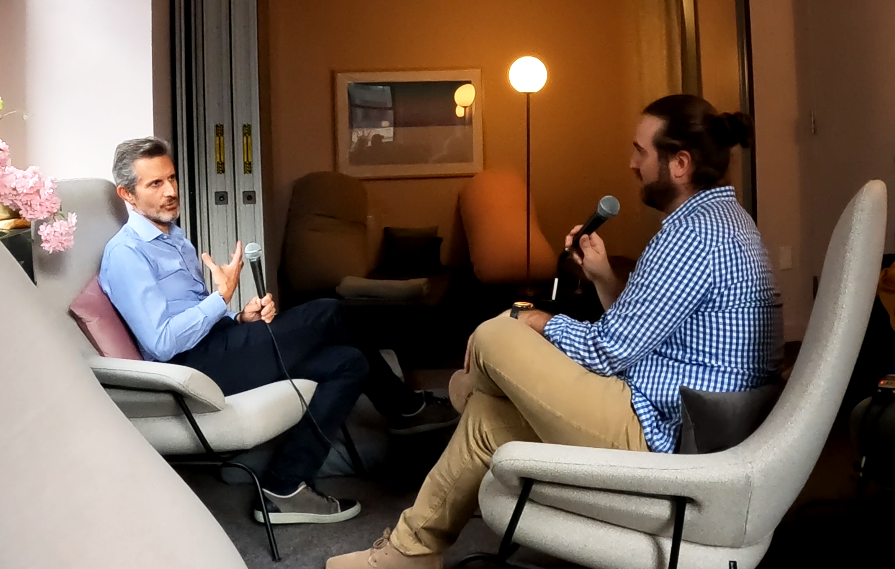







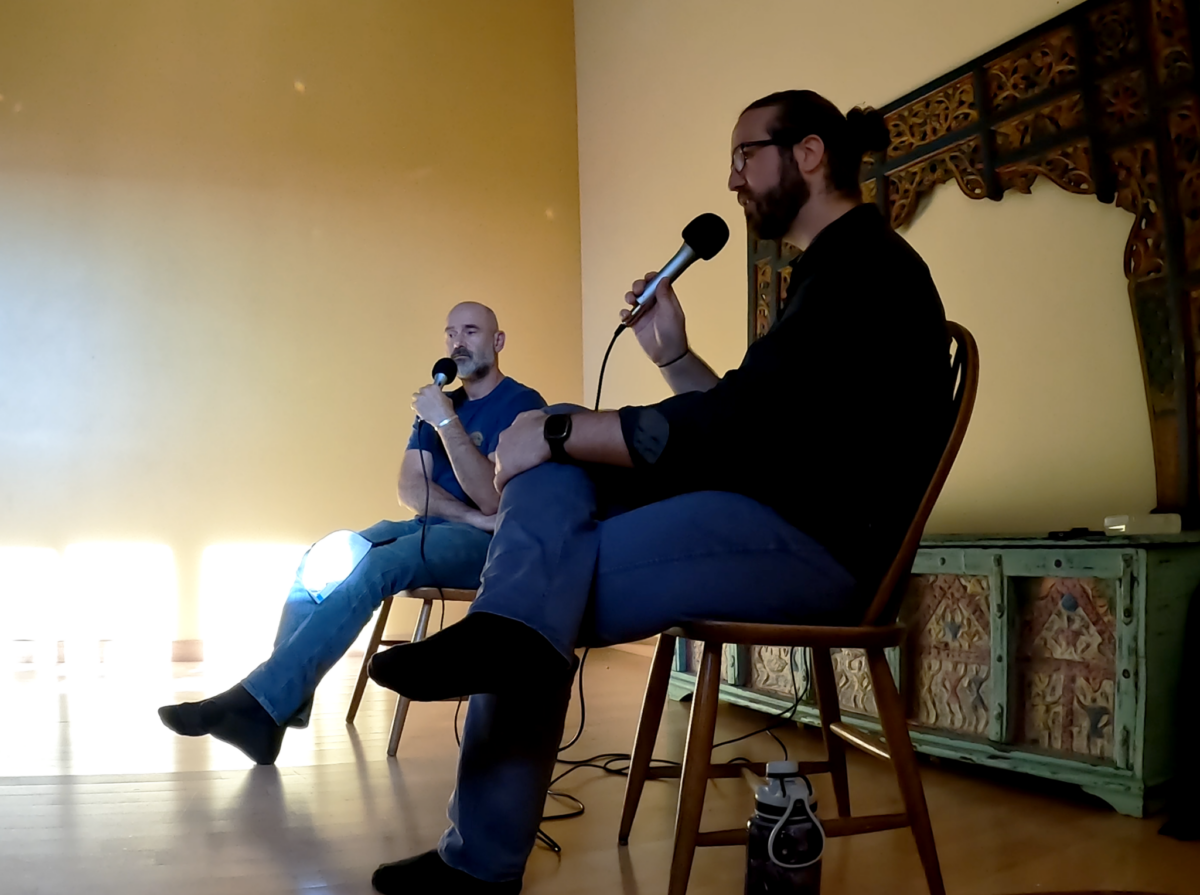




 Melissa Lavasani is Founder and Executive Director of Washington, DC-based
 Lauren Katalinich oversees all things membership and marketing at the
  Anya Oleksiuk is a documentary filmmaker, host, and educator. She is a Co-Director of the
 Sisi Li, Ph.D. is a Data Architect and leads the data archival team at
 Christopher Dawson is the Co-Founder and CEO of
  Andrew Galloway is the Co-Founder and COO of
 David Nutt
 Miriam Volat, MS, serves as Co-Director with Cody Swift of the
  T. Cody Swift, MFT is a philanthropist, qualitative researcher, and licensed psychotherapist. Through the
 James Lanthier
 Julie Zukof is the creator of
  Dr. Michelle Weiner is double board-certified in Interventional Pain Medicine and Physical Medicine and Rehabilitation, and a partner in
 Dick Simon
 Scott has been a student of consciousness since his honor’s thesis on that topic at the University of Arizona in the 1970s. Following medical school, MDMA-assisted psychotherapy became a facet of his practice before this medicine was scheduled in 1985. He then completed a Psychiatry residency at a Columbia program in New York. Scott studied cross-cultural psychiatry and completed a child/adolescent psychiatry fellowship at the University of New Mexico. Scott has published four books on holistic and integrative mental health including the first textbook for this field in 2001. He founded
 Courtney Watson is a Licensed Marriage and Family Therapist and AASECT Certified Sex therapist. She is the owner of