Download In this episode, Kyle talks with Leia Friedman, co-founder of the Boston Entheogenic Network (BEN) and also known as “The Psychedologist.” Kyle recently was invited to facilitate an “Introduction to Transpersonal Breathwork” workshop for BEN. Joe also was in town for the weekend and presented a talk about “Breathwork, Psychedelics, and Ecological Collapse.” It was a great psychedelic weekend in Massachusetts.
After the workshop, Kyle had the opportunity to sit down and talk with Leia about her interests in the psychedelic field, feminism and eco-feminism, and how she got involved with starting a psychedelic group in Boston. She provides some helpful tips and advice for creating/starting your own local group.
Tips for starting your own psychedelic group:
First, what is the point of the group?
What is the purpose or mission?
Learn about your local laws and the legal risks
Do not condone or facilitate illegal activity
Go slow
Find the others to help you out
Check in with yourself and the other members of the group
Protect your members
Start online to gain awareness and then start an in-person meet up
Sign up below to get your FREE download “How to Create Your Own Psychedelic Group”
We hope you enjoy this episode and let us know what you think!
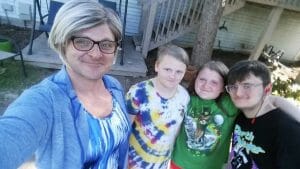
Kyle and Leia holding space for the breathwork circleBreathwork on the river.Joe and Kyle presenting, “Breathwork, Psychedelics, and Ecological Collapse” in Lowell, MA, USA
Leia Friedman is a professor, clinician, writer and the cofounder of Boston Entheogenic Network. Her present focus is an amalgamation of psychology, ecology, and experiences of altered consciousness as tools for deeper self-understanding. She is also involved in local social and climate justice activism, alphabet soup, and body positivity.
Download In this episode, Kyle talks with Allison Pelissier, of The Traveling Light Machine, about the Lucia N°03 Hypnagogic Light Machine. It turns out it is very powerful and induces powerful visions in some.
During Kyle’s recent trip to Vermont, he met a fellow fan of the podcast, Grant, at the recent Dreamshadow Holotropic Breathwork retreat. While meeting Grant felt like a synchronicity, it led Kyle to experience the Lucia N°03 with Allison. Kyle shares his experience with the hypnagogic light machine in this episode while Allison discusses the background and development of this this fascinating piece of technology. Be sure to continue below to learn more about the Lucia N°03, get show notes/links, and to find out more about Allison’s work.
Consider leaving us a comment to let us know what you think about the episode.
About The Lucia N°03 Hypnagogic Light Machine
The Lucia N°03 was developed in Austria by clinical psychologist Dr. EngelbertWinkler and medical neurologist Dr. Dirk Proeckl.
It is important to note that the Lucia N°03 is not a medical device. Rather it is a therapeutic light meditation. That is, it helps light travelers achieve a state of effortless meditation. It is not in competition with, nor a replacement for pharmaceutical drugs, clinical therapy, or any other medical intervention. It is a journey into consciousness.
The Lucia N°03 gently entrains the brain, stimulates the pineal gland and opens up a beautiful space for visionary exploration.
The Lucia N°03 helps clear the mind and allow even beginning meditators to reach a space of peace quickly. It is not a replacement for a meditation practice but quite the opposite – it encourages people to meditate by realizing how powerful the practice can be and gives them the confidence (and roadmap) to get there on their own. As the Lucia is both a stimulation (through light), and a relaxation (through brain entrainment), it helps the individual learn to let go in stressful situations, rather than resist and make things even more difficult. The Lucia N°03 also uses a wide spectrum of light which has been reported to have a great impact for people with both seasonal affective disorder and other types of depression.
The Lucia light experience is different for each person, as it works with each person’s individual system and has a balancing effect. Everyone feels more clear and centered after an experience, while some people feel more energized or deeply relaxed.
Dedicated to assisting in the expansion of consciousness of humanity, Allison is a lightworker that is both a clairvoyant and ambassador for the Lucia N°03 light experience. Allison has a MA in International Education and Development and a BA in Political Economics. She also holds a 200 hr Yoga Teaching Certification, a Children’s Yoga Teaching Certification and has worked across the world in many different capacities as an academic teacher, textbook author, meditation and yoga teacher, project manager and developer and light ambassador.
The Lucia N°03 light experience peaked Allison’s interest after her first experience at Light Eye Mind Gallery in London, UK. She traveled deeply into her own mind and memories and emerged from the experience feeling like she had come back to herself in a way she would never have suspected could be possible. Her experience helped her shift from a state of depression and PTSD to an ability to sleep through the night and wake up with a sense of joy again.
Feeling a strong calling to work with the Lucia N°03, Allison purchased her own lamp and started touring around the US with Traveling Light Machine project, aiming to bring the experience to wherever the light was called. The most moving part of the experience for Allison is that as a light ambassador she holds space for people to have their own experiences. She strongly believes that we cannot help anyone, but rather hold space for them to see and love themselves.
Currently Allison travels around the US and the world with her partner in business and love, Zachary Noel, sharing the Lucia N°03 light experience.
The MAPS Psychedelic Science 2017 conference was the largest psychedelic conference in history to date. It is an exciting time to be part of the movement and to get involved in the field. There is a push to legalize psychedelics for therapy and to recognize these substances as medicine. While the field needs the science and research to legitimize psychedelics as medicines to treat various disorders, but the change in status does not mean access for everyone. This is not to discourage the research or science, we acknowledge that it is important, but rather it is to help educate the public that the change in status does not mean psychedelics will be legal for recreational use.
There may be a misconception floating around that once MDMA or psilocybin becomes medicine there will be greater access. This is not entirely true according to Jag Davies. The criminalization of psychedelic substances will continue despite the health and clinical applications. Jag and the DPA strive to help move drug policy away from a criminalization approach and help to move it towards a more health-based approach.
In this episode, we talk with Jag Davies, Communication Strategy Director of the Drug Policy Alliance (DPA). Jag provides us with his insights about the current state of psychedelics, psychedelic research, and other drug laws. Jag also talks about his work with the DPA and what the DPA’s mission is. We discuss drug policy, advocacy, harm reduction, scheduling vs penalty, racism, and so much more.
One of the best things to do to get involved is to help spread the word about the healing potential of psychedelic medicines and substances. The policy around these substances are constantly changing and new issues are always arising. We talk a lot about privilege in this episode, and how being in a privileged position makes it easier to speak about experiences with psychedelics or other substances.
Another great way to get involved is connecting with the Drug Policy Alliance. There is a wonderful drug reform conference coming up and that is also a great way to get your foot in the door with this work. The Reform Conference is happening in Atlanta, Georgia, from October 11th-14th. If you do not think you can attend, try applying for the scholarship, which ends June 9th.
About the Drug Policy Alliance
The Drug Policy Alliance (DPA) is the nation’s leading organization promoting drug policies that are grounded in science, compassion, health and human rights.
Our supporters are individuals who believe the war on drugs is doing more harm than good. Together we advance policies that reduce the harms of both drug use and drug prohibition, and seek solutions that promote safety while upholding the sovereignty of individuals over their own minds and bodies. We work to ensure that our nation’s drug policies no longer arrest, incarcerate, disenfranchise and otherwise harm millions – particularly young people and people of color who are disproportionately affected by the war on drugs.
Mission and Vision of the Drug Policy Alliance
The Drug Policy Allianceenvisions a just society in which the use and regulation of drugs are grounded in science, compassion, health and human rights, in which people are no longer punished for what they put into their own bodies but only for crimes committed against others, and in which the fears, prejudices and punitive prohibitions of today are no more.
Our mission is to advance those policies and attitudes that best reduce the harms of both drug use and drug prohibition, and to promote the sovereignty of individuals over their minds and bodies.
As director of communications strategy, Jag Davies works with communications, program, development and senior management staff to oversee production of all DPA publications and to facilitate best practices in the implementation of the organization’s messaging and brand identity. Davies manages a team that includes DPA’s research coordinator and communications coordinator, as well as external consultant relationships with writers, designers, and multimedia content producers.
Davies also plays a key role in DPA’s media work. He is regularly quoted in a wide range of media outlets and his writings have appeared in the New York Times, Washington Post, BBC.com, CNN.com, and dozens of regional and online publications.
Davies has more than a decade of professional experience working to establish drug policies grounded in science, compassion, health and human rights. Before joining the organization, he served as director of communications for MAPS, a nonprofit pharmaceutical company conducting clinical trials aimed at developing marijuana and certain psychedelic drugs into federally-approved prescription medicines. Davies also previously served as policy researcher for the American Civil Liberties Union (ACLU) Drug Law Reform Project (now known as the Criminal Law Reform Project), where he coordinated local, state, federal, and international efforts to end punitive drug policies that cause the widespread violation of constitutional and human rights.
How can we use our mind, intellect, or heart to diffuse or address the origin of our problems that arise from the same place?
Iboga, Ayahuasca, Kambo, and 5-MeO-DMT have wandered from their origins and into our western culture during an ominous time for humanity – a time that is naturally calling for healing and metamorphosis. At Oka Center, it is our privilege to work with and integrate these medicines with their traditional uses into our lives and the lives of all who come here. Each guest brings benefits to all who are involved.
For us, the traditional use of entheogens is just as important (or more) as the recently developed ideology and protocols created by western doctors, scholars, and laypeople. Westerners have only recently started using these medicines significantly within the last 50 – 60 years. Traditional indigenous use is centuries old – perhaps older according to many – and comprises the vast majority of experience with these powerful medicines, not to mention their original discovery. Generations of use has naturally given rise to refined protocols, beautifully disarming spirituality, sublime music, and just the right amount of humor. We include standardized western medical guidelines to ensure safety which is imperative, but not intrusive. Particularly with ibogaine, it is of utmost importance to have medical prescreening, monitoring, and supervision before, during, and after the treatment.
We are grateful for the research and empirical data that has helped to assess the risks and benefits of Ibogaine and other entheogens, particularly from Ken Alper and the late Howard Lotsof. At the same time, the new trend in attempting to fit entheogens into the framework of the western medical schema is questionable.
Since there are enough anecdotal reports that suggest so many applications and benefits of these entheogens, it makes sense to try and “legitimize” them in order to make them available in our healthcare system. However, we need an honest review of our healthcare industry – especially within the mental health sector – to gauge how genuine a reference point our system is for validating or practicing any medicine or modality, especially for plant-based medicine which is off limits for patenting.
The enormous profit margins of the healthcare industry would be significantly reduced if lifelong prescription medications were no longer considered final solutions to common mental “disorders.” You need only do minimal research on the ruthless financial methods and ethics of the healthcare industry to come to some disturbing conclusions. In our experience, many people coming to Oka Center have reached a point at which their ongoing use of prescribed medications has provided no change or only damaged their situation further.
For those of you who want to get off hard drugs and have heard about the medicinal value of plant medicine like ibogaine, you might not see the relevance of its traditional use. Perhaps you have come to ibogaine because of its ability to alleviate opiate withdrawal or interrupt addiction, or your friend of a friend got off dope with ibogaine and it was miraculous.
While we do not force our ceremonially based protocol on anyone, almost everyone – including those coming to get off hard drugs – respond very positively to it. In the end, it is embraced and appreciated as an important element of the healing process.
Ruptured spirituality is common to everyone that comes to Oka Center – drug use or not: We are broken, tired, angry, bored, confused, stressed, frustrated, and oftentimes infinitely sad. Reflection, prayer, song, and dance may seem frivolous at first, but these things are much needed in our lives and are important in respecting the medicine and for laying the groundwork for your experience.
In many ways, our western culture has separated itself from nature. As individuals, we have lost an innate intelligence or awareness because of it. What might have been awe and wonder has been replaced with sarcasm and cynicism. Although our advancements in technology and industry have paved the way for practical efficiency and comfort, the downside is that it is getting increasingly easier to forget where we come from and where we are going. It is normal for us to feel alienated and unhappy in such a competitive, indifferent society built with concrete, computer chips, and suffocating ethical standards and expectations. Hard drug use is an appropriate response as any attempt to get through each day with a smile on your face.
Whether it is drugs, alcohol, gambling, depression, anxiety, exhaustion, or whatever else we have adopted or suffered from in the attempt to get by, somewhere along the line we realize discomfort, harm, and despair. Naturally, this is when we look for a way out of these negative cycles.
Beyond a certain point, to truly view and examine ourselves deeply and objectively in waking life can be almost impossible. The attempt at doing so most often ends up being more of the same self-deception. How can we use our mind, intellect, or heart to diffuse or address the origin of our problems that arise from the same place?
This is one of the main reasons why we advocate for the use of entheogens. The incessant internal rapport we have with ourselves never allows us to look beneath the masks we have created which project the flawless versions of ourselves we present to the world. Entheogens have a way of blasting our masquerade into pieces. With any luck, we are left with a beautiful nightmare that shines a light on our humanness: our fallibility, our fragility, our innate goodness, and our capacity for softness and empathy toward others because at the very root, we all share the same capacity for madness and beauty.
About the Author
David Stetson‘s passion has been Bwiti since his Iboga initiation in 2007. David is extensively well-traveled in Gabon, Africa where he is known as Okukwe. During his time in Gabon he learned Bwiti traditions, music, and ceremonial practices and is proficient on both the moungongo (musical bow) and ngombi (harp) instruments. David views Bwiti and Ibogaine as a lifeway that champions communion with others while also empowering the individual. His approach to working and healing with others starts with the awareness of alienation and isolation as common and appropriate responses to our western culture, and is based in non-judgement. Learn more about Oka Center here and check out David’s podcast interview with us here.
In this episode, Kyle and Joe talk with Julie Megler from Entheogenic Research, Integration, and Education (ERIE) about psychedelics and integration. We learn about the work and mission of ERIE, and how Julie got involved/interested in psychedelics. Integration is a growing concern in the psychedelic world. We continue the conversation by having Julie on the show to learn more about her work. Leave us a comment below and let us know what you think!
ERIE is a 501(c)(3) organization dedicated to the sharing of entheogenic and transpersonal knowledge in a non-hierarchical, community based format, located in the San Francisco Bay Area.
We offer a platform for entheogenic research, integration and education. ERIE is not only a hub of integration information for entheogenic and transpersonal experiences, we also host peer integration circles to facilitate meaning-making and community building. We host monthly educational events including symposiums, forums, and conferences on varied topics surrounding entheogenic research and activism.
We are dedicated to supporting cognitive liberty by offering a learning environment to support grassroots education and outreach on the topics of integration and entheogenic potentials.
Mission
The Entheogenic Research, Integration, and Education (ERIE) mission:
1) Review and conduct research on the use of traditional plant medicines, and their modern analogs, for creativity, healing, personal growth, and spiritual exploration
2) Develop integration methods that combine new research with existing, tested practices to help people incorporate extraordinary experiences into their lives
3) Articulate a new educational paradigm that honors and draws upon the vast Indigenous knowledge of plant and fungi kingdoms, then envisions new applications of it within contemporary Western contexts
4) Create a forum for the responsible discussion of these topics.
*Psychiatric Nurse Practitioner * Trained in Somatic Experiencing * Shipibo/Vegetalista Dieta Experience*
Julie is a board certified nurse practitioner in psychiatry and family medicine. She received her Master’s of Science in Nursing from the University of Miami, Florida and post master’s certificate in psychiatry at the University of California-San Francisco. Julie maintains licenses in family medicine and psychiatry in an effort to close the gap between medical and psychiatric care, incorporating the mind/body connection for most effective treatment. She currently is in private practice in the San Francisco/Bay Area.
Her practice focuses on integrative mental health services for emotional and physical well being, as well as integration of non-ordinary states of consciousness. In addition to her clinical work, Julie is on the board of directors of ERIE (Entheogenic Research, Integration, and Education). She has presented on the topics of psychedelic risk reduction, integration, and therapeutic applications of ayahuasca at the Psychedelic Science Conference 2013 & 2017, The Women’s Visionary Congress, Detroit’s First Entheogenic Conference, and the Visionary Convergence 2015.
She has also co-authored chapters in the books Manifesting Minds and The Therapeutic Uses of Ayahuasca. As an experienced clinician, and activist for the psychedelic movement, Julie is dedicated to educating the community about safety and the therapeutic benefits of entheogens. Her particular emphasis on integration assists individuals to develop practices that bring insights from entheogenic work to daily life. You can learn more about Julie’s work at erievision.org & mindfulnp.com.
Julie has done many ayahuasca sessions and other plant work as well. This along with her medical provider practice as a nurse practitioner in the San Francisco Bay Area. She is able to speak about psychedelic integration from a unique perspective with her background. We think you will really enjoy this episode and please let us know what you think.
As psychedelics and plant medicines continue to gain mainstream attention, more and more people are becoming interested in having their own experience. While many people travel outside their home country to experience ayahuasca legally in a retreat setting, many people are participating in ceremonies in the “underground” all over the world. Attending a festival, large or small, is also a very common place for people to experiment with psychedelic substances. This new wave of psychedelic use is almost like a new rites of passage for many. Two parts of any rites of passage is the preparation and integration of the experience. Sherree Malcolm Godasi can and does help.
We talk with Sherree Malcolm Godasi about her work with psychedelic preparation and integration. As she mentions on her site, Psychedelic Integration Coach:
Preparation for ceremony and ongoing, post-ceremony integration of the lessons shown by Ayahuasca are all about developing the physiological and psychological flexibility that would enable the drinker to surrender to her awesome, wise spirit. It is also about harnessing the time, effort and resources put into ceremony work to ensure that the healing is anchored and cultivated in the default life. The diligent preparation stage aims to cleanse the mind, body and energetic field and opens the drinker to receive, and is most beneficial when started a month in advance.
Following the ceremony, as the lessons from La Medicina – THE Medicine – will keep unfolding for weeks, months and even years later, a mindful integration stage of minimum 3 months is recommended. This intentional awareness surrounding the experience allows you to successfully retain the positively life-changing connection with Mother Ayahuasca long after you exit the jungle and return to your home environment – this is how miracles turn into your reality.
What type of services does Sherree Offer?
Information addressing your concerns about the use of psychedelic substances/entheogens based on contemporary scientific research, ancient medicine teachings, my academic studies, professional training and personal experience
Support and guidance to those who are experiencing challenging and adverse effects related to psychedelic substances
Support and guidance to those who are undergoing a spiritual emergence or spiritual emergency, due to the use of psychedelic substances or otherwise
Educational tools to individuals who wish to learn how to support others who have experienced/are experiencing altered states.
What type of services does Sherree NOT offer?
Plant medicines or psychedelic substances of any kind, or advice on where/how to acquire them
Psychedelic therapy sessions, guided medicine journeys, or ceremonies involving plant medicines or psychedelic substances
References to facilitators or centers who provide psychedelics/medicine sessions
Recommendations for using any plant medicines/psychedelic substances
Psychotherapy or other clinical mental health services, medical services, evaluations or diagnosis, or legal services.
Sherree Malcolm Godasi, “The Psychedelic Integration Coach”, lends a passionate philosophy about mindful integration of the psychedelic experience as an enriching self-care practice and a harm reduction technique. She holds a Master’s in psychology specializing in Psychedelic Integration Therapy with a focus on spiritual/depth theories, is a certified senior Psychedelic Integration and Addiction Recovery Coach at Being True To You and is trained in Spiritual Emergence. She also co-leads ayahuasca healing retreats to Peru, incorporating a preparation and post-retreat integration program. Her approach draws from transpersonal, mindfulness and shamanic healing modalities to fuse ancient wisdom with modern & practical practices. At this psychedelic renaissance she hopes to educate towards a responsible engagement with entheogens to cultivate a connection with our inner healer and live that psychedelic feeling.
David Stetson – Oka Center Ibogaine – Ibogaine Therapy
IBOGAINE and AYAHUASCA in the MAYAN YUCATÁN
Kyle and Joe discuss iboga and ibogaine with David Stetson who runs Oka Ibogaine Center in the Yucatan Peninsula of Mexico. David was a wonderful guest on the show and we had a lovely talk that was very broad. We discussed the ecological issues surrounding iboga and ibogaine therapy, as well as the differences between the more traditional model and the clinical model of administering these medicines. Oka has recently started offering ayahuasca retreats as well.
We also get to talk about the idea of psychedelic aftercare facilities and they are substantial importance for people requiring serious psychedelic work to heal. When healing, going back to your old life is often not the best decision. The inpatient rehab model is something that we should really look at. The Holistic House in the Las Vegas area is one successful model and we are very excited about it.
We hope you enjoy the episode and reach out if you have any questions or comments.
Our place is a marriage of two different worlds: While we respect and utilize western clinical protocols for safety and detox success, we love and live by our numerous and ongoing experiences with the traditional use of these master plants in Africa and Peru.
David’s passion has been Bwiti since his Iboga initiation in 2007. It’s his privilege to be sharing this medicine with people in need.
David is extensively well-traveled in Gabon, Africa where he is known as Okukwe. During his time in Gabon he learned Bwiti traditions, music, and ceremonial practices and is proficient on both the moungongo (musical bow) and ngombi (harp) instruments.
David views Bwiti and Ibogaine as a lifeway that champions communion with others while also empowering the individual. His approach to working and healing with others starts with the awareness of alienation and isolation as common and appropriate responses to our western culture, and is based in nonjudgement.
We discuss our recent trip to MAPS‘s Psychedelic Science 2017. It was incredibly fun and we loved being able to connect with so many with this shared interest. Many attendees are actively working to progress the case of psychedelic substances.
This was the largest psychedelic conference ever in recorded history attended by over 3000 people from 42 countries. There were discussions around ayahuasca, peyote, DMT, salvia, MDMA and many other substances. Some of the most interesting discussions were around ibogaine treating people with addiction. Turns out there are far more things that can be treated with ibogaine than simply opiate addiction.
I was very excited to discuss drug testing and harm reduction with the people from DanceSafe. We were also able to check out some really interesting technology – lights and music – that triggered some of the most intense visuals of my life. Illuminated SF put that demonstration together. It is highly recommend.
The experience of Psychedelic Science 17 was so incredible and encouraging that I cannot wait to go to the next one. Being around the movement was truly humbling and gratifying. Connecting with people from as far as Brussels, Poland and Hong Kong gave extra context to how far and wide this movement is spreading and that there is real depth in the movement.
We hope you enjoy the episode. If you want to connect with us please feel free to reach out using the contact page. If you want to stay in touch with us please join our mailing list and we will send some interesting links to you on a semi regular basis.
MAPS made available a tremendous amount of the talks for free on youtube. You should spend some time digging through the talks for things you may find very interesting.
Download Peter is a psychedelic philosopher focusing on panpsychism, psychedelics, Whitehead, Nietzsche and some other heavy weights. We discuss Peter’s psychedelic philosophy and influences from psychedelic liberty cap mushrooms found in a field in England, his influence on the famous comic author Warren Ellis, his essay Neo-Nihilism, transhumanism and much more. We really look forward to having Peter on the show again in the future!
‘The terms morality, logic, religion, art, have each of them been claimed as exhausting the whole meaning of importance. Each of them denotes a subordinate species. But the genus stretches beyond any finite group of species.’ (MT)
‘Philosophy is an attempt to express the infinity of the universe in terms of the limitations of language.’ (Autobiog.)
‘The doctrines which best repay critical examination are those which for the longest period have remained unquestioned.’ (MT)
‘[I]n the development of intelligence there is a great principle which is often forgotten. In order to acquire learning, we must first shake ourselves free of it. We must grasp the topic in the rough, before we smooth it out and shape it.’ (MT)
Peter Sjöstedt-H is an Anglo-Scandinavian philosopher who specialises in the thought of Schopenhauer, Nietzsche, and Whitehead within the fields of Philosophy of Mind and Metaphysics – especially with regard to panpsychism and altered states of sentience. Peter received a Bachelor’s degree in Philosophy and a Master’s degree in Continental Philosophy from the University of Warwick, where he was awarded a first-class distinction for his dissertation on Kant and Schelling in relation to ‘intellectual intuition’. He subsequently became a Philosophy Lecturer in London for six years but is now engaged in his PhD at Exeter University where he also teaches philosophy modules and writing skills. Peter is the author of Noumenautics and an inspiration behind the new inhuman philosopher Marvel Superhero, Karnak.
In the words of futurist, philosopher and pop star Alexander Bard: ‘One of our favourite contemporary philosophers, Peter Sjöstedt-H…think a psychedelic Nietzsche’.
Kyle and Joe recently chatted with a second therapist who works underground. Trained as a traditional therapist, this therapist integrates MDMA work into her practice with selective clients. She has been mentored by a teacher who has done this work for a very long period of time. She has a community of therapists around her providing support.
MDMA is not a typical psychedelic drug but it is the focus of most of MAPS’s efforts in the Psychedelic Psychotherapy world. Psychedelic therapy is THE frontier of psychology. Therapists like Selina are on the vanguard of these therapies. By working underground they have great risks (legal) and advantages (huge amounts of healing for their patients).
Why are we waiting? We are in a mental health crisis, far too many people are suffering and committing suicide. If one compares this to any recent “outbreak” the numbers certainly make sense to fast track MDMA as a viable therapy for PTSD and other disorders.
We want to keep interviewing people doing underground work, so please send them our way for interviews. We are going to be able to provide anonymity for those that want it, so feel free to ask about this if you want it.
Enjoy!!
MDMA Therapist – Show Notes
Dosage for sessions
135-140 mg starting dose
80 mg booster (optional)
Psilocybin dosing – Depends on what type of experience a person is looking for
We will not provide any information about this therapist. Please do not email/contact us about therapy sessions or gaining information about the therapist. These interviews are anonymous and private. We can provide general advice. We will not provide any information about this or other anonymous guests of the show. Thanks for understanding!
“Can I use my mind as a tool to help me open a closed heart?”
We talked to a 79-year-old underground MDMA psychotherapist. Remaining anonymous, due to the illegality of this work, he shares some of his greatest insights from his many years of experience helping people with psychedelic therapy. Succeeding a twenty-year hiatus from MDMA therapy, he continues to provide this healing psychedelic work to individuals today.
The following is an excerpt from our interview. Check out the full audio interview here.
Edited by: Alyssa Gursky
MDMA – Confessions of an Underground Therapist
Psychedelics Today: How did you get exposed to the literature and science around psychedelics in those early days?
Anonymous: It wasn’t the literature. In 1958, when I was 20 years old, someone got a hold of some acid. I was living in Boston and a friend of mine said,
“Would you like to try this new drug?”
I was naïve and I didn’t know. The only drug I’d ever consumed was alcohol. I said, “It is habit-forming?” They said, “No.” I said, “Alright. I’ll try it.”
I told my friend I was going to try it that day. The next day, when I met him on the street, he asks, “How was it?” I said, “Considerably more interesting than the sum total of my life up until this point.”
Psychedelics Today: What has surprised you the most about working with people at MDMA? Do you see rapid transformations? Is it kind of a catalyst for a longer set of transformations or transformational process? How do you think about it?
Anonymous: In order to answer that, I have to emphasize that people are in different stages of understanding and growth in their own level of self-knowledge. Also, people have set a lot of defenses against change in the conscious and unconscious mind.
I especially like looking at relationships; relationship to one’s self, relationship to nature and something beyond one’s self and relationship to one’s friends, to one’s lover, or one’s past lovers, and to the people that push your buttons. Looking at the difference between the way that the relationship feels normally and the way you feel towards the person when your heart is more open because of the medicine is the greatest benefit, in my eyes. Looking at those relationships, people sometimes get glimpses of what it could feel like if their hearts were open instead of closed. Sometimes, they even realize that they do not have any good reason to keep it closed.
Psychedelics Today: It’s like one of its better effects is just kind of a reorientation towards daily life. No need to be closed off, no need to be fearful.
Anonymous: Of course. That doesn’t mean they don’t go back to being have been closed off and fearful, but when you go back to the old place because you’ve tasted the new place, the old place is never quite the same.
Psychedelics Today: I am am curious if you could share any stories of people’s healing, anonymized, of course.
Anonymous: One comes to mind, a man who was brought up in a minority community out West and was molested by a man who was not part of the community. The man told him at the end, “You better not tell anyone about this or else … ” and he threatened him with something pretty terrible. This young boy did tell. He told his people in his community. They found the man and beat him until he was at the ends of his life. My client told me that he felt really guilty for what had happened, even though it’s not rational to feel guilty. He felt really guilty and the guilt spilled over until many areas of his life and was the sort of central pillar of his psychology, this feeling of being bad, unworthy of love as a result of that.
When he took the medicine, he told me about his situation. I just asked him, “Pretend that it is your son who gets molested and is told that he mustn’t tell and then, he told anyway; how would you feel towards him?” He had a moment’s pause and said, “I will just love him.” Then, he made the connection himself and there was a visible, immediate change that came over his facial expression and looked like a different person. He dropped the majority of his guilt. It stayed with him because I saw him the next day and he still looked much more relaxed, whole, and happy. He said that there was a fundamental shift in him as a result that couldn’t just end when the effects of the medicine wore off.
Relating to my own growth, I found that emotional maturity and self exploration are key portions of my journey. I found that every single relational difficulty that I found in myself, if I looked at it it deep enough, brought me to the same lesson- that I wasn’t being kind to myself. When I’m feeling good about myself, I just don’t have relational difficulties. Of course, most of us have a ways to go before we can feel good about ourselves. Another thing, I realized, is the hurt doesn’t come from rejection, it comes from my taking offense at rejection. If I learn not to take offense, I’ll get hurt a lot less. That would just be an example of a much bigger principle.
Psychedelics Today: I really appreciate your focus on the relationship aspect of healing work. My teacher and I were discussing psychedelic use in traditional cultures. To the Native Americans, Peyote usage is all about relationship; a relationship to the medicine, a relationship to the universe. It doesn’t seem like that’s always the case.
When we were asking another teacher about like, “How would you pitch breathwork to somebody that’s interested?” His first response was, “Are you curious? Are you curious about your relationship to the world?” I think that’s kind of like the cornerstone of self-discovery. It’s about learning about your relationship to yourself, learning about your relationship to others, learning about your relationship to the universe and how you interact with it.
Anonymous: One more side on the matter is that I look at the spiritual literature of the world. I noticed that there’s very little believable and useful literature about intimate partnerships between two equal people in the spiritual literature. Most spiritual literature just says, “Be loving. Be kind. Be forgiving.” That’s very nice, but they don’t talk about how do you do that when your heart is closed?
I think the deepest question when one is in relationship is, am I safe? Is it safe for me to love? Do I need to close my heart in order to stay safe? I believe the answer to that question is always no, but we often think it’s yes.
The MDMA affected my work by the nature of the changes it brought about in me. We saw things about opening… I really saw that the central issue for most people is very simply put, the need to open the closed heart. I look at everything in the world that I found distasteful; war and violence, starvation and hunger, economic inequality, environmental disaster, the stuff that goes on in the homes, and every single thing seemed like it wouldn’t take place if they were loved.
It seemed like the same factor that caused disharmony in the home is what caused war among nations, you know, like “as above, so below.” It felt like there’s this one change needed in the human consciousness which could be summarized by the opening of the closed heart, and that became my biggest interest. Can I use my mind as a tool to help me open the closed heart?
Psychedelics Today: Looking back at all these years of doing your own self-exploration and providing a space for people to do their own exploration and healing, is there a piece of advice that you have gathered and would like to pass on? You must have seen a lot and been through a lot. To us, you are this elder passing some serious wisdom on. I’m curious if you have any deep insights.
Anonymous: Boy! From what I’ve experienced, I can say that most of the time, people start from an assumption that the world is unsafe. In order to make it safe, they attempt to control people, events, and circumstances. If you start with “I’m not safe,” then the only thing I’ll ever arrive at is, “I’m still not safe.” We’re all looking for a feeling of deep, deep safety. I think safety is like love. The only safety worth anything is unconditional safety. A safety that doesn’t depend on circumstances is the most valuable because circumstances are out of our control. I think that the piece of advice would be — consider the possibility that the world is safe. Start with that and see where that takes you.
Psychedelics Today: Thank you for that. That’s a really, really great piece of insight.
MDMA is hugely beneficial for some (most?) people, and it makes sense to optimize for the best outcome. People can now try this on their own. It is easier and safer than ever. With all of the new research being published, this is happening with increasing frequency. Interested in learning about integration and self-care? Be sure to check out our “Psychedelic Integration & Self-Care” course! Free course preview in the sign up link below. Learn about MDMA and many other drugs in the course we created for you and your friends.
Download Kevin is a science writer, graduate student researcher and aspiring clinician, harm reduction educator and substance use recovery advocate. Kyle and Joe talk to him about loads of topics including early Iboga therapies, an early Boston Ibogaine Conference, his approach to journalism and his future aspirations to do future clinical work and research.
Kevin graduated from Northeastern University in 2013 with a degree in neuroscience. As an undergraduate he completed an internship as a research assistant at Harvard Medical School working on the Phase 2 dose-response study investigating the therapeutic potential of MDMA-assisted psychotherapy for treatment of cancer related anxiety. Kevin was also one of the founders of the Northeastern chapter of Students for Sensible Drug Policy, and in 2009 the group hosted and co-sponsored the Boston Ibogaine Forum. He now lives in New York City where he is enrolled in a clinical psychology graduate program at The New School for Social Research and is pursuing a doctoral degree. Kevin has worked part-time for the Drug Policy Alliance, and also works as a writer covering topics related to psychedelic therapy, addiction, and mental health advocacy. His recent contributions include: New Scientist, Reason.com, Reset.me, Reality Sandwich, and VICE.com.
This week we talk to Joe and Kyle from Psychedelics Today, a regular podcast that explores important events in the field of psychedelics. We hear about how Joe and Kyle met, and about their unique personal experiences with psychedelics. We end up pretty much covering it all – life, death, rebirth and (of course), holotropic breathwork.
Joe and Kyle met through a shared interest in holotropic breathwork – a technique for transpersonal development created by LSD-psychotherapist Stanislav Grof. Joe describes holotropic breathwork as a method of intense, focussed breathing, in a group setting, aided by loud, evocative music. It can often produce a psychedelic state that is used for healing or personal development – and many describe it as being similar to psychedelic therapy.
Now experienced holotropic practitioners, Joe and Kyle also run the Psychedelics Today podcast in an effort to provide a resource for anyone interested in any aspect of the psychedelic world – including holotropic breathwork.
TBC 011: Psychedelics, Healing, and Transformation
Can psychedelic drugs, and breathing techniques that achieve similar states, help heal our individual and collective emotional pain? Can they help us transform our society?
Here’s what we talk about in this episode’s delicious stuffing:
The Multidisciplinary Assoc. for Psychedelic Studies (MAPS) and their sponsored, peer-reviewed research
How the War on Drugs delayed this research by decades
Kyle’s “near death” experience and his path; Joe’s path through philosophy, ayahuasca, and breathwork
Holotropic Breathwork, a non-substance alternative
Integration—a key to these therapeutic uses of psychedelics
The likeness of these journeys to mythic ones
The role of elders
Are we entering a psychedelic revolution?
Inventing new “rites of passage” (beyond getting a driver’s license and being able to buy booze.)
Download
Psymposia’s MC and Host, Lex Pelger, joins us again on Psychedelics Today to talk about Psymposia’s upcoming Blue Dot Tour. Lex also talks about his graphic novel about cannabis, the endocannabinoid system, and the War on Weed.
Our goal is to hit blue cities in red states that serve as such pressure cookers of activism, education, and art. But also blue cities in blue states, red towns in red states, purple villages in green states, and anywhere we can find a host from Mexico to Canada.
Lex is Host of Psymposia. He’s also a drug writer and scientist based in Brooklyn.
His current project, Anandamide or: the Cannabinoid a graphic novel about cannabis (based on Moby Dick), illustrates the beauties of the endocannabinoid system (the Whale), the brutalities of the racist War on Weed (Ahab), and the staggering benefits of medical marijuana to ease the aging of our grandparents
He graduated from Boston University with a BS in Biochemistry and Molecular Biology
“Through my lens, so many problems in this world are driven by people acting from a reactionary place of fear and pain instead of from a place of compassion or love.” – Natalie Ginsberg
Joe and Kyle spoke with Natalie Ginsberg, Policy and Advocacy Manager at Multidisciplinary Association for Psychedelic Studies (MAPS). Natalie provides us with a summary on facets of the current state of global drug policy. She also discusses the role of racism and privilege in the psychedelic community in America. The following is an excerpt from our interview.
Edited by: Alyssa Gursky
Natalie: This past year, the UN General Assembly met for the first time in 20 years to revisit international drug treaties. A special session was called on the world drug problem. There were a series of different meetings. Vienna hosts something called the, Commission on Narcotic Drugs, every year. First, there is a big gathering in Vienna where reformers, non-reformers, and people working both from civil society on drug policy come to meet with delegates from around the world and educate them.
They tried to move drug policy from a criminalization approach to a more public health and harm reduction kind of approach.That was also pretty inspiring, and it was definitely a bit frustrating in terms of progress.We would’ve liked the outcome document to reflect much more progressive drug policy stances, but they’re very influenced by countries like Russia and China, who are really not open to the harm reduction approaches at all.
Being there, you meet so many global representatives. For example, the so-called drug czar, but he doesn’t like that name. The National Drug Coordinator of Czech Republic, for example, is really supportive of psychedelic advocacy and was able to host a lot of more innovative, progressive events. The Colombian health minister gave a really powerful speech on the floor of the United Nations (UN), basically saying the drug war… using that Einstein quote, “The definition of insanity is doing the same thing and expecting different results.” It was really epic for the minister from Columbia to be saying that to the whole UN.
Overall, for me, what was so, so valuable was really this coming together of the international reform community. Now, I work super-closely with advocates from Afghanistan, Mexico, and Nigeria. We’re much more in the same loop of what’s going on and learning about how we’re doing work in different countries is important because the UN is a really slow body that is quite reactionary, and it’s really driven forward by individual countries’ progress. The more we can support individual countries moving forward, the better chance we have for them to kind of influence the UN later.
Joe: Are there any star countries that you noticed that are really doing stuff that might not be on the radar yet?
Natalie: Bolivia actually legalized coca leaves and has done some really important work around protecting cultural indigenous plant medicines, like promoting the traditional use of these substances.
As I mentioned, the Czech Republic is really, I’d say, the leader on all things psychedelic that are not traditional, indigenous use. I would also say that even though Portugal gets a lot of attention for decriminalizing drugs, they actually weren’t the first place to do that. The Czech Republic has been decriminalizing drugs longer than Portugal, as has Spain. Portugal received a great deal of attention because they did it in response to a big opiate crisis. There’s some incredible results to show how dramatically things have shifted, but other countries have kind of taken that stance for a while, so there isn’t as much of a shift. But, they do have really promising results from not having a crazy drug war.
Spain is also really cool because of their cannabis social clubs. I was lucky to spend a few weeks in Barcelona this fall. They have these incredible spaces that basically was like a mix between coffee shop, co-worker space, maybe a little bar worked in there — just like a community space where you can go and become a club member.
Also, keep an eye on Colombia. When Ismail and I, my colleague from the policy team, were at the UN, we spoke to the Colombian health minister about MDMA therapy. He said, “Yeah, that sounds really promising.” I’m optimistic about that. They’re kind of still in the process of reforming their drug policies, and though they haven’t made as dramatic of strides as the other countries, a lot of the ministers and people doing work in Colombia are a lot more conscious. They see all of the horrible impacts of the drug war on their country and want to improve it. I think they will continue to do this work and lead some reform in South America.
Then also of course Canada is leading the way in so many ways on the drug policy front. From legalizing cannabis to really strongly supporting harm-reduction measures in response to opiate crises. I think Canada is going to be the leader on drug policy reform, and probably on a lot of other policies as well.
Joe: What else is going on in your world? Are you projected a couple years out to be working on some other interesting projects, or what do you see happening?
Natalie: I can speak about something that’s really near to my heart. In context of MDMA-assisted psychotherapy for PTSD, we are working to develop a study that would be focused on racial trauma, or PTSD from racism. We are working on another focusing on PTSD in trans communities as well. I’m really interested in talking about how social injustice can manifest in an individual as PTSD. I think that’s going to be a really important conversation.
Anti-racist work within the psychedelic community is really important. A lot of people I know are these peace-loving, hippie types who have really beautiful ideals, but don’t necessarily know the details or the reality of certain situations. I’ve heard from so many amazing, well-intentioned people in this community, “I don’t see race. All people are the same.” I think the concept is beautiful and well-intentioned, but that’s also really ignoring the experience of people of color in this country.
Unfortunately, police officers do see race. Breaking that conversation open I think is immensely important. If we’re a community that really talks about healing and working in solidarity with other social justice movements, I think that is really essential. I have seen more and more progress on that front, but I just want to definitely flag that because I think we have a lot of room to improve in that space.
Joe: What does that look like to you? How could we heal a bit? I know the research itself is very white, really kind of bland, but in terms of diversity, how do we heal that? What do you see?
Natalie: Yes, the research is quite white, unfortunately. This study focusing on racial trauma, we’re working with Dr. Monica Williams in process, but she’s a leading researcher on PTSD from racism. Working with experts and therapists of color to do outreach to their own communities. We have to work with communities and not just go in and be like, “Why don’t you come into our space?” We have to be willing to meet people where they are and really listen, and hear what different communities need from us and how we can best work with them. I think really the best way, when you ask how can we heal, it’s really we as white, psychedelic enthusiasts need to do our own work We need to do our own reading and need to start asking questions. And not questions just of people of color, and asking them to do this emotional labor for us, but maybe other white people who are doing this work who might be able to help support this process.
It’s a really long, difficult process that requires a lot of self-reflection, which is why I think there’s so much potential in our psychedelic community.We’re a community so focused on being conscious and self-reflection. All of these things that are essential to understanding racial consciousness, and the impact of racism on white people. There’s a lot of hugely harmful impacts of racism in white people, the way that sexism deeply harms men in patriarchy. I think it’s really important that we are doing some of our own work. That is a difficult process but a healing one, The more conscious we are of things, I believe that is really a way to move towards healing.
Returning war veterans are incredibly traumatized and don’t have adequate support, but yet compared to someone living in a poor, black neighborhood in Atlanta … There was a study that returning war veterans had way lower rates of PTSD than people living in this community. These people are also underdiagnosed, and don’t have the resources that even… It’s just interesting context because certainly, we dramatically need to improve our support for veterans as well, but even just stepping back and seeing that there’s so many people suffering from PTSD who have no access, or no even language to understand what they’re going through.
Kyle: Do you have any last-minute advice for students or anyone that is interested in getting involved with policy work? Because now, maybe, with this fear of the new administration taking over, we don’t really know what the climate is going to look like.
Natalie: In this political climate, it’s more important than ever to do work also outside of the so-called direct political system. Advocacy even means talking to your family or friends, creating a cultural space to support this political work is the most important thing we can do. This ties back into the conversation about the whiteness and privilege of the psychedelic space. I totally understand that there are such a span of people who are able to speak openly about this in certain contexts. You can be at risk for losing your job, your children, and certainly people of color are far higher risk for being arrested for drugs or things like that. I think that’s a really powerful part of recognizing being conscious of your privilege in this community — if you feel safe enough to speak in certain communities and speak out, that it’s super-important to do that and use that privilege to move the conversation forward. There’s so many ways for people to get involved. MAPS alone has a million volunteer opportunities, or we’ll help you host a global psychedelic dinner if you want help inviting people in your community, and having things to talk about. I encourage people also to just think of whatever they’re most passionate about and do that, and see how psychedelics can intersect with that, and how they can speak in their space.
Check out the full audio interview with Natalie Ginsberg here.
Transcribed by: Rev.com
About Natalie Ginsberg
Natalie earned her Master’s in Social Work from Columbia University in 2014, and her Bachelor’s in History from Yale University in 2011. At Columbia, Natalie served as a Policy Fellow at the Drug Policy Alliance, where she helped legalize medical marijuana in her home state of New York, and worked to end New York’s racist marijuana arrests. Natalie has also worked as a court-mandated therapist for individuals arrested for prostitution and drug-related offenses, and as a middle school guidance counselor at an NYC public school. Natalie’s clinical work with trauma survivors spurred her interest in psychedelic-assisted therapy, which she believes can ease a wide variety of both mental and physical ailments by addressing the root cause of individuals’ difficulties, rather than their symptoms. Through her work at MAPS, Natalie advocates for research to provide evidence-based alternatives to both the war on drugs and the current mental health paradigm.
Download In this episode, Joe and Kyle chat with Ed Liu of the podcast, Psychedelic Milk. It has been great to connect with other folks that host podcasts, and are doing whatever they can to spread the message about psychedelics and the psychedelic movement. We really enjoyed talking with Ed and appreciated his honesty as well as the conversations he is bringing to the field.
PsychedelicMilk.com is an independent media collective that takes a deeper look into the world of psychedelics through interviews and discussions. Our mission is to bring more awareness and understanding to alternative medicine and different ways of thinking to our our audiences through young and exciting ways. Psychedelic Milk also aims to investigate old and new consciousness opening technologies to see what roles they can play in our modern world. We believe psychedelic technologies are not just limited to plant medicines, but can be accessed through meditation, movement, knowledge, and many more. If you like the podcast, leave us a review on iTunes! (will help us tremendously)
About Ed Liu
Ed Liu is a podcast host and a music producer – previously charted on the Beatport Top 100. He is currently the host of the Psychedelic Milk podcast, a long form conversational interview with interesting and influential guests from all over the world to discuss topics of consciousness, psychedelics, and new emerging technologies.
Kyle and Joe speak with, Paul Austin, psychedelic educator, founder of The Third Wave and Psychedelia. Paul is a super fun guy to talk to. He tours both in the US and internationally to speak about microdosing. Microdosing is becoming incredibly popular and seems to be making psychedelics more popular in the mainstream. Microdosing can help with creativity, therapy and many other things without any of the burden of a “full” dose.
What is the psychedelic Third Wave? Paul describes it as:
A new era of psychedelic use. It is an era of psychedelic use defined by practical, measured use for specific purposes. It is an era, not for ‘dropping-out’ of society, but for integrating psychedelics into the mainstream. It is an era, not to fear psychedelics for their possible negative repercussions, but to embrace psychedelics for their tremendous upside.
Some insight from DR. JAMES FADIMAN
“For some people, it is helpful to identify your goals. Your goals may be spiritual: to have direct experience with aspects of your tradition or another tradition, to transcend prior beliefs, even to transcend belief itself. You may hope to have what is called a “unity experience,” in which there is no separation between your identity and all else. Your goals may be social: to improve relationships with your spouse, children, siblings, parents, colleagues, friends, and spiritual and secular institutions. Your goals may be psychological: to find insight into neurotic patterns, phobias, or unresolved anger or grief.”
We get into some great psychedelic topics such as:
As an entrepreneur and avid psychedelic explorer, Paul believes in the power of rational dialogue and community engagement in stripping away the stigma around psychedelic use.
He understands the power of responsible psychedelic use in aiding psycho-spiritual development, and believes in sharing this message with others.
When not ruminating on his next psychedelic project, Paul enjoys traveling, reading, and spending time outside.
Download Joe and Kyle talk at length about the recently produced documentary titled “The Sunshine Makers” created by Cosmo Feilding-Mellen and starring both Nick Sand and Tim Scully.
Let us know what you think about this and if it was interesting to you at all. Please rent or purchase the documentary through our amazon link here to support Psychedelics Today.
Kyle and Joe talk to an anonymous MDMA therapist and relationship coach. He has been working with people while they use MDMA beginning in the early days while it was still legal and continues to facilitate work with people while it is prohibited.
For his safety, his identity is kept anonymous. The insights here are wonderful and worth learning. Hopefully you will learn something here and it can be applied to future therapies once we hit the 2021 MAPS target date.
Some interesting thoughts from the interview:
Transcending the parent-child relationship.
We are human beings that can be in good relationship with one another.
Do I feel safe? What does it mean to feel safe?
Appropriate dosages.
Intuitive approaches for engaging with the client patient.
The future of psychedelic research is endless. There seems to be thousands of ways to get involved, and thousands of ways to approach the topic. In this talk, Kyle and Joe talk with Thomas Roberts Ph.D. — author of the book, The Psychedelic Future of the Mind: How Entheogens Are Enhancing Cognition, Boosting Intelligence, and Raising Values. Tom shares his story with us about how he got involved in the field of psychedelic research and education. Starting in 1981, Dr. Roberts taught one of the world’s first university-cataloged psychedelic course, “Foundations of Psychedelics Studies.”
We get into a great conversation with Tom about his early days at Esalen to talking about mindapps, mindbody states, and different ways to approach psychedelic research.
Topics of Discussion:
Esalen Institute — Stanislav Grof, Holotropic Breathwork, and Maslow
Psychedelics in humanities and religion
Joseph Campbell
How the, The Hero with a Thousand Faces relates to the new archetype of the conscious explorer
The Good Friday Experiment
Huston Smith
Tips and advice about starting a psychedelic course/independent study
Thomas B. Roberts promotes the legal adaptation of psychedelics for multidisciplinary cultural uses, primarily their academic and spiritual implications. He formulated Multistate Theory (2013) coined Singlestate Fallacy, mindapps, neurosingularity, metaintelligence, and ideagen, and he named and characterized the Entheogen Reformation (2016). He is a founding member of the Multidisciplinary Association for Psychedelic Studies, a cofounder of the Council on Spiritual Practices and the International Transpersonal Association, originated the Rising Researcher conference sessions, and launched the celebration of Bicycle Day to commemorate the day that Albert Hofmann first intentionally took LSD.
AB Hamilton College, MA University of Connecticut, PhD Stanford, Roberts is an emeritus professor of educational psychology at Northern Illinois University, where he taught Foundations of Psychedelic Studies as an Honors Program Seminar. Started in 1981 and taught through 2013, it is the world’s first university-cataloged psychedelic course.
In the fall of 2006, he was a Visiting Scientist at the Johns Hopkins Medical Schools’ Behavioral Pharmacology Research Unit (Griffiths psilocybin team). His website is: www.niu.academia.edu/ThomasRoberts
It is the start of a New Year. People are saying 2016 has been pretty horrible, but 2016 has been pretty decent in regards to psychedelic science and research. We are hoping that 2017 will be a fruitful year as well.
Download Joe and Kyle talk to Shannon Clare Petitt about the current state of MDMA research and what MAPS needs to do in the next number of months with the FDA as the phase three trials become approved. A few days after the interview the New York Times reported that the phase three research was approved. Shannon’s story is great and optimistic. If you are interested in how to get a job in the psychedelic field, this is certainly an episode you’ll want to listen to. We also discuss some possible tweaks to the studies that could be done that may yield interesting results, and also why MAPS is taking the approach that they are (its the most straightforward way to push the research through the FDA). Continue reading “Shannon Clare Petitt – MAPS, Zendo and an update on MDMA’s status”
Faan was a great guest. He is currently working on a cannabis startup in Montréal, Québec, Canada named Indeeva Biomedical. Joe previously interviewed Faan for his permaulture podcast Permaculture Salad to talk about how shamanism, ayahuasca and permaculture go together in a complementary way (link). At the time of that interview Faan was living on a permaculture/ayahuasca retreat center in Peru named the Paititi Institute.Continue reading “Faan Rossouw – Indeeva Biomedical”
Download Kyle recently had the great opportunity to attend one module of the MAPS MDMA Therapy sessions. In this episode we talk about the experience at the workshop and about some other valuable topics as well. Let us know what you think, and please leave a review on iTunes! Continue reading “Kyle and Joe – MAPS MDMA training in New York”
In this episode Kyle and Joe speak about the recent interview they recorded with Dimitri Muganis. There were some relatively important points in the interview that needed further discussion and expansion and in this podcast we unravel some of the material. There is plenty more to unpack there.
Some of what is discussed in this episode includes.
Race
Class
Research and Treatment
When should one take priority
Democratization of the medicines
Privilege
Paying for people to participate in research
The white upper middle class bias in the research
The bias in research towards veterans
Overall there are loads of things that we discussed, and in short the real message here is that we all need to keep moving forward. There is plenty of room for growth in the field for all of us to move our agendas forward.
With endless amounts of research left to be run, we can still treat people. I’m not sure we are going to see Psychedelic medicines be used in the next 1-2 years in major hospitals outside of research, but we are going to see it in the next decade for sure.
Tom Shroder Joe and Kyle talk about Tom’s great book titled “Acid Test: LSD, Ecstasy, and the Power to Heal”. Tom is an editor, and author of a number of books as well as the former editor of the Washington Post.
Interviewing Tom was real fun and we appreciate him joining us for the show.
We get into some great topics including
Tom’s interesting connection to Rick Doblin
The history of Rick’s rise to influence
The story of the Mithoefers transitioning from emergency medicine and sailing to Holotropic Breathwork and MDMA research
The book and this interview also follow the story of a US Marine who came home with treatment resistant PTSD and was then treated by the Mithoefers with MDMA as part of their research.
The book is amazing and well worth your time if you want to get familiarized with the hopes and history of psychedelic research.
Brian Normand is Co-Founder of Psymposia, greenthumb, and occasional
trouble maker, focused on creating spaces and projects to teach people about plants and drugs.
He graduated from the University of Massachusetts Amherst with a BS in Plant, Soil, Insect Science, & Sustainable Horticulture, Magna Cum Laude. He lives in Baltimore.
In this interview, we discuss a lot, but here are some highlights.
Brian’s introduction to psychedelic art.
Music and plants informing Brian’s interest.
The genesis of Psymposia at a more academic conference.
The stuffiness of the academic world and it not being suitable for everyone.
Yet how important the academic work in top schools is.
Rick Doblin, David Nichols, Mithoffers and Grifiths and Dennis McKenna are individuals who prove how important it is to have top academic credentials.
Bio via Psymposia – Katherine MacLean is an academically trained research scientist and meditation practitioner with a long-standing interest in the brain, consciousness and the science of well-being. As a graduate student at the University of California, Davis, Katherine was supported by a prestigious National Science Foundation research fellowship to study the effects of intensive meditation training on concentration, emotional well-being and brain function.
As a postdoctoral fellow and faculty member at the Johns Hopkins University School of Medicine, she was one of the only scientists in the world studying psilocybin — a psychedelic chemical found naturally in certain types of mushrooms. Her groundbreaking research on psilocybin and personality change suggests that psychedelic medicines may be the key to enhancing mental health and promoting openness and creativity throughout the lifespan.
Ingmar Gorman, M.A. is a currently unlicensed doctoral student in Clinical Psychology at the New School for Social Research. His clinical work is supervised by licensed clinical psychologists at his training sites. After receiving his B.A. in Psychology from the New College of Florida. Ingmar completed a pre-doctoral externship at Bellevue’s Chemical Dependency Outpatient Program and Dual Diagnosis Inpatient Unit, where he obtained specialized training in treating people living with substance use disorders. He has also gained extensive experience treating severe mental illness at South Beach Psychiatric Hospital’s Heights Hill Outpatient Clinic. Ingmar has trained in individual and group psychotherapy at Beth Israel Medical Center’s Psychiatric Inpatient Services, as well as the Brief Psychotherapy Research Program. Ingmar uses an integrative approach to treatment utilizing Cognitive Behavioral Therapy (CBT) and Psychodynamic principles. When treating substance misuse, Ingmar draws on his extensive training with Dr. Andrew Tatarsky and Dr. Jen Talley, in Harm Reduction Psychotherapy and Mindfulness based approaches.
Download This episode features Joe Moore, co-host of Psychedelics today. Joe was a student at Plymouth State University in New Hampshire and is now working in the software industry as well as hosting a few podcasts and coordinating Transpersonal Breathwork workshops mostly in Breckenridge, Colorado.
Kyle and Joe speak with Djinn Thompson about their podcast Psychedelic Parenting and the future of the Psychedelic Parenting organization. Other topics that were covered include:
Talking about psychedelics and substances with teenagers and children
The Aftercare Project and psychedelic integration, and holding space.
How to pass on the values of the psychedelic experience through spirituality, conscious living, social justice, free expression, and radical honesty.
Djinn has over 20 years’ experience with psychedelic plants and has been trip sitting in a professional capacity for over a decade, having served as a facilitator for legal psilocybin retreats in Jamaica and other venues. Djinn specializes in working with victims of childhood trauma, those with treatment-resistant depression, and issues related to LGBTQ identities. Djinn came out as a nonbinary trans person in 2017. They are currently pursuing a Masters Degree in Social Work. Djinn was previously the host of the Psychedelic Parenting Podcast under their birth name, and has been a speaker on psychedelics and family life at multiple conferences, both in the USA and abroad.
Hope everyone enjoys this episode. We really enjoyed talking to Djinn and feel blessed by their wealth of knowledge and wisdom. Let us know what you think!
Download Kyle and Joe speak with Raven Renee Ray about the Aftercare project. Here is a short description of the project from it’s facebook site.
The Aftercare Project is dedicated to the psychological and spiritual well-being of people reintegrating after challenging psychedelic experiences.
The conversation is fun and wide ranging. We hope it is helpful and informative to academics, therapists, counselors and psychiatrists who are interacting with people coming back from difficult experiences.
Here is a slightly longer description of the ACP.
Given the fact that ayahuasca has shown promise in research studies, we feel we not only have the humane duty to help those in need, but also the responsibility to ensure the reputation of ayahuasca and her traditional stewards among decision-makers in our own culture. This will allow us to continue holding space for research to continue, while protecting traditional practices. Because of the colossal challenges inherent in navigating multicultural spaces and the lack of understanding outside of the anthropological community regarding conflicting paradigms of urban capitalism and jungle reciprocity, we must do our best as North Americans to prepare those in our own communities who are called to this experience prior to their trip. This preparation will include full, informed consent, education on safety, cultural expectations and differences, and what to do in the case that further care is required upon return.
Raven is also fundraising for the Aftercare Project. You can find a page for the fundraising effort here.
Download
Lex, Kyle and Joe discuss MAPS, Psymposia, Ibogaine, Mushrooms, Ketamine, LSD, Cannabis, and loads more. Lex is working on a book related to the supremely complex neurochemistry of cannabis.
In this episode of Psychedelics Today, Joe interviews the co-host of the show, Kyle Buller. As hosts of the show, we thought that it would be fun to dig a little deeper into our own personal narratives to give our listeners an idea of who we are. This episode offers the opportunity for Kyle to share his story about how he became interested in psychedelics and other non-ordinary states of consciousness.
From Kyle of Psychedelics Today
I became interested in non-ordinary states of consciousness at an young age. One event that sparked my interest in these topics stems from suffering a near-death experience when I was teenager. This experience changed the trajectory of my life and also left me with asking myself many questions about life and death.
Tune into this episode as Joe asks me about my history with non-ordinary states of consciousness, the development of a psychedelic course at Burlington College, my interest in Holotropic Breathwork, and much more.
Download Kyle and Joe get to talk with Elizabeth regarding her experience with MDMA assisted psychotherapy, Holotropic Breathwork, and her work with Stan and Christina Grof in the Grof Transpersonal Training program. Elizabeth also discusses the importance of bodywork such as working with people who “aren’t back” from their experience, doing breathwork/bodywork with other experienced facilitators, observation of bodywork, and the lack of bodywork in psychedelic psychotherapy. Elizabeth will be facilitating some Dream Work at her next Holotropic Breathwork workshop.
Download Philosophy and psychedelics brought Lenny to Holotropic Breathwork. Since then he has co-facilitated countless sessions with even more people mainly in Vermont, but also in Massachusetts and Maine. Lenny and Elizabeth (his wife) have helped foster Kyle and Joe’s interest in Holotropic states and facilitating breathwork sessions. We are thankful and happy to share this two part interview with Lenny Gibson.
Download
Brett Greene is the co founder of Psymposia. Kyle and I talk to him about how Psymposia is different from events currently being put on and important for the psychedelic world. Story telling of people in the psychedelic world is just as important as doctors and academics giving presentations. Psymposia is having their busiest year yet. Check them out here to keep track of their upcoming events.
https://vimeo.com/143491234
Keeping Tabs
A microdose of all things psychedelic news, all in one place. Get bi-weekly updates, education, and events straight to your inbox.
We won’t share your information. Unsubscribe at any time.






 She received her Master’s of Science in Nursing from the University of Miami, Florida and post master’s certificate in psychiatry at the University of California-San Francisco. Julie maintains licenses in family medicine and psychiatry in an effort to close the gap between medical and psychiatric care, incorporating the mind/body connection for most effective treatment. She currently is in private practice in the San Francisco/Bay Area.


 Peter Sjöstedt-H is an Anglo-Scandinavian philosopher who specialises in the thought of Schopenhauer, Nietzsche, and Whitehead within the fields of Philosophy of Mind and Metaphysics – especially with regard to panpsychism and altered states of sentience. Peter received a Bachelor’s degree in Philosophy and a Master’s degree in Continental Philosophy from the University of Warwick, where he was awarded a first-class distinction for his dissertation on Kant and Schelling in relation to ‘intellectual intuition’. He subsequently became a Philosophy Lecturer in London for six years but is now engaged in his PhD at Exeter University where he also teaches philosophy modules and writing skills. Peter is the author of


 Kevin graduated from Northeastern University in 2013 with a degree in neuroscience. As an undergraduate he completed an internship as a research assistant at Harvard Medical School working on the Phase 2 dose-response study investigating the therapeutic potential of MDMA-assisted psychotherapy for treatment of cancer related anxiety. Kevin was also one of the founders of the Northeastern chapter of Students for Sensible Drug Policy, and in 2009 the group hosted and co-sponsored the Boston Ibogaine Forum. He now lives in New York City where he is enrolled in a clinical psychology graduate program at The New School for Social Research and is pursuing a doctoral degree. Kevin has worked part-time for the Drug Policy Alliance, and also works as a writer covering topics related to psychedelic therapy, addiction, and mental health advocacy. His recent contributions include: New Scientist, Reason.com, Reset.me, Reality Sandwich, and VICE.com.


 talie earned her Master’s in Social Work from Columbia University in 2014, and her Bachelor’s in History from Yale University in 2011. At Columbia, Natalie served as a Policy Fellow at the Drug Policy Alliance, where she helped legalize medical marijuana in her home state of New York, and worked to end New York’s racist marijuana arrests. Natalie has also worked as a court-mandated therapist for individuals arrested for prostitution and drug-related offenses, and as a middle school guidance counselor at an NYC public school. Natalie’s clinical work with trauma survivors spurred her interest in psychedelic-assisted therapy, which she believes can ease a wide variety of both mental and physical ailments by addressing the root cause of individuals’ difficulties, rather than their symptoms. Through her work at MAPS, Natalie advocates for research to provide evidence-based alternatives to both the war on drugs and the current mental health paradigm.



 away the stigma around psychedelic use.


 Thomas B. Roberts promotes the legal adaptation of psychedelics for multidisciplinary cultural uses, primarily their academic and spiritual implications. He formulated Multistate Theory (2013) coined Singlestate Fallacy, mindapps, neurosingularity, metaintelligence, and ideagen, and he named and characterized the Entheogen Reformation (2016). He is a founding member of the