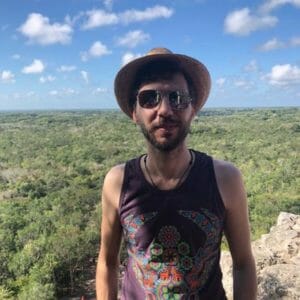
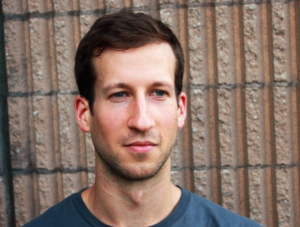
During this episode of Psychedelics Today, your hosts Kyle Buller and Joe Moore talk to Zach Leary host of the MAPS podcast and It’s All Happening. We have an incredible time talking to Zach and his worldview, experiences, opinions and much more. It was a very fun time recording with Zach and we hope it can happen again in the near future.
Show Notes
Joe and Kyle discuss Zach’s connections with Ram Dass
Zach Leary calls himself a futurist and we discuss what a futurist is.
A natural way to continue the narrative of our physical evolution and our spiritual development.
Cyberspace is an invention as a result of our human condition.
The way and the reason we invented it is that we found a need to create another dimension.
Futurism and transhumanism and embracing the way technology is augmenting the human experience is a great place to be.
Do you see any major problems in psychedelia?
Overall, it’s a great time to be into psychedelics.
There’s so much research and data available to the end-user and the discussion is improving.
Many people are starting to be more open about their beneficial relationship with psychedelics.
It’s important to get people in the mainstream aware of their beneficial properties.
The Ayahuasca fad going on in the U.S. has many people calling themselves shamans, which raised a red flag to Zach.
It used to be that going to the medicine man was a common occurrence in any culture.
Mysticism didn’t go away, it just got turned into a more doctrinal practice.
The part of the church that bothers Zach is the authoritarian aspect, that there is only one god.
There’s an element of fanaticism when someone says there’s only one drug that’s worth taking.
April 19 is the 75th anniversary of the first intentional use of LSD (Bicycle Day).
We have to start re-thinking about what “natural” means.
The human imagination and what it creates is a by-product of nature.
There’s no stopping the technological march, the train has left the station.
A return to nature can include biodiverse rooftop gardens in New York.
It’s very hard to get off the grid.
What do we have that’s readily available and sustainable?
Mushrooms
LSD
Other synthetic compounds that don’t bother the rainforest, etc.
Zach is the host of both the “It’s All Happening with Zach Leary” podcast and “The MAPS Podcast.” They have helped to cement him as one of the most thought provoking podcasters in the cultural philosophy genre of podcasting. He’s also a blogger/writer, a futurist, spiritualist, a technology consultant and socio-cultural theorist.
In all of Zach’s work he blends his roles as a spiritual aspirant and a futurist into a unique identity all his own. His spiritual background has it’s roots in being a practitioner of bhakti yoga as taught through many of the vedantic systems of Northern India, in particular Neem Karoli Baba as taught by Ram Dass. Through the practice of bhakti yoga he has found keys that unlock doorways that allow the soul to experience it’s true nature of being eternal, full of knowledge and full of bliss. In addition to bhakti yoga, Zach is influenced by many different methods and traditions of consciousness exploration ranging from trans-humanism to buddhism and clinical psychology. Zach is also a frequent pundit on the political systems that are fueling todays economic and cultural structures. At the core of all of Zach’s work is the belief that we have been fused together by the collective practice of using technology to expand our species imagination with spirituality and mysticism to define the very nature of who we are.
In this episode of Psychedelics Today, Kyle and Joe speak to Dennis McKenna (of Dennis McKenna fame) and Mark Plotkin founder of the Amazon Conservation Team. We discuss a broad range of subjects. One of the most interesting was a project that Dennis and many others have been working on for over a year at the time of recording this, titled Ethnopharmacologic Search for Psychoactive Drugs, which was a conference in the UK in 2017. It was a 50-year follow up to the initial event (and later seminal book) that Richard Evan Schultes, Ph.D. helped coordinate and host.
This link will take you to a page where you can see all of the talks that were given at ESPD50. https://vimeo.com/album/4766647
We really think you’ll enjoy the show. Please let us know what you think and if you can, pre-order the ESPD 50 to save some money on the post-release price.
“In 1967, a landmark symposium entitled Ethnopharmacologic Search for Psychoactive Drugs was held in San Francisco, California. It was the first international, interdisciplinary group of specialists – from ethnobotanists to neuroscientists – who gathered in one place to share their findings on the use of psychoactive plants in indigenous societies. Follow-up meetings were intended to be held every ten years, but the War on Drugs intervened. The findings of the convention were printed in a book entitled with the same name as the gathering.
On the 50th anniversary during the month of June 2017 an international group of specialists gathered again to share their perspectives on past, present, and future research in ethnopharmacology. The symposium was held at the spectacular Tyringham Hall in Britain.
ESPD50 was organized by a team led by Dennis McKenna, Founder of Symbio Life Sciences, PBC. Synergetic Press published a collector’s box set including the first edition of 1967 plus a brand new book with the 50th-anniversary symposium’s findings.”
Dr. Plotkin has led ACT and guided its vision since 1996, when he co-founded the organization with his fellow conservationist, Liliana Madrigal. He is a renowned ethnobotanist who has spent almost three decades studying traditional plant use with traditional healers of tropical America.
Dr. Plotkin has previously served as Research Associate in Ethnobotanical Conservation at the Botanical Museum of Harvard University; Director of Plant Conservation at the World Wildlife Fund; Vice President of Conservation International; and Research Associate at the Department of Botany of the Smithsonian Institution.
Among his many influential writings, Dr. Plotkin may be best known for his popular work Tales of a Shaman’s Apprentice (1994), which has been printed continuously and has been published in multiple languages. Other works include the critically acclaimed children’s book The Shaman’s Apprentice – A Tale of the Amazon Rainforest, illustrated by Lynne Cherry, and Medicine Quest: In Search of Nature’s Healing Secrets. His most recent book, The Killers Within: The Deadly Rise of Drug-Resistant Bacteria, coauthored with Michael Shnayerson, was selected as a Discover Magazine book of the year.
In 1998, he played a leading role in the Academy Award-nominated IMAX film Amazon. Dr. Plotkin’s work also has been featured in a PBS Nova documentary, in an Emmy-winning Fox TV documentary, on the NBC Nightly News and Today Show, CBS’ 48 Hours and in Life, Newsweek, Smithsonian, Elle, People, The New York Times, along with appearances on National Public Radio. Time magazine called him an “Environmental Hero for the Planet” (2001) and Smithsonian magazine hailed him as one of “35 Who Made a Difference” (2005), along with Bill Gates, Steven Spielberg, and fellow New Orleanian Wynton Marsalis.
Dr. Plotkin has received the San Diego Zoo Gold Medal for Conservation; the Roy Chapman Andrews Distinguished Explorer Award; an International Conservation Leadership Award from the Jane Goodall Institute; and, with Liliana Madrigal, the Skoll Foundation’s Award for Social Entrepreneurship. In 2010, he received the honorary degree of “Doctor of Humane Letters” from Lewis and Clark College in Portland, Oregon. Dr. Plotkin was educated at Harvard, Yale and Tufts University.
About the Amazon Conservation Team
The Amazon Conservation Team (ACT) is a non-profit organization dedicated to preserving South American rainforests. This small but robust outfit occupies a unique niche among other environmental non-profits working in the tropics: ACT works hand in hand with local indigenous communities to devise and implement its conservation strategies.
About Dennis McKenna
Dennis Jon McKenna is an American ethnopharmacologist, research pharmacognosist, lecturer, and author. He is a founding board member and the director of ethnopharmacology at the Heffter Research Institute, a non-profit organization concerned with the investigation of the potential therapeutic uses of psychedelic medicines.
McKenna received his Master’s degree in botany at the University of Hawaii in 1979. He received his doctorate in botanical sciences in 1984 from the University of British Columbia,[2] where he wrote a dissertation entitled Monoamine oxidase inhibitors in Amazonian hallucinogenic plants: ethnobotanical, phytochemical, and pharmacological investigations. McKenna then received post-doctoral research fellowships in the Laboratory of Clinical Pharmacology, National Institute of Mental Health, and in the Department of Neurology, Stanford University School of Medicine.
Joe recently had the opportunity to interview an old friend, Tarif Ahmed while visiting Long Island, New York. They had the opportunity to record about all sorts of things from diversity, privilege, open source experimentation with different psychedelic regimens, bringing psychedelics safely into Islam and much more.
If you enjoy the episode, please let us know what you think by leaving an iTunes review!
Topics in the show
Meeting at Evolver Boston events years ago.
Race and privilege
Growing up in a Muslim community
Bringing in psychedelics into Muslim communities quietly
How status could be helpful in the Muslim world
Possible psychedelic origins of some aspects of Islam
Psychedelic art
Sufism
Some teachings
Open source testing of ideas on places like reddit
Tracking experiences and tests in a journal is very important
Working with mentors long term to have consistent support over time
Nicholas Powers Ph.D. is a poet, journalist, and Associate Professor of English, SUNY Old Westbury. Nick joins us to talk about psychedelics, race, cultural diversity, and the future of psychedelics. Race and diversity within the psychedelic community has been a hot topic lately, and it is an important topic to continue discussing and examining. Unfortunately, the community is exclusive to people of privilege and power, which shows some concern when it comes to the future direction of this field, as it leaves out diverse ideas and beliefs from people from other cultural backgrounds and communities.
What are your thoughts on this topic? Leave us a comment below!
Show Topics
Diversity in research
Monica Williams – Diversity in the psychedelic research
The trust between diverse populations and institutional research
History of forced sterilizations and the Tuskegee syphilis study
The importance of storytelling and authentically listening to stories of people from other cultural backgrounds
Start your own psychedelic community
Psychedelics and intergenerational trauma
Including minority groups into the psychedelic community
Nicholas Powers is a poet, journalist and professor. His books, The Ground Below Zero and Theater of War, was published by Upset Press. He has written for The Indypendent, Alternet and The Village Voice. He has spoken and read all over the country. He teaches literature at SUNY Old Westbury and co-hosts the long running New York City College Poetry Slam at the Nuyorican Cafe. If you would like to work with Nick, please contact tara@upsetpress.org.
Download Dr. Matt Brown of the Chicago Psychedelic Club and the Psychedelics and the Future of Psychiatry Meetup joins us to talk about his interests and involvement with psychedelics. We talk about how Dr. Brown got interested in psychedelic research and how he got involved in forming two psychedelic meet up groups in Chicago.
Leave us a comment below and let us know what you think!
Show Notes
Perspectives on psychedelics
Creating a psychedelic meetup
Building community
Introducing more voices into the conversation besides medical professionals and students – artists and other creative people can help to provide various insights into the psychedelic conversation.
If you enjoy the show, please consider donating to our Patreon!
About Dr. Matt Brown D.O., M.B.A.
Dr. Brown Specializes in whole health psychiatry. This approach differs from many other practitioners who more and more practice symptomatic management when it comes to mental health. Dr. Brown takes the perspective that the body has the ability to heal itself, but from time to time may need assistance through balancing the things that are important for physical health that are also important from mental health. These include, sleep, diet, exercise, meditative/spiritual practice and cultivating positive social relationships. Dr. Brown also has a strong command of how to balance vital nutrients in our body with the aid of supplementation to augment traditional psychopharmacological therapies. Dr. Brown’s method is aimed primarily at the treatment of Depression and Anxiety as well as other mood disorders and ADHD. Dr. Brown is a specialist in the treatment of OCD specifically and is board certified by the ABPN in both adult as well as child and adolescent psychiatry.
Download Emanuel Sferios joins us to talk about his upcoming film “MDMA The Movie” along with the founding story of Dance Safe.
Emanuel has a fascinating story that includes.
Humble beginnings
Lots of media attention
Huge amounts of fundraising for harm reduction
A film that is going to be incredible. Check out the trailers below!
MDMA was one of the last drugs that the old guard anti drug US government worked to smear with disinformation and outright lies, using outlets like Oprah and more to stain MDMA’s reputation. While Ophra’s media empire has now come around a bit, MDMA continues to hold parts of the social stigma that Oprah helped to give it. Emanuel tells the story here with on the ground details in ways that Kyle and Joe haven’t heard before.
We hope you love it!
If you enjoyed this episode you may love these other podcasts.
If you maintain a drug involved premises, you can be liable
“Massives” – Testing at massives – early raves – huge lines
Reducing harm by drug decriminalization
Cognitive liberty for adults
Gas chromatography & Mass spectrometry
Want to learn more about psychedelic harm reduction, safety, and integration? Sign up for our online course!
Find MDMA The Movie On Social Media
About Emanuel Sferios
Emanuel Sferios is an activist, educator, public speaker and harm reduction advocate. Founding DanceSafe in 1998, Emanuel was an early pioneer of MDMA harm reduction. DanceSafe has volunteer chapters in over two dozen cities across the United States and provides non-judgmental, peer-based drug education and drug checking (a.k.a., “pill testing”) services in the electronic dance music community. Emanuel also started the first public laboratory pill analysis program in 1999 which allowed ecstasy users for the first time to anonymously send tablets to a DEA-licensed laboratory for chromatography analysis. Originally publishing the results on the DanceSafe website, the program still exists today and is hosted at Ecstasydata.org.
Today Emanuel speaks at colleges and universities about MDMA, harm reduction, and drug policy. He lives in Grass Valley, California with his wife and two stepchildren.
Download Kwasi Adusei of the Psychedelic Society of Western New York joins us to talk about the Global Psychedelic Month of Service campaign. This is a wonderful campaign to help encourage members of the psychedelic community to become more involved in their communities.
About The Global Psychedelic Month of Service
Still hiding in the psychedelic closet? Looking for an opportunity to join the movement? This November, find a need in your community, gather your friends, and participate in the Global Psychedelic Month of Service.
In the month of November, the global psychedelic community invites you to take on a need in your community in the name of psychedelics. Psychedelic groups all over the world are joining the cause by giving back.
At the core of the psychedelic movement is a mission of social activism. So take part in seeing this mission through by volunteering at your local soup kitchen, food pantry, or doing a community clean up.
The integration of a psychedelic experience is as important as the experience itself. Transform the feelings of connectedness induced by the psychedelic experience, into actions of connectedness.
How to get involved
1. Find a local service organization
2. Reach out to find volunteer opportunities in the month of November
3. Find psychedelic friends to volunteer with
4. Volunteer and send in pictures and number of hours completed
What to join the cause? Email buffalopsychedelic@yahoo.com with your name and location so we can add you to the list of participating individuals.
Kwasi Adusei Show Topics
Building community
Breaking down stigma
Doing psychedelic things
Spending time helping
Doing compassionate things
Psychedelic values and morals
Access to expensive MDMA therapies
How to bring more diversity into the psychedelic movement
Kwasi dedicates his work in the psychedelic movement to altering the stigma in mainstream channels by promoting the science, the healing potential of psychedelics, and civic engagement.
Kwasi is a nurse and a doctoral student at the University at Buffalo, studying to be a Psychiatric Nurse Practitioner. He is the founder of the Psychedelic Society of Western New York and project manager for Psychonauts of the World, an initiative to share meaningful psychedelic stories, with the ultimate goal of publishing them in a book as an avenue to raise money for psychedelic research. He is also one of the administrators for the Global Psychedelic Network, a conglomerate of psychedelic groups and individuals from around the world.
He hopes to use his training and education to become a psychedelic therapist. Born in Ghana and raised in the Bronx, New York, Kwasi hopes to bring psychedelic therapy to communities of color.
Kyle and Joe report from the scene of the amazing Horizons: Perspectives on Psychedelics conference. We had the chance to interview attendees of Horizons NYC 2017 outside the venue on the closing day.
Horizons is a fantastic event at an amazing venue in the heart of Manhattan at the historic venue – “The Cooper Union.” The same podium on stage was shared by Abraham Lincoln, Susan B Anthony, and along with many other important historical figures.
It was an amazing event and we hope that this episode helps share some of the excitement. We talked to past guests, future guests, and also some new friends. You may recognize some of the voices 🙂 Let us know what you think of this episode and if you want to hear similar episodes to this in the future.
In the show, we speak about a lot of things from Horizons NYC including
The most interesting thing learned
The sense of community inside a conference like this
Some problems the movement has that we need to stay aware of
Issues with communicating the science of psychedelics with a wider audience
Volunteering for events for free tickets
Do you want to listen to Joe and Kyle recap their highlights of the conference and the Psymposia Microdosing event? Support us on Patreon to get exclusive access! Check out the video introduction to this episode – Here
Horizons: Perspectives on Psychedelics is an annual forum that examines the role of psychedelic drugs in science, medicine, culture, and spirituality.
In recent years, a growing community of scientists, doctors, artists, activists, seekers, and scholars have orchestrated a renaissance in psychedelic thought and practice.
Horizons brings together the brightest minds and the boldest voices of this movement to share their research, insights, and dreams for the future.
Horizons was founded in 2007 by Kevin Balktick, with Neal M. Goldsmith, Ph.D., joining as speaker curator and MC in 2008.
Horizons Media, Inc., a 501c(3) not-for-profit educational charity, is currently led by board members Kevin Balktick, Neal M. Goldsmith, Ph.D., James Vasile, Esq., and Ingmar Gorman, M.A.
Having outgrown Judson Memorial Church, its original location, Horizons is now hosted at The Cooper Union Great Hall, which has been a center for public dialogue since its founding in 1858, having hosted such illustrious speakers as Abraham Lincoln, Mark Twain, Frederick Douglass, Susan B. Anthony, and more recently, Barack Obama.
Horizons Media, Inc. conducts no other business besides the annual conference and is funded in solely by registration and concession sales. All profits go towards producing and improving the following year’s event. Its board members are not compensated.
Horizons Media, Inc. is not a political advocacy or scientific research organization, nor does it have any financial relationships with other organizations and businesses that participate as presenters or informational presences.
Sign up for our online course, “Navigating Psychedelics: Lessons on Self-Care & Integration”
Download
Animals are known to indulge in psychoactive compounds. Humans are not the only species who like to become intoxicated. From bees drinking to fermented nectars to reindeer of the Siberian tundra eating Amanita muscaria mushrooms, Aaron and Andras find a creative way to start a conversation about drug policy, harm reduction, and psychedelics. Aaron and Andras have started a company that produces tshirts depicting cute animals doing drugs. While this may seem like a way to promote drug use using cute animals, Aaron and Andras have a deeper meaning, which is about starting a conversation and trying to shift the cultural narrative about drug use.
If you want to get one of your own t-shirts, use the coupon code: PSYCHEDELICSTODAY25 to receive 25% off your purchase!
Cute Animals Doing Drugs was created by two friends to raise awareness around these issues, support drug policy reform, and encourage honest conversations about drugs in everyday life.
We believe individuals have the right to sovereignty over their own consciousness and that there is no reason to deny any adult the safe and beneficial use of psychoactive substances.
We believe social and political change can start from the bottom-up. Our apparel serves as a conversation-starter and a fun, unique way to show your support for an increasingly important social issue.
Cute Animals Doing Drugs is here to call attention to these issues, support psychedelic research, encourage drug policy reform, and promote cognitive liberty for all.
We also donate 10% of our pre-tax profits to MAPS, the Drug Policy Alliance, and other drug-related non-profit organizations.
Andras L is a cofounder of Cute Animals Doing Drugs Apparel, an initiative intended to help shift societal perceptions around drug use. Cute Animals builds on his previous work as a director on the board of Canadian Students for Sensible Drug Policy, where he advocated for the advancement of harm reduction and evidence-based drug policy reform. He is especially focused on reversing harmful policies and combating stigma. Andras graduated with an M.Sc. in Primary Care Research from McGill University and now researches infectious disease.
Aaron
Aaron co-founded Cute Animals Doing Drugs Apparel with Andras in the summer of 2017. He finished his BA at McGill University in 2014 and has since been traveling the world and working online. Aaron has a longstanding fascination with psychedelics, and is particularly interested in the subjective elements of psychedelics experience as well as the potential broad social impact of mainstreaming psychedelic use, especially in spiritual contexts. He writes about personal development, spirituality, and psychedelic experience at freedomandfulfilment.com.
Download
What is microdosing? Is this a growing trend in the psychedelic community? What do some people in the psychedelic community think about it? Can it really help boost creativity and productivity? While the idea that microdosing can help with depression, creativity, and productivity, these claims are usually backed by self-reported experiences. There is currently no hard science/research that highlights the risks, safety, or benefits of this concept despite the growing trend and loads of anecdotal evidence. If you want to learn more about this current trend, be sure to get your ticket to the upcoming Psymposia Microdosing event. We are sure all of these questions will be laid out on the table, and it will sure be a great night and discussion!
Brian Normand, Co-Founder of Psymposia, joins us again to talk about the Psymposia Microdosing event/Horizons afterparty. The event will be hosted by the one and only, Duncan Trussell. If you have plans to attend the Horizons: Perspectives on Psychedelics conference in NYC, be sure to check out the afterparty. It is always a great time and also a great place to “find the others.”
Save 5 dollars on your ticket with the coupon code psychedelicstoday
We also cover topics revolving around drug policy and Brian’s experience in the Amazon.
You’re invited to Psymposia’s 4th annual celebration following day 1 of the Horizons Perspectives on Psychedelics forum in New York City that examines the role of psychedelic drugs in science, healing, culture and spirituality.
This year, Comedian Duncan Trussell joins Hamilton Morris (VICELAND’s Hamilton’s Pharmacopeia), Katherine MacLean, Sophia Korb, and Paul Austin to talk about everything you wanted to know about microdosing and more, surrounded by a live audience in Brooklyn.
Co-sponsored by the Multidisciplinary Association for Psychedelic Studies // MAPS
Brian Normand is CoFounder, lead designer, and webmaster of Psymposia. He’s a greenthumb, social entrepreneur & occasional trouble maker, focused on changing minds and creating spaces to teach people about plants and drugs. He graduated from the University of Massachusetts Amherst with a BS in Plant, Soil, Insect Science, & Sustainable Horticulture, Magna Cum Laude.
Joe speaks with Becca Segall Tarnas about her work with Carl Jung’s Red Book and J.R.R. Tolkien. There is a substantial amount of overlap between the two. Why these two in a show about psychedelics? Transpersonal Jungian psychology is the bridge. There appears to be objects or entities beyond the veil of our perception and understanding (so far). We have a collective imagination collective unconscious that these things interact in. Psychedelics and other methods can give us access to these. Becca will be presenting her work to this point at the Prague ITC 2017. This discussion goes all over the world, so feel free to reach out if you have any questions. We really enjoy Becca’s work and hope to have her on again in the near future!
About Becca Segall Tarnas
Becca Segall Tarnasis a doctoral candidate in the Philosophy and Religion department at the California Institute of Integral Studies. Her dissertation research is focused on the theoretical implications of the synchronicity between the Red Books of C.G. Jung and J.R.R. Tolkien. Becca received her M.A. from CIIS, and her B.A. from Mount Holyoke College. Her research interests include ecology, imagination, philosophy, and depth psychology, and she is also co-editor of Archai: The Journal of Archetypal Cosmology.
All that is gold does not glitter, not all those who wander are lost; the old that is strong does not wither, deep roots are not reached by the frost. J. R. R. Tolkien
“The Road goes ever on and on
Down from the door where it began.
Now far ahead the Road has gone,
And I must follow, if I can.” Tolkien – The Fellowship of the Ring
“I indignantly answered, “Do you call light what we men call the worst darkness? Do you call day night?”
To this my soul spoke a word that roused my anger, “My light is not of this world.”
I cried, “I know of no other world!”
The soul answered, “Should it not exist because you know nothing of it?”
― C.G. Jung, The Red Book: Liber Novus
Download This talk was recorded live in Bolton, Vermont during a MAPS Psychedelic Dinner fundraising event in May 2016.
Lenny Gibson presented a lecture during the event about the brief history of psychedelics in the Western world — surveying the ancient Greek mysteries to the current contemporary psychedelic culture.
“Blessed is he who, having seen these rites,
undertakes the way beneath the Earth.
He knows the end of life,
as well as its divinely granted beginning.” Pindar
Creatures for a day! What is a man?What is he not? A dream of a shadow Is our mortal being. But when there comes to menA gleam of splendour given of heaven,Then rests on them a light of glory And blessed are their days. Pindar
I suddenly became strangely inebriated. The external world became changed as in a dream. Objects appeared to gain in relief; they assumed unusual dimensions; and colours became more glowing. Even self-perception and the sense of time were changed. When the eyes were closed, coloured pictures flashed past in a quickly changing kaleidoscope. After a few hours, the not unpleasant inebriation, which had been experienced whilst I was fully conscious, disappeared. What had caused this condition?
Dr. Albert Hofmann – Laboratory Notes (1943)
To fathom hell or soar angelic, just take a pinch of psychedelic.
Dr Humphry Osmond
Leonard Gibson, Ph.D., graduated from Williams College and earned doctorates from Claremont Graduate School in philosophy and The University of Texas at Austin in psychology. Lenny has 50 years of experience working with non–ordinary states of consciousness. He has taught at The University of Tulsa and Lesley College and served his clinical psychology internship at the Boston, MA V.A. Hospital. He also taught transpersonal psychology for 20 years at Burlington College. Lenny serves on the board of the Community Health Centers of the Rutland Region in Vermont. A survivor of throat cancer, he facilitates the head and neck cancer support group at Dartmouth Hitchcock Medical Center. He is a past president of the Association of Holotropic Breathwork International.
You can find out more about Lenny at these two links.
In this episode, Joe and Kyle discuss the difference contexts of psychedelic use:
Therapeutic
Recreational
Psychospiritual & Self-Discovery
Ceremonial & Shamanic
While these categories can be flexible and sometimes merge into one another, we thought that it would be important to give context to the variety of experiences. As MAPS has just received “Breakthrough Therapy” status on the MDMA-assisted psychotherapy research, this is an exciting time for research and therapeutic use of a powerful medicine. However, there may be some confusion about how the therapeutic approach is different from some of these other contexts and ways of using psychedelics. While we believe that all contexts are valid or legitimate and each carry their own risk/benefit, we thought that it would be helpful and fun to talk about our views about this subject.
Zoe Helene of Cosmic Sister and Medicine Hunter joins us to discuss feminism, psychedelic feminism and eco feminism, and her organization, Cosmic Sister. During this conversation, we explore ayahuasca safety in general as well as ayahuasca safety for women — from understanding the risks of Toé as an admixture to ayahuasca to traveling in a group to stay safe.
Other Show Topics
Synthetic vs Natural compounds
Masculine energy in the psychedelic space
Ayahuasca Dieta
Sex and ayahuasca
Working with sexual energy pre and post ceremony
Sexual abuse in the medicine space
Finding one’s voice and power
What is Psychedelic Feminism?
Psychedelic Feminism is a sub-genre of feminism that embraces the power of the frontier field of psychedelic healing, transformation, inspiration, and mind/body/spirit exploration into altered states of consciousness. Safe, intentional journeying with psychedelics can help women look deeply inside themselves, in part to face core feminist issues in fresh and exciting ways. – Cosmic Sister
About Cosmic Sister
Cosmic Sister® is a network that connects kindred-spirit women in mutually supportive ways, working collectively toward shared goals while enhancing the personal journey of each individual. Cosmic Sister promotes love, higher consciousness, abundance and creativity, and members pledge to hold each other’s best interests at heart as allies and affiliates. We want to see women shine.
We envision a healthy, life-affirming balance of power between genders, worldwide. We envision a well world where women are fully respected globally, where their voices are heard and respected, and where a natural, healthy, life-affirming gender balance is restored. We believe that many of the world’s most critical problems are a result of a gross gender imbalance that has been sustained for thousands of years. We do not want our species to evolve in the direction we see the majority of human beings choosing, and we wish to be part of a global cultural shift that helps us evolve more rationally and with functioning minds, hearts and spirits with respect and love for other life-forms and the planet we all depend on to survive. We are passionate about helping to protect wilderness spaces and wildlife species that are currently in crisis or threatened.
Zoe Helene, MFA, an artist, environmental and cultural activist, and psychedelic feminist, founded Cosmic Sister, an “underground collective” for women who understand that balance of power between genders is the only way to true sustainability—a system in which all parties (human and non-human) thrive. Educational advocacy projects championing women’s frontline voices are a core concept in Cosmic Sister’s approach to creating positive change. Through these projects, Zoe emphasizes our responsibility—as Earth’s apex predator—to evolve ethically. Cosmic Sister’s educational advocacy projects include a trio of psychedelic feminism grants—Women of the Psychedelic Renaissance, Cosmic Sisters of Cannabis and the merit-based immersive Plant Spirit Grant—promote sacred plants (and fungi) such as ayahuasca, cannabis, peyote, and psilocybin mushrooms and our fundamental human right to journey with them. Zoe’s work in the field is focused on how exploring the wilderness of our own psyches with these natural allies can be a profoundly self-liberating experience for females in male-dominated cultures. She also speaks out for cannabis as a sacred plant for journeying and an “ambassador” for promoting the greater plant medicine conversation.
Zoe’s work has been featured in Bust, Vice, Forbes, Outside Magazine, Boston Magazine, Wisdom Daily, Utne Reader, AlterNet, Newsday and others, and her articles and interviews have been published in LA Yoga, Boston Yoga, Utne Reader, Huffington Post, Organic Spa Magazine, Eco Salon, Organic Authority and more. She has presented to audiences ranging from top-tier corporate executives to nonprofit organizations and women’s empowerment gatherings. Most recently, she led a psychedelic feminism talking circle at Bastyr University, and taught about Psychedelic Feminism: Core Concepts and Key Stages for Plant Spirit Journeying and Global Sustainable Medicinal Plant Trade at the 30th Anniversary of Rosemary Gladstar’s Women’s Herbal Conference. For the past decade, Zoe has traveled to remote regions of the globe with her husband, ethnobotanist and Medicine Hunter Chris Kilham, to promote medicinal plants (including sacred plants), environmental protection and cultural preservation and bear witness to the state of women, wilderness and wildlife. She also supports media professionals in communicating messages around global sustainable plant medicine and has worked with NBC Nightly News, The New York Times, The Dr. Oz Show and many others.
For the past decade, Zoe Helene has traveled to remote regions of the globe with her husband and partner Medicine Hunter Chris Kilham, to promote medicinal plants, environmental protection and cultural preservation.
Download Daniel Pinchbeck, author of the new book, How Soon is Now?joins us this week to talk about the global ecological crisis, climate change, and how psychedelics may play a role in transforming human culture.
If you do believe that we are in a time of great ecological crisis, what are you doing about it? Taking action is the most important step to creating change, but are we willing to take the sacrifices and action to create change?
Daniel shares his insights about how to take action to implement change. While some of these changes may be challenging, i.e., stop traveling as much, it may be necessary to help cut carbon emissions and to slow down the global warming cycle. Or is it too late to even take action?
Our model controlled for experiences with other classes of psychoactive substances (cannabis, dissociatives, empathogens, popular legal drugs) as well as common personality traits that usually predict drug consumption and/or nature relatedness (openness to experience, conscientiousness, conservatism). Although correlational in nature, results suggest that lifetime experience with psychedelics in particular may indeed contribute to people’s pro-environmental behavior by changing their self-construal in terms of an incorporation of the natural world, regardless of core personality traits or general propensity to consume mind-altering substances. Thereby, the present research adds to the contemporary literature on the beneficial effects of psychedelic substance use on mental wellbeing, hinting at a novel area for future research investigating their potentially positive effects on a societal level.
We are on the brink of an ecological mega-crisis, threatening the future of life on earth, and our actions over the next few years may well determine the destiny of our descendants. Between a manifesto and a tactical plan of action, How Soon is Now? by radical futurist and philosopher Daniel Pinchbeck, outlines a vision for a mass social movement that will address this crisis.
Drawing on extensive research, Daniel Pinchbeck presents a compelling argument for the need for change on a global basis. The central thesis is that humanity has unconsciously self-willed ecological catastrophe to bring about a transcendence of our current condition. We are facing an initiatory ordeal on a planetary scale. We can understand that this initiation is necessary for us to evolve from one state of being – our current level of consciousness – to the next. Overcoming outmoded ideologies, we will realize ourselves as one unified being, a planetary super-organism in a symbiotic relationship with the Earth’s ecology and the entire web of life.
Covering everything from energy and agriculture, to culture, politics, media and ideology, How Soon Is Now? is ultimately about the nature of the human soul and the future of our current world. Pinchbeck calls for an intentional redesign of our current systems, transforming unjust and elitist structures into participatory, democratic, and inclusive ones. His viewpoint integrates indigenous design principles and Eastern metaphysics with social ecology and radical political thought in a new synthesis.
I am the author of Breaking Open the Head (Broadway Books, 2002), 2012: The Return of Quetzalcoatl (Tarcher/Penguin, 2006), Notes from the Edge Times(Tarcher/Penguin, 2010), andHow Soon Is Now (Watkins, 2017). I co-founded the web magazine, Reality Sandwich, and Evolver.net, and edited the publishing imprint, Evolver Editions, with North Atlantic Books. I was featured in the 2010 documentary, 2012: Time for Change, directed by Joao Amorim and produced by Mangusta Films. I founded the think tank, Center for Planetary Culture, which produced the Regenerative Society Wiki. I hosted the talk show Mindshift on GaiamTV. My essays and articles have been featured in The New York Times Magazine, Esquire, Rolling Stone, ArtForum, The New York Times Book Review, The Village Voice, Dazed & Confused, and many other publications.
Check out our upcoming course, Navigating Psychedelics
Learn about harm reduction practices, self-care, and ways to integration your experience
Download Sara Gael joins us on this week’s episode. Sara is the Director of Harm Reduction at the Zendo Project. We get into some great stuff including some of Zendo’s biggest wins, how Zendo works, how to discuss harm reduction with festival organizers, and how to manage difficult experiences that arise in the Zendo. Something interesting that we learned during this talk was how law enforcement at Burning Man has really been interested in learning more about Zendo and their services, and requested Zendo to help train their staff.
Sara also shares her experience and insights working on the MAPS Phase 2 MDMA-assisted psychotherapy for PTSD trials and how she got involved in psychedelic research. We also explore how transpersonal psychology can serve as an important framework for working with psychedelic experiences.
We hope you enjoy this episode. Be sure to leave us a comment below and share this episode!
The Zendo Project
The Zendo Project is sponsored by the Multidisciplinary Association for Psychedelic Studies (MAPS). Zendo provides harm reduction services to the community and to festivals. Zendo strives to:
Reduce the number of psychiatric hospitalizations and arrests.
Create an environment where volunteers can work alongside one another to improve their harm reduction skills and receive training and feedback.
Demonstrates that safe, productive psychedelic experiences are possible without the need for law enforcement-based prohibitionist policies.
Sara Gael, M.A., Director of Harm Reduction, Zendo Project
Sara received her Master’s degree in Transpersonal Counseling Psychology at Naropa University. She began working with MAPS in 2012, coordinating psychedelic harm reduction services at festivals and events worldwide with the Zendo Project. Sara was an Intern Therapist for the recently completed MAPS Phase 2 clinical trial of MDMA-assisted psychotherapy for PTSD in Boulder, CO. She maintains a private practice as a psychotherapist specializing in trauma and non-ordinary states of consciousness. Sara believes that developing a comprehensive understanding of psychedelic medicines through research and education is essential for the health and well being of individuals, communities, and the planet.
Community is an important part of integration. One of the most difficult aspects of integration is returning to a society that doesn’t understand or support psychedelic exploration. In fact, re-entering society can feel like a stark contrast between the interconnected, transpersonal state of the psychedelic experience. Therefore, one of most important tools for successful integration is a supportive, understanding community. We encourage our Guests to connect with and build supportive communities around themselves when they return home from the event. We support them in seeking professional help if necessary.
It is the week of the 4th of July. That means the United States is celebrating the signing of the Declaration of Independence, breaking free from the British Empire, and becoming an independent nation. With the holiday underway, it seems like a great time to reflect on the concept of freedom (including cognitive liberty) and what it means to each and every one of us.
In honor of Independence Day and the Declaration of Independence, here is a quote by Terence McKenna:
In this episode, Joe and Kyle reflect on the concept of personal freedom, cognitive liberty, and the impact that the War on Drugs has on the American people. It seems to be the consensus that the War on Drugs is failing. The policy has huge negative consequences on people across the globe, and significantly marginalizes minority groups and people of color.
Cognitive Liberty
As psychedelic research continues to progress in the academic and scientific realm, many people are still subjected to arrest and imprisonment because of this failed policy. Kyle and Joe share their thoughts about the pursuit for cognitive liberty and personal freedom.
The unexamined life is not worth living – Socrates
Do you think that exploring one’s own consciousness, whether through plants or other drugs, be illegal? Why should a person have to “ask permission” to have an experience with their own body, mind, and spirit?
We are giving away a SPECIAL offer just for the 4th of July! Receive 10% off our Earl-Bird special with the coupon code “freedom” when you check out. You do not want to miss this offer!
Doing work with veterans and gaining their trust for therapeutic relationships.
Traditional approaches to ayahuasca.
First hand accounts of what the Peyote world is like.
Shifting away from the predominant Newtonian Cartesian paradigm after psychedelic use and understanding that we know very little about what is really happening here in the world.
Shane earned his Bachelor of Arts Degree in Psychology from the University of Colorado in Boulder, CO, completed extensive coursework towards a Master of Arts Degree in Sport & Performance Psychology at the University of Denver, and earned his Master of Arts Degree in Sport & Exercise Psychology from Argosy University.
Shane is nationally certified as a Sport Psychology Consultant and a licensed mental health clinician in the state of Colorado. Having worked in community non-profit mental health since 2008, Shane has gained experience working with the entire spectrum of mental disorders and with all populations and age groups. Shane plans on attending a Ph.D program in Counseling Psychology where his interest in Resiliency, Mental Toughness, and Mindfulness Training Program Development can be explored and further developed.
He is a life-long athlete having competed at various levels in more than a dozen different sports. Because of his passion for warrior cultures of past and present, Shane has been ardently developing his own “Warriorship,” training in various forms of Martial Arts for 25 years. Shane feels that the self-discipline, the philosophy of non-violence, the innumerable mental and physical benefits, and the enjoyment that he gains from the Martial Arts is what helped drive his passion in the field of Psychology.
His personal interest in Eastern Philosophy stems from his adoption of a Buddhist lifestyle and blends well with his training in Western Psychological Science. Clients describe Shane as an out-of-the-box clinician that is easy to get along with, knowledgeable on a variety of topics, credible with lived experience, and as having the ability to make therapy fun and interesting.
Interested in learning more about psychedelic self-care and integration? Check out and sign up for our new online course!
Download In this episode, Kyle talks with Leia Friedman, co-founder of the Boston Entheogenic Network (BEN) and also known as “The Psychedologist.” Kyle recently was invited to facilitate an “Introduction to Transpersonal Breathwork” workshop for BEN. Joe also was in town for the weekend and presented a talk about “Breathwork, Psychedelics, and Ecological Collapse.” It was a great psychedelic weekend in Massachusetts.
After the workshop, Kyle had the opportunity to sit down and talk with Leia about her interests in the psychedelic field, feminism and eco-feminism, and how she got involved with starting a psychedelic group in Boston. She provides some helpful tips and advice for creating/starting your own local group.
Tips for starting your own psychedelic group:
First, what is the point of the group?
What is the purpose or mission?
Learn about your local laws and the legal risks
Do not condone or facilitate illegal activity
Go slow
Find the others to help you out
Check in with yourself and the other members of the group
Protect your members
Start online to gain awareness and then start an in-person meet up
Sign up below to get your FREE download “How to Create Your Own Psychedelic Group”
We hope you enjoy this episode and let us know what you think!
Kyle and Leia holding space for the breathwork circleBreathwork on the river.Joe and Kyle presenting, “Breathwork, Psychedelics, and Ecological Collapse” in Lowell, MA, USA
Leia Friedman is a professor, clinician, writer and the cofounder of Boston Entheogenic Network. Her present focus is an amalgamation of psychology, ecology, and experiences of altered consciousness as tools for deeper self-understanding. She is also involved in local social and climate justice activism, alphabet soup, and body positivity.
We discuss our recent trip to MAPS‘s Psychedelic Science 2017. It was incredibly fun and we loved being able to connect with so many with this shared interest. Many attendees are actively working to progress the case of psychedelic substances.
This was the largest psychedelic conference ever in recorded history attended by over 3000 people from 42 countries. There were discussions around ayahuasca, peyote, DMT, salvia, MDMA and many other substances. Some of the most interesting discussions were around ibogaine treating people with addiction. Turns out there are far more things that can be treated with ibogaine than simply opiate addiction.
I was very excited to discuss drug testing and harm reduction with the people from DanceSafe. We were also able to check out some really interesting technology – lights and music – that triggered some of the most intense visuals of my life. Illuminated SF put that demonstration together. It is highly recommend.
The experience of Psychedelic Science 17 was so incredible and encouraging that I cannot wait to go to the next one. Being around the movement was truly humbling and gratifying. Connecting with people from as far as Brussels, Poland and Hong Kong gave extra context to how far and wide this movement is spreading and that there is real depth in the movement.
We hope you enjoy the episode. If you want to connect with us please feel free to reach out using the contact page. If you want to stay in touch with us please join our mailing list and we will send some interesting links to you on a semi regular basis.
MAPS made available a tremendous amount of the talks for free on youtube. You should spend some time digging through the talks for things you may find very interesting.
Download Peter is a psychedelic philosopher focusing on panpsychism, psychedelics, Whitehead, Nietzsche and some other heavy weights. We discuss Peter’s psychedelic philosophy and influences from psychedelic liberty cap mushrooms found in a field in England, his influence on the famous comic author Warren Ellis, his essay Neo-Nihilism, transhumanism and much more. We really look forward to having Peter on the show again in the future!
‘The terms morality, logic, religion, art, have each of them been claimed as exhausting the whole meaning of importance. Each of them denotes a subordinate species. But the genus stretches beyond any finite group of species.’ (MT)
‘Philosophy is an attempt to express the infinity of the universe in terms of the limitations of language.’ (Autobiog.)
‘The doctrines which best repay critical examination are those which for the longest period have remained unquestioned.’ (MT)
‘[I]n the development of intelligence there is a great principle which is often forgotten. In order to acquire learning, we must first shake ourselves free of it. We must grasp the topic in the rough, before we smooth it out and shape it.’ (MT)
Peter Sjöstedt-H is an Anglo-Scandinavian philosopher who specialises in the thought of Schopenhauer, Nietzsche, and Whitehead within the fields of Philosophy of Mind and Metaphysics – especially with regard to panpsychism and altered states of sentience. Peter received a Bachelor’s degree in Philosophy and a Master’s degree in Continental Philosophy from the University of Warwick, where he was awarded a first-class distinction for his dissertation on Kant and Schelling in relation to ‘intellectual intuition’. He subsequently became a Philosophy Lecturer in London for six years but is now engaged in his PhD at Exeter University where he also teaches philosophy modules and writing skills. Peter is the author of Noumenautics and an inspiration behind the new inhuman philosopher Marvel Superhero, Karnak.
In the words of futurist, philosopher and pop star Alexander Bard: ‘One of our favourite contemporary philosophers, Peter Sjöstedt-H…think a psychedelic Nietzsche’.
Download
Psymposia’s MC and Host, Lex Pelger, joins us again on Psychedelics Today to talk about Psymposia’s upcoming Blue Dot Tour. Lex also talks about his graphic novel about cannabis, the endocannabinoid system, and the War on Weed.
Our goal is to hit blue cities in red states that serve as such pressure cookers of activism, education, and art. But also blue cities in blue states, red towns in red states, purple villages in green states, and anywhere we can find a host from Mexico to Canada.
Lex is Host of Psymposia. He’s also a drug writer and scientist based in Brooklyn.
His current project, Anandamide or: the Cannabinoid a graphic novel about cannabis (based on Moby Dick), illustrates the beauties of the endocannabinoid system (the Whale), the brutalities of the racist War on Weed (Ahab), and the staggering benefits of medical marijuana to ease the aging of our grandparents
He graduated from Boston University with a BS in Biochemistry and Molecular Biology
“Through my lens, so many problems in this world are driven by people acting from a reactionary place of fear and pain instead of from a place of compassion or love.” – Natalie Ginsberg
Joe and Kyle spoke with Natalie Ginsberg, Policy and Advocacy Manager at Multidisciplinary Association for Psychedelic Studies (MAPS). Natalie provides us with a summary on facets of the current state of global drug policy. She also discusses the role of racism and privilege in the psychedelic community in America. The following is an excerpt from our interview.
Edited by: Alyssa Gursky
Natalie: This past year, the UN General Assembly met for the first time in 20 years to revisit international drug treaties. A special session was called on the world drug problem. There were a series of different meetings. Vienna hosts something called the, Commission on Narcotic Drugs, every year. First, there is a big gathering in Vienna where reformers, non-reformers, and people working both from civil society on drug policy come to meet with delegates from around the world and educate them.
They tried to move drug policy from a criminalization approach to a more public health and harm reduction kind of approach.That was also pretty inspiring, and it was definitely a bit frustrating in terms of progress.We would’ve liked the outcome document to reflect much more progressive drug policy stances, but they’re very influenced by countries like Russia and China, who are really not open to the harm reduction approaches at all.
Being there, you meet so many global representatives. For example, the so-called drug czar, but he doesn’t like that name. The National Drug Coordinator of Czech Republic, for example, is really supportive of psychedelic advocacy and was able to host a lot of more innovative, progressive events. The Colombian health minister gave a really powerful speech on the floor of the United Nations (UN), basically saying the drug war… using that Einstein quote, “The definition of insanity is doing the same thing and expecting different results.” It was really epic for the minister from Columbia to be saying that to the whole UN.
Overall, for me, what was so, so valuable was really this coming together of the international reform community. Now, I work super-closely with advocates from Afghanistan, Mexico, and Nigeria. We’re much more in the same loop of what’s going on and learning about how we’re doing work in different countries is important because the UN is a really slow body that is quite reactionary, and it’s really driven forward by individual countries’ progress. The more we can support individual countries moving forward, the better chance we have for them to kind of influence the UN later.
Joe: Are there any star countries that you noticed that are really doing stuff that might not be on the radar yet?
Natalie: Bolivia actually legalized coca leaves and has done some really important work around protecting cultural indigenous plant medicines, like promoting the traditional use of these substances.
As I mentioned, the Czech Republic is really, I’d say, the leader on all things psychedelic that are not traditional, indigenous use. I would also say that even though Portugal gets a lot of attention for decriminalizing drugs, they actually weren’t the first place to do that. The Czech Republic has been decriminalizing drugs longer than Portugal, as has Spain. Portugal received a great deal of attention because they did it in response to a big opiate crisis. There’s some incredible results to show how dramatically things have shifted, but other countries have kind of taken that stance for a while, so there isn’t as much of a shift. But, they do have really promising results from not having a crazy drug war.
Spain is also really cool because of their cannabis social clubs. I was lucky to spend a few weeks in Barcelona this fall. They have these incredible spaces that basically was like a mix between coffee shop, co-worker space, maybe a little bar worked in there — just like a community space where you can go and become a club member.
Also, keep an eye on Colombia. When Ismail and I, my colleague from the policy team, were at the UN, we spoke to the Colombian health minister about MDMA therapy. He said, “Yeah, that sounds really promising.” I’m optimistic about that. They’re kind of still in the process of reforming their drug policies, and though they haven’t made as dramatic of strides as the other countries, a lot of the ministers and people doing work in Colombia are a lot more conscious. They see all of the horrible impacts of the drug war on their country and want to improve it. I think they will continue to do this work and lead some reform in South America.
Then also of course Canada is leading the way in so many ways on the drug policy front. From legalizing cannabis to really strongly supporting harm-reduction measures in response to opiate crises. I think Canada is going to be the leader on drug policy reform, and probably on a lot of other policies as well.
Joe: What else is going on in your world? Are you projected a couple years out to be working on some other interesting projects, or what do you see happening?
Natalie: I can speak about something that’s really near to my heart. In context of MDMA-assisted psychotherapy for PTSD, we are working to develop a study that would be focused on racial trauma, or PTSD from racism. We are working on another focusing on PTSD in trans communities as well. I’m really interested in talking about how social injustice can manifest in an individual as PTSD. I think that’s going to be a really important conversation.
Anti-racist work within the psychedelic community is really important. A lot of people I know are these peace-loving, hippie types who have really beautiful ideals, but don’t necessarily know the details or the reality of certain situations. I’ve heard from so many amazing, well-intentioned people in this community, “I don’t see race. All people are the same.” I think the concept is beautiful and well-intentioned, but that’s also really ignoring the experience of people of color in this country.
Unfortunately, police officers do see race. Breaking that conversation open I think is immensely important. If we’re a community that really talks about healing and working in solidarity with other social justice movements, I think that is really essential. I have seen more and more progress on that front, but I just want to definitely flag that because I think we have a lot of room to improve in that space.
Joe: What does that look like to you? How could we heal a bit? I know the research itself is very white, really kind of bland, but in terms of diversity, how do we heal that? What do you see?
Natalie: Yes, the research is quite white, unfortunately. This study focusing on racial trauma, we’re working with Dr. Monica Williams in process, but she’s a leading researcher on PTSD from racism. Working with experts and therapists of color to do outreach to their own communities. We have to work with communities and not just go in and be like, “Why don’t you come into our space?” We have to be willing to meet people where they are and really listen, and hear what different communities need from us and how we can best work with them. I think really the best way, when you ask how can we heal, it’s really we as white, psychedelic enthusiasts need to do our own work We need to do our own reading and need to start asking questions. And not questions just of people of color, and asking them to do this emotional labor for us, but maybe other white people who are doing this work who might be able to help support this process.
It’s a really long, difficult process that requires a lot of self-reflection, which is why I think there’s so much potential in our psychedelic community.We’re a community so focused on being conscious and self-reflection. All of these things that are essential to understanding racial consciousness, and the impact of racism on white people. There’s a lot of hugely harmful impacts of racism in white people, the way that sexism deeply harms men in patriarchy. I think it’s really important that we are doing some of our own work. That is a difficult process but a healing one, The more conscious we are of things, I believe that is really a way to move towards healing.
Returning war veterans are incredibly traumatized and don’t have adequate support, but yet compared to someone living in a poor, black neighborhood in Atlanta … There was a study that returning war veterans had way lower rates of PTSD than people living in this community. These people are also underdiagnosed, and don’t have the resources that even… It’s just interesting context because certainly, we dramatically need to improve our support for veterans as well, but even just stepping back and seeing that there’s so many people suffering from PTSD who have no access, or no even language to understand what they’re going through.
Kyle: Do you have any last-minute advice for students or anyone that is interested in getting involved with policy work? Because now, maybe, with this fear of the new administration taking over, we don’t really know what the climate is going to look like.
Natalie: In this political climate, it’s more important than ever to do work also outside of the so-called direct political system. Advocacy even means talking to your family or friends, creating a cultural space to support this political work is the most important thing we can do. This ties back into the conversation about the whiteness and privilege of the psychedelic space. I totally understand that there are such a span of people who are able to speak openly about this in certain contexts. You can be at risk for losing your job, your children, and certainly people of color are far higher risk for being arrested for drugs or things like that. I think that’s a really powerful part of recognizing being conscious of your privilege in this community — if you feel safe enough to speak in certain communities and speak out, that it’s super-important to do that and use that privilege to move the conversation forward. There’s so many ways for people to get involved. MAPS alone has a million volunteer opportunities, or we’ll help you host a global psychedelic dinner if you want help inviting people in your community, and having things to talk about. I encourage people also to just think of whatever they’re most passionate about and do that, and see how psychedelics can intersect with that, and how they can speak in their space.
Check out the full audio interview with Natalie Ginsberg here.
Transcribed by: Rev.com
About Natalie Ginsberg
Natalie earned her Master’s in Social Work from Columbia University in 2014, and her Bachelor’s in History from Yale University in 2011. At Columbia, Natalie served as a Policy Fellow at the Drug Policy Alliance, where she helped legalize medical marijuana in her home state of New York, and worked to end New York’s racist marijuana arrests. Natalie has also worked as a court-mandated therapist for individuals arrested for prostitution and drug-related offenses, and as a middle school guidance counselor at an NYC public school. Natalie’s clinical work with trauma survivors spurred her interest in psychedelic-assisted therapy, which she believes can ease a wide variety of both mental and physical ailments by addressing the root cause of individuals’ difficulties, rather than their symptoms. Through her work at MAPS, Natalie advocates for research to provide evidence-based alternatives to both the war on drugs and the current mental health paradigm.
Download In this episode, Joe and Kyle chat with Ed Liu of the podcast, Psychedelic Milk. It has been great to connect with other folks that host podcasts, and are doing whatever they can to spread the message about psychedelics and the psychedelic movement. We really enjoyed talking with Ed and appreciated his honesty as well as the conversations he is bringing to the field.
PsychedelicMilk.com is an independent media collective that takes a deeper look into the world of psychedelics through interviews and discussions. Our mission is to bring more awareness and understanding to alternative medicine and different ways of thinking to our our audiences through young and exciting ways. Psychedelic Milk also aims to investigate old and new consciousness opening technologies to see what roles they can play in our modern world. We believe psychedelic technologies are not just limited to plant medicines, but can be accessed through meditation, movement, knowledge, and many more. If you like the podcast, leave us a review on iTunes! (will help us tremendously)
About Ed Liu
Ed Liu is a podcast host and a music producer – previously charted on the Beatport Top 100. He is currently the host of the Psychedelic Milk podcast, a long form conversational interview with interesting and influential guests from all over the world to discuss topics of consciousness, psychedelics, and new emerging technologies.
Kyle and Joe speak with, Paul Austin, psychedelic educator, founder of The Third Wave and Psychedelia. Paul is a super fun guy to talk to. He tours both in the US and internationally to speak about microdosing. Microdosing is becoming incredibly popular and seems to be making psychedelics more popular in the mainstream. Microdosing can help with creativity, therapy and many other things without any of the burden of a “full” dose.
What is the psychedelic Third Wave? Paul describes it as:
A new era of psychedelic use. It is an era of psychedelic use defined by practical, measured use for specific purposes. It is an era, not for ‘dropping-out’ of society, but for integrating psychedelics into the mainstream. It is an era, not to fear psychedelics for their possible negative repercussions, but to embrace psychedelics for their tremendous upside.
Some insight from DR. JAMES FADIMAN
“For some people, it is helpful to identify your goals. Your goals may be spiritual: to have direct experience with aspects of your tradition or another tradition, to transcend prior beliefs, even to transcend belief itself. You may hope to have what is called a “unity experience,” in which there is no separation between your identity and all else. Your goals may be social: to improve relationships with your spouse, children, siblings, parents, colleagues, friends, and spiritual and secular institutions. Your goals may be psychological: to find insight into neurotic patterns, phobias, or unresolved anger or grief.”
We get into some great psychedelic topics such as:
As an entrepreneur and avid psychedelic explorer, Paul believes in the power of rational dialogue and community engagement in stripping away the stigma around psychedelic use.
He understands the power of responsible psychedelic use in aiding psycho-spiritual development, and believes in sharing this message with others.
When not ruminating on his next psychedelic project, Paul enjoys traveling, reading, and spending time outside.
Download Joe and Kyle talk at length about the recently produced documentary titled “The Sunshine Makers” created by Cosmo Feilding-Mellen and starring both Nick Sand and Tim Scully.
Let us know what you think about this and if it was interesting to you at all. Please rent or purchase the documentary through our amazon link here to support Psychedelics Today.
It is the start of a New Year. People are saying 2016 has been pretty horrible, but 2016 has been pretty decent in regards to psychedelic science and research. We are hoping that 2017 will be a fruitful year as well.
In this episode Kyle and Joe speak about the recent interview they recorded with Dimitri Muganis. There were some relatively important points in the interview that needed further discussion and expansion and in this podcast we unravel some of the material. There is plenty more to unpack there.
Some of what is discussed in this episode includes.
Race
Class
Research and Treatment
When should one take priority
Democratization of the medicines
Privilege
Paying for people to participate in research
The white upper middle class bias in the research
The bias in research towards veterans
Overall there are loads of things that we discussed, and in short the real message here is that we all need to keep moving forward. There is plenty of room for growth in the field for all of us to move our agendas forward.
With endless amounts of research left to be run, we can still treat people. I’m not sure we are going to see Psychedelic medicines be used in the next 1-2 years in major hospitals outside of research, but we are going to see it in the next decade for sure.
Brian Normand is Co-Founder of Psymposia, greenthumb, and occasional
trouble maker, focused on creating spaces and projects to teach people about plants and drugs.
He graduated from the University of Massachusetts Amherst with a BS in Plant, Soil, Insect Science, & Sustainable Horticulture, Magna Cum Laude. He lives in Baltimore.
In this interview, we discuss a lot, but here are some highlights.
Brian’s introduction to psychedelic art.
Music and plants informing Brian’s interest.
The genesis of Psymposia at a more academic conference.
The stuffiness of the academic world and it not being suitable for everyone.
Yet how important the academic work in top schools is.
Rick Doblin, David Nichols, Mithoffers and Grifiths and Dennis McKenna are individuals who prove how important it is to have top academic credentials.
Kyle and Joe speak with Djinn Thompson about their podcast Psychedelic Parenting and the future of the Psychedelic Parenting organization. Other topics that were covered include:
Talking about psychedelics and substances with teenagers and children
The Aftercare Project and psychedelic integration, and holding space.
How to pass on the values of the psychedelic experience through spirituality, conscious living, social justice, free expression, and radical honesty.
Djinn has over 20 years’ experience with psychedelic plants and has been trip sitting in a professional capacity for over a decade, having served as a facilitator for legal psilocybin retreats in Jamaica and other venues. Djinn specializes in working with victims of childhood trauma, those with treatment-resistant depression, and issues related to LGBTQ identities. Djinn came out as a nonbinary trans person in 2017. They are currently pursuing a Masters Degree in Social Work. Djinn was previously the host of the Psychedelic Parenting Podcast under their birth name, and has been a speaker on psychedelics and family life at multiple conferences, both in the USA and abroad.
Hope everyone enjoys this episode. We really enjoyed talking to Djinn and feel blessed by their wealth of knowledge and wisdom. Let us know what you think!
Download Kyle and Joe speak with Raven Renee Ray about the Aftercare project. Here is a short description of the project from it’s facebook site.
The Aftercare Project is dedicated to the psychological and spiritual well-being of people reintegrating after challenging psychedelic experiences.
The conversation is fun and wide ranging. We hope it is helpful and informative to academics, therapists, counselors and psychiatrists who are interacting with people coming back from difficult experiences.
Here is a slightly longer description of the ACP.
Given the fact that ayahuasca has shown promise in research studies, we feel we not only have the humane duty to help those in need, but also the responsibility to ensure the reputation of ayahuasca and her traditional stewards among decision-makers in our own culture. This will allow us to continue holding space for research to continue, while protecting traditional practices. Because of the colossal challenges inherent in navigating multicultural spaces and the lack of understanding outside of the anthropological community regarding conflicting paradigms of urban capitalism and jungle reciprocity, we must do our best as North Americans to prepare those in our own communities who are called to this experience prior to their trip. This preparation will include full, informed consent, education on safety, cultural expectations and differences, and what to do in the case that further care is required upon return.
Raven is also fundraising for the Aftercare Project. You can find a page for the fundraising effort here.
Download
Brett Greene is the co founder of Psymposia. Kyle and I talk to him about how Psymposia is different from events currently being put on and important for the psychedelic world. Story telling of people in the psychedelic world is just as important as doctors and academics giving presentations. Psymposia is having their busiest year yet. Check them out here to keep track of their upcoming events.
https://vimeo.com/143491234
Keeping Tabs
A microdose of all things psychedelic news, all in one place. Get bi-weekly updates, education, and events straight to your inbox.
We won’t share your information. Unsubscribe at any time.